

5.4.1.3 Significance for Petroleum Geology
Some unicellular cyanobacteria synthesise oil and
their remains may accumulate to form sapropelic
deposits. These deposits may be important source
rocks for oil. Oncolites may possess primary interparticle pores, but high porosity is not as common as in
oolites because of poor sorting in less turbulent water.
Oncolites also form thinner and less persistent beds
than oolites and have relatively low reservoir and
source rock potential.
5.4.2 Calcareous Algae
Calcareous algae form a diverse group of plants that
inhabit most shallow marine, clear water environments. They prefer normal marine salinity although
some forms may be euryhaline. Most calcareous
algae are sessile, although a few, such as the
coccolithophores, are planktonic. Most important are
red algae and green algae, but one species of brown
algae (Palina) also secretes a calcareous skeleton,
which consists of aragonite.
A wide range of growth forms exists, and the most
important are:
• Encrusting calcareous algae
These are usually red algae and form smooth or
uneven crusts, nodular shapes and rigid branching
forms (Fig. 5.7). They vary in size from a few
millimetres to many centimetres.
• Calcareous algae with erect growth morphology
Usually segmented, branching algae which may
become several centimetres high (Fig. 5.8). Each
segment is normally less than a few millimetres,
often cylindrical with circular or oval cross-section.
Since the segments generally come apart when the
alga dies, it is very difficult to reconstruct the original plant body (thallus) of fossil species.
a
c
b
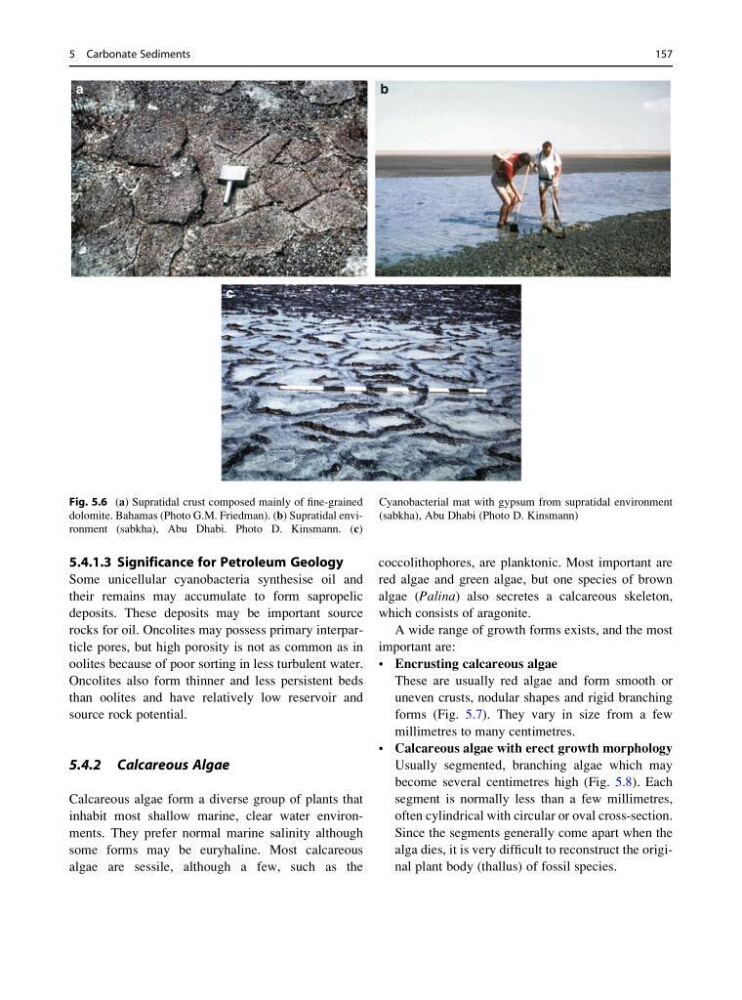
Fig. 5.6 (a) Supratidal crust composed mainly of fine-grained
dolomite. Bahamas (Photo G.M. Friedman). (b) Supratidal environment (sabkha), Abu Dhabi. Photo D. Kinsmann. (c)
Cyanobacterial mat with gypsum from supratidal environment
(sabkha), Abu Dhabi (Photo D. Kinsmann)
5 Carbonate Sediments
157
Some unicellular cyanobacteria synthesise oil and
their remains may accumulate to form sapropelic
deposits. These deposits may be important source
rocks for oil. Oncolites may possess primary interparticle pores, but high porosity is not as common as in
oolites because of poor sorting in less turbulent water.
Oncolites also form thinner and less persistent beds
than oolites and have relatively low reservoir and
source rock potential.
5.4.2 Calcareous Algae
Calcareous algae form a diverse group of plants that
inhabit most shallow marine, clear water environments. They prefer normal marine salinity although
some forms may be euryhaline. Most calcareous
algae are sessile, although a few, such as the
coccolithophores, are planktonic. Most important are
red algae and green algae, but one species of brown
algae (Palina) also secretes a calcareous skeleton,
which consists of aragonite.
A wide range of growth forms exists, and the most
important are:
• Encrusting calcareous algae
These are usually red algae and form smooth or
uneven crusts, nodular shapes and rigid branching
forms (Fig. 5.7). They vary in size from a few
millimetres to many centimetres.
• Calcareous algae with erect growth morphology
Usually segmented, branching algae which may
become several centimetres high (Fig. 5.8). Each
segment is normally less than a few millimetres,
often cylindrical with circular or oval cross-section.
Since the segments generally come apart when the
alga dies, it is very difficult to reconstruct the original plant body (thallus) of fossil species.
a
c
b
Fig. 5.6 (a) Supratidal crust composed mainly of fine-grained
dolomite. Bahamas (Photo G.M. Friedman). (b) Supratidal environment (sabkha), Abu Dhabi. Photo D. Kinsmann. (c)
Cyanobacterial mat with gypsum from supratidal environment
(sabkha), Abu Dhabi (Photo D. Kinsmann)
5 Carbonate Sediments
157