

8 From Precision Polymer Synthesis to “Cook-and-Bake”
At this point, the trade-off between the added value of materials synthesis and the
complexity of the experimental protocol should again be invoked. When focusing
on molecularly defined nanographenes and GNRs, their electronic properties
and their use as semiconductors stand in the foreground. Graphenes and related
carbon materials, however, can also find applications in other areas such as sensing
[230–237], gas separation [238–240], and energy technology [2, 241–244]. The
urgent need by society for a safe and sustainable energy supply strongly encourages
us to briefly consider their use in energy storage and transformation. Graphite
materials have already found extensive use in batteries [245–249] and supercapacitors [250–254]. Increasing energy and power densities are, first, an issue of
the electronic structure of the electrodes, whereby inorganic materials are known
[255–257] to have distinct advantages over graphite, and, second, of the morphology.
The latter must allow efficient ion and electron transport while remaining unobstructed over many cycles. Not surprisingly, graphenes accessible by methods
other than molecular synthesis have received attention toward these ends. While
CVD deposition of graphene on metal surfaces has already been mentioned for
the fabrication of transparent electrodes [7, 8], graphene oxide reduction [258–262]
and pyrolysis of carbon-rich precursors [263] come into play as useful and
versatile techniques. Graphene oxide, although it must be reduced back to graphene
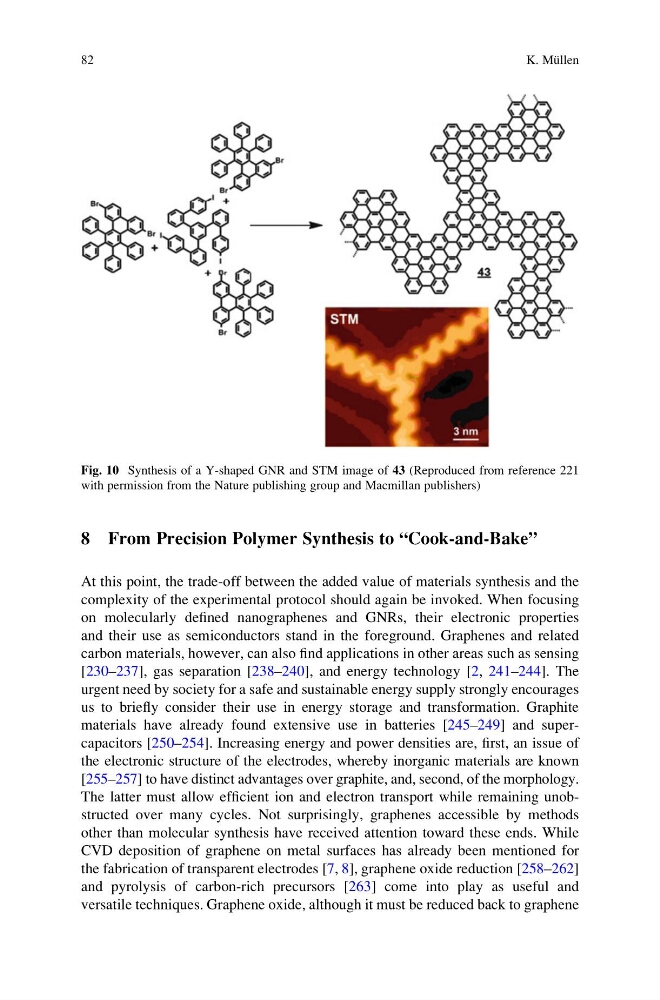
Fig. 10 Synthesis of a Y-shaped GNR and STM image of 43 (Reproduced from reference 221
with permission from the Nature publishing group and Macmillan publishers)
82
K. Mu ¨llen
At this point, the trade-off between the added value of materials synthesis and the
complexity of the experimental protocol should again be invoked. When focusing
on molecularly defined nanographenes and GNRs, their electronic properties
and their use as semiconductors stand in the foreground. Graphenes and related
carbon materials, however, can also find applications in other areas such as sensing
[230–237], gas separation [238–240], and energy technology [2, 241–244]. The
urgent need by society for a safe and sustainable energy supply strongly encourages
us to briefly consider their use in energy storage and transformation. Graphite
materials have already found extensive use in batteries [245–249] and supercapacitors [250–254]. Increasing energy and power densities are, first, an issue of
the electronic structure of the electrodes, whereby inorganic materials are known
[255–257] to have distinct advantages over graphite, and, second, of the morphology.
The latter must allow efficient ion and electron transport while remaining unobstructed over many cycles. Not surprisingly, graphenes accessible by methods
other than molecular synthesis have received attention toward these ends. While
CVD deposition of graphene on metal surfaces has already been mentioned for
the fabrication of transparent electrodes [7, 8], graphene oxide reduction [258–262]
and pyrolysis of carbon-rich precursors [263] come into play as useful and
versatile techniques. Graphene oxide, although it must be reduced back to graphene
Fig. 10 Synthesis of a Y-shaped GNR and STM image of 43 (Reproduced from reference 221
with permission from the Nature publishing group and Macmillan publishers)
82
K. Mu ¨llen