

for GNR polymers (Scheme 9) is the synthesis of supernaphthalene 31. In this case,
a partial pre-planarization of the precursor (i.e. starting from 31a instead of 32)
enables a higher degree of perfection of the dehydrogenation [168] (Scheme 9).
It is not surprising that the large polycyclic disc structures strongly tend to
aggregate and are sparingly soluble in organic solvents. This is why attachment of
alkyl chains is mandatory. As convincingly described by Yves Geerts, Mark Watson,
Jishan Wu, and Wojtek Pisula in our group, nanophase separation between the hard
aromatic core and the soft alkyl mantle leads to the formation of extremely stable
discotic mesophases [157, 158], with a high degree of order in the columnar
superstructures [169, 170]. Also, solution and melt processing into thin-film devices
become possible, which allows control over the packing mode and thus over
the charge carrier mobility [14, 171, 172]. The size of these PAHs is a critical issue
because it not only enables the straightforward detection of the molecules by scanning tunneling microscopy (STM) with atomic resolution, but also the observation of
single-molecule current–potential curves by STM [173–175]. Indeed, diode-like
characteristics could be recorded for single PAH molecules and interpreted in
terms of a resonant enhancement of the tunneling current [153, 176]. It is thus fair
to say that the synthesis and processing of nanosized disc-type PAH molecules have
opened new avenues in nanoscience and molecular electronics [170, 173, 177, 178].
The logical question now is: how can we extend the synthesis of giant PAHs to that of
polymeric GNRs?
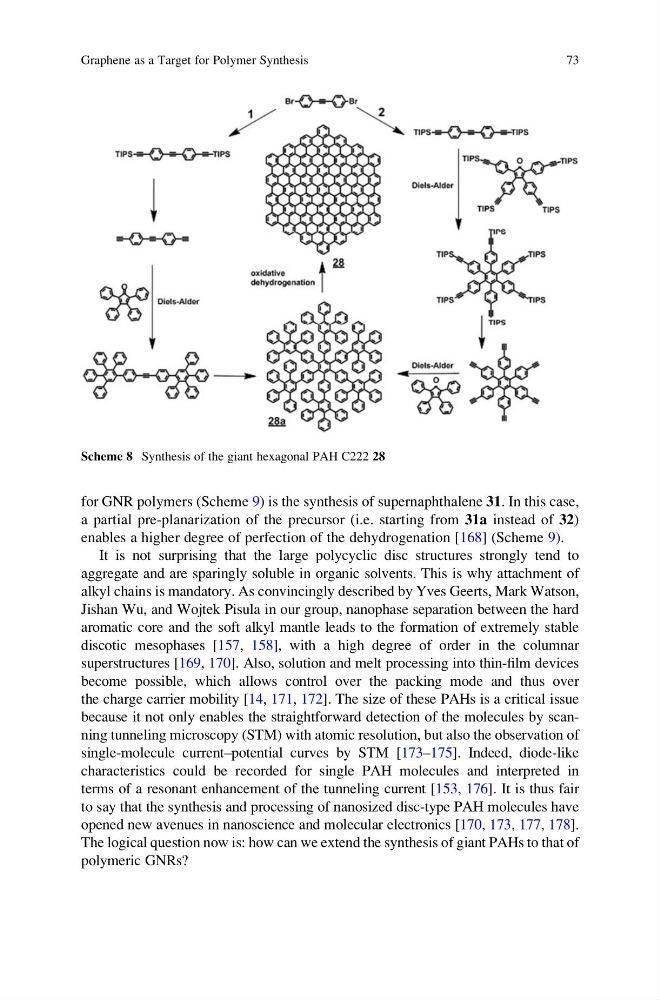
Scheme 8 Synthesis of the giant hexagonal PAH C222 28
Graphene as a Target for Polymer Synthesis
73
a partial pre-planarization of the precursor (i.e. starting from 31a instead of 32)
enables a higher degree of perfection of the dehydrogenation [168] (Scheme 9).
It is not surprising that the large polycyclic disc structures strongly tend to
aggregate and are sparingly soluble in organic solvents. This is why attachment of
alkyl chains is mandatory. As convincingly described by Yves Geerts, Mark Watson,
Jishan Wu, and Wojtek Pisula in our group, nanophase separation between the hard
aromatic core and the soft alkyl mantle leads to the formation of extremely stable
discotic mesophases [157, 158], with a high degree of order in the columnar
superstructures [169, 170]. Also, solution and melt processing into thin-film devices
become possible, which allows control over the packing mode and thus over
the charge carrier mobility [14, 171, 172]. The size of these PAHs is a critical issue
because it not only enables the straightforward detection of the molecules by scanning tunneling microscopy (STM) with atomic resolution, but also the observation of
single-molecule current–potential curves by STM [173–175]. Indeed, diode-like
characteristics could be recorded for single PAH molecules and interpreted in
terms of a resonant enhancement of the tunneling current [153, 176]. It is thus fair
to say that the synthesis and processing of nanosized disc-type PAH molecules have
opened new avenues in nanoscience and molecular electronics [170, 173, 177, 178].
The logical question now is: how can we extend the synthesis of giant PAHs to that of
polymeric GNRs?
Scheme 8 Synthesis of the giant hexagonal PAH C222 28
Graphene as a Target for Polymer Synthesis
73