

5 Dendritic (3D) Polyphenylenes
At this point, a little detour was rewarding as we discovered that the precursors used
for the synthesis of the planarized nanographene molecules turned out to be true
dendrimers made from nothing more than twisted, tightly packed, interlocked
benzene rings The crystal structure of the C222 precursor 28a reveals a unique
3D molecule with twisted benzene rings and large voids [167] (Fig. 6).
Upon inspection of this polyphenylene, the reader readily recognizes the central
benzene ring (A in Fig. 6) as the core and the C rings as branching points of a
general dendrimer structure [179–186]. This realization stimulated us to synthesize
larger and larger polyphenylene dendrimers by both convergent and divergent
approachs [187–189]. For the divergent approach (e.g., layer-by-layer synthesis),
the AB 2 -type branching reagent 33 turned out of be crucially important [190].
Indeed, the diene unit of this AB 2 system could react with any multiethynyl core
to furnish new pentaphenyl benzene moieties in a Diels–Alder cycloaddition with
expulsion of carbon monoxide (Scheme 10).
In this case, the two dienophile functional groups in 33 remained unreacted due
to the presence of the bulky triisopropylsilyl (TiPS) protecting groups [191].
Removal of the latter with ammonium fluoride reactivated the ethynyl dienophiles
for the next-generation synthesis by another round of addition of the AB 2 systems.
The shape and packing density of the dendrimers could be tuned by the choice
of the ethynylated core and of the branching reagent (e.g., the AB 4 system 33a
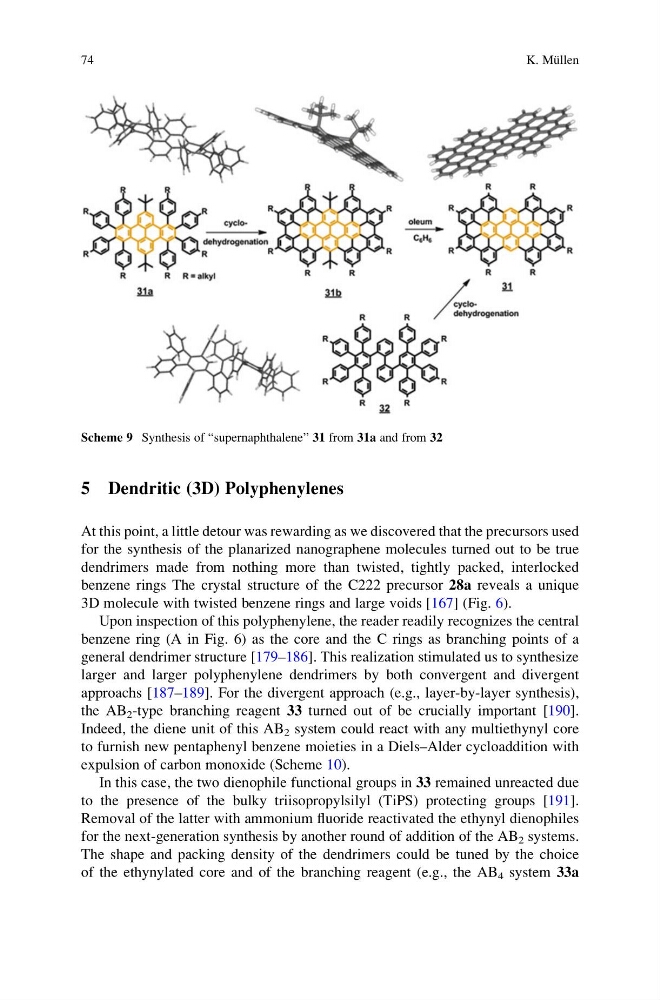
Scheme 9 Synthesis of “supernaphthalene” 31 from 31a and from 32
74
K. Mu ¨llen
At this point, a little detour was rewarding as we discovered that the precursors used
for the synthesis of the planarized nanographene molecules turned out to be true
dendrimers made from nothing more than twisted, tightly packed, interlocked
benzene rings The crystal structure of the C222 precursor 28a reveals a unique
3D molecule with twisted benzene rings and large voids [167] (Fig. 6).
Upon inspection of this polyphenylene, the reader readily recognizes the central
benzene ring (A in Fig. 6) as the core and the C rings as branching points of a
general dendrimer structure [179–186]. This realization stimulated us to synthesize
larger and larger polyphenylene dendrimers by both convergent and divergent
approachs [187–189]. For the divergent approach (e.g., layer-by-layer synthesis),
the AB 2 -type branching reagent 33 turned out of be crucially important [190].
Indeed, the diene unit of this AB 2 system could react with any multiethynyl core
to furnish new pentaphenyl benzene moieties in a Diels–Alder cycloaddition with
expulsion of carbon monoxide (Scheme 10).
In this case, the two dienophile functional groups in 33 remained unreacted due
to the presence of the bulky triisopropylsilyl (TiPS) protecting groups [191].
Removal of the latter with ammonium fluoride reactivated the ethynyl dienophiles
for the next-generation synthesis by another round of addition of the AB 2 systems.
The shape and packing density of the dendrimers could be tuned by the choice
of the ethynylated core and of the branching reagent (e.g., the AB 4 system 33a
Scheme 9 Synthesis of “supernaphthalene” 31 from 31a and from 32
74
K. Mu ¨llen