

precluding the applicability of noncovalent arrays for bioseparations. Yet, if strong
hydrophobic interactions exist, the assemblies may be essentially nondynamic, with
nonpolar groups entirely segregated from the aqueous phase. Therefore, they will
not respond to the environment and are analogous to a covalent system. PEG groups
that can be partially involved in interfiber interactions may also not be available to
interact with ions. To our delight, supramolecular membranes based on 8 proved to
be quite stable: they remain robust (no detectable leaching of membrane material)
and exhibit stable flow rates under physiological conditions (e.g., 150 mM NaCl or
in a buffer containing 20 mM MOPS, 70 mM KCl, and 10 mM MgCl 2 ), indicating
that a porous 3D network is preserved [67]. In addition, PEG groups provide a
potentially biocompatible hydrophilic environment and minimize the unfavorable
electrostatic adsorption of biological macromolecules.
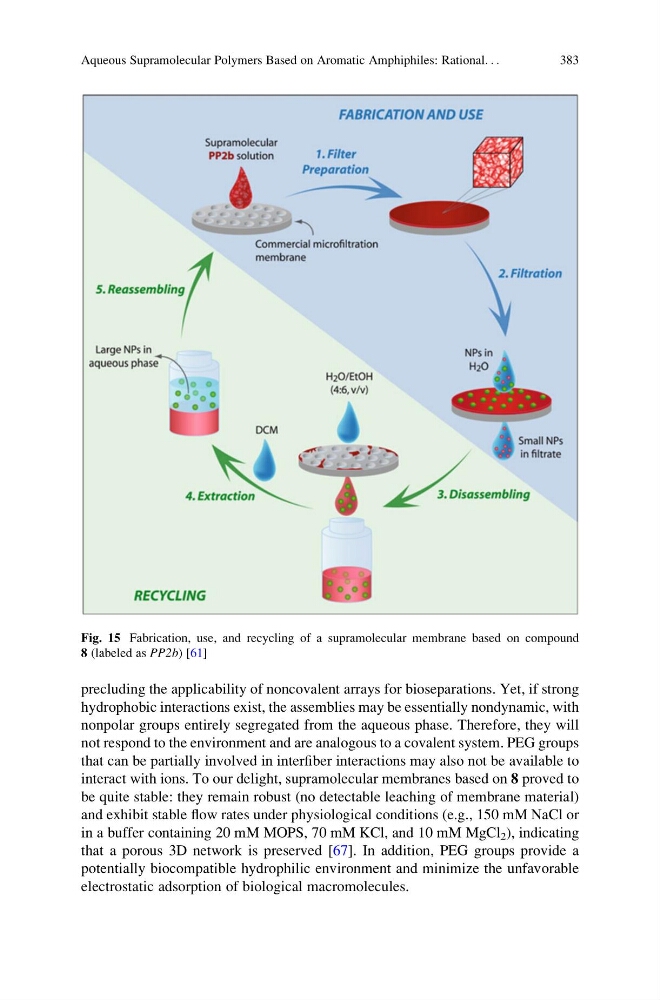
Fig. 15 Fabrication, use, and recycling of a supramolecular membrane based on compound
8 (labeled as PP2b) [61]
Aqueous Supramolecular Polymers Based on Aromatic Amphiphiles: Rational. . .
383
hydrophobic interactions exist, the assemblies may be essentially nondynamic, with
nonpolar groups entirely segregated from the aqueous phase. Therefore, they will
not respond to the environment and are analogous to a covalent system. PEG groups
that can be partially involved in interfiber interactions may also not be available to
interact with ions. To our delight, supramolecular membranes based on 8 proved to
be quite stable: they remain robust (no detectable leaching of membrane material)
and exhibit stable flow rates under physiological conditions (e.g., 150 mM NaCl or
in a buffer containing 20 mM MOPS, 70 mM KCl, and 10 mM MgCl 2 ), indicating
that a porous 3D network is preserved [67]. In addition, PEG groups provide a
potentially biocompatible hydrophilic environment and minimize the unfavorable
electrostatic adsorption of biological macromolecules.
Fig. 15 Fabrication, use, and recycling of a supramolecular membrane based on compound
8 (labeled as PP2b) [61]
Aqueous Supramolecular Polymers Based on Aromatic Amphiphiles: Rational. . .
383