

about 90% for β-selectivity with Sn(II) catalyst and without catalyst [43]. The
selectivity of lipase catalyst is thought to explain the reactive polyester formation
under mild reaction conditions [50].
An interesting ROP of a new cyclic monomer of an O-carboxylic anhydride
derived from lactic acid with lipase catalysis is to be noted. The polymerization
proceeded within a few hours at 80
C with liberation of carbon dioxide and
gave PLA in high yields and high M n of up to 38,400, with low polydispersity
M w /M n < 1.4 [52].
3.2 Enzyme-Catalyzed Oligomerization of Alkyl Lactates:
Enantioselection Mechanism
New oligomerization reactions of alkyl lactates have been developed recently using
enzymatic catalysis, where lipase [53] and protease [54] were employed as enzyme
catalysts.
3.2.1 Lipase Catalysis
A recent paper reported that lipase-catalyzed ROP of lactide occurred with
enantioselection of D-lactide [55]. Here, a new lipase-catalyzed enantioselective
oligomerization of an alkyl lactate (RLa) is described (Scheme 7) [53];
Novozym 435-catalyzed polycondensation of alkyl D-lactates at 50
C gave oligo
(D-lactic acid)s (oligoDLAs) at up to 82% yields with n ¼ 2–7. Primary alkyl
lactates of Et-, Pr-, and Bu-, showed a higher reactivity than longer alkyl lactates
like Pe-, Hx-, Hp-, and Oc-. A secondary alkyl lactate of BuDLa showed a
decreased reactivity. L-Lactates did not show any reactivity, i.e., enantioselection
for D-isomers is very strict.
n
n
n
n
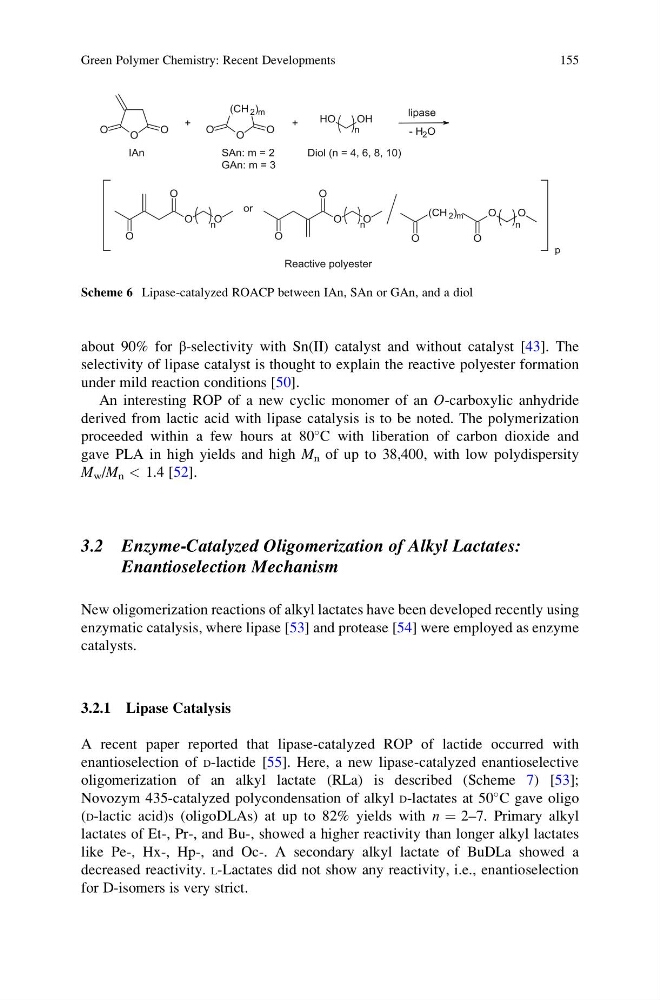
Scheme 6 Lipase-catalyzed ROACP between IAn, SAn or GAn, and a diol
Green Polymer Chemistry: Recent Developments
155
selectivity of lipase catalyst is thought to explain the reactive polyester formation
under mild reaction conditions [50].
An interesting ROP of a new cyclic monomer of an O-carboxylic anhydride
derived from lactic acid with lipase catalysis is to be noted. The polymerization
proceeded within a few hours at 80
C with liberation of carbon dioxide and
gave PLA in high yields and high M n of up to 38,400, with low polydispersity
M w /M n < 1.4 [52].
3.2 Enzyme-Catalyzed Oligomerization of Alkyl Lactates:
Enantioselection Mechanism
New oligomerization reactions of alkyl lactates have been developed recently using
enzymatic catalysis, where lipase [53] and protease [54] were employed as enzyme
catalysts.
3.2.1 Lipase Catalysis
A recent paper reported that lipase-catalyzed ROP of lactide occurred with
enantioselection of D-lactide [55]. Here, a new lipase-catalyzed enantioselective
oligomerization of an alkyl lactate (RLa) is described (Scheme 7) [53];
Novozym 435-catalyzed polycondensation of alkyl D-lactates at 50
C gave oligo
(D-lactic acid)s (oligoDLAs) at up to 82% yields with n ¼ 2–7. Primary alkyl
lactates of Et-, Pr-, and Bu-, showed a higher reactivity than longer alkyl lactates
like Pe-, Hx-, Hp-, and Oc-. A secondary alkyl lactate of BuDLa showed a
decreased reactivity. L-Lactates did not show any reactivity, i.e., enantioselection
for D-isomers is very strict.
n
n
n
n
Scheme 6 Lipase-catalyzed ROACP between IAn, SAn or GAn, and a diol
Green Polymer Chemistry: Recent Developments
155