

Gro-wth of Present-Day Concepts, 1978-1988
SEDIMENT
Ia)
(b}
49
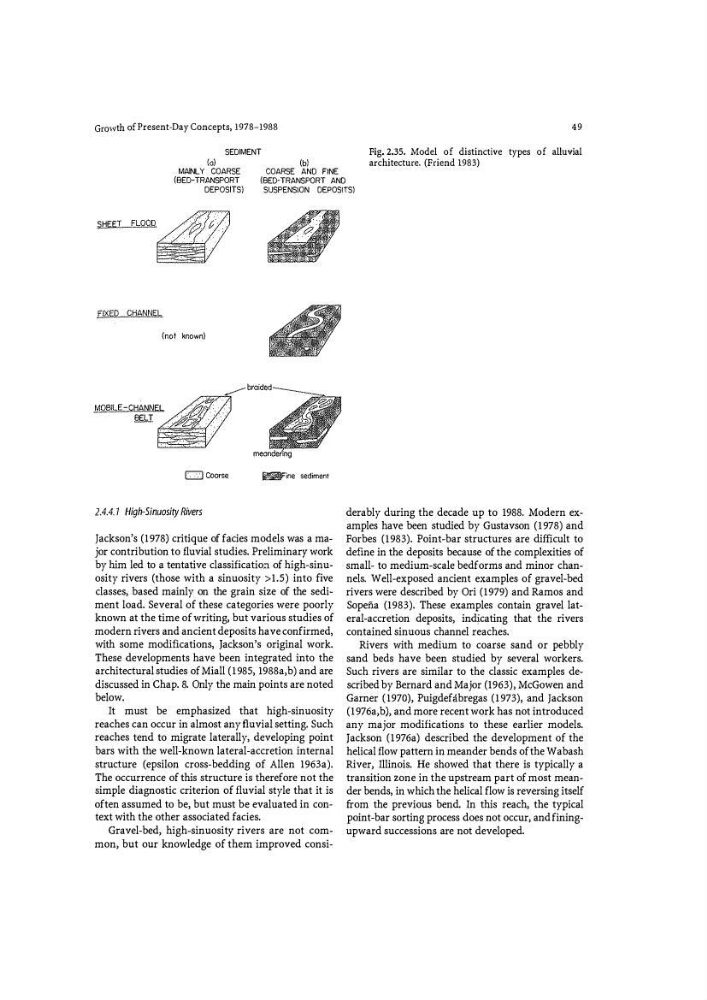
Fig. 2.35. Model of distinctive types of alluvial
architecture. (Friend 1983)
MAINLY COARSE
(BED-TRANSPORT
DEPOSITS)
COARSE AND FINE
(BED-TRANSPORT AND
SUSPENSION DEPOSITS)
SHEET FLOOD �
(not known)
MOBILE -CHANNEL
BELT _r:/,t;B); ;!
j
Qc oorse
�Fine sediment
2.4.4. 7 High-Sinuosity Rivers
Jackson's (1978) critique of facies models was a major contribution to fluvial studies. Preliminary work
by him led to a tentative classificatio:� of high-sinuosity rivers (those with a sinuosity >1.5) into five
classes, based mainly on the grain size of the sediment load. Several of these categories were poorly
known at the time of writing, but various studies of
modern rivers and ancient deposits have confirmed,
with some modifications, Jackson's original work.
These developments have been integrated into the
architectural studies of Miall (1985, 1988a,b) and are
discussed in Chap. 8. Only the main points are noted
below.
It must be emphasized that high-sinuosity
reaches can occur in almost any fluvial setting. Such
reaches tend to migrate laterally, developing point
bars with the well-known lateral-accretion internal
structure (epsilon cross-bedding of Allen 1963a).
The occurrence of this structure is therefore not the
simple diagnostic criterion of fluvial style that it is
often assumed to be, but must be evaluated in context with the other associated facies.
Gravel-bed, high-sinuosity rivers are not common, but our knowledge of them improved considerably during the decade up to 1988. Modern examples have been studied by Gustavson (1978) and
Forbes (1983). Point-bar structures are difficult to
define in the deposits because of the complexities of
small- to medium-scale bedforms and minor channels. Well-exposed ancient examples of gravel-bed
rivers were described by Ori (1979) and Ramos and
Sopefia (1983). These examples contain gravel lateral-accretion deposits, indicating that the rivers
contained sinuous channel reaches.
Rivers with medium to coarse sand or pebbly
sand beds have been studied by several workers.
Such rivers are similar to the classic examples described by Bernard and Major (1963), McGowen and
Garner (1970), Puigdefabregas (1973), and jackson
(1976a,b), and more recent work has not introduced
any major modifications to these earlier models.
jackson (1976a) described the development of the
helical flow pattern in meander bends of the Wabash
River, Illinois. He showed that there is typically a
transition zone in the upstream part of most meander bends, in which the helical flow is reversing itself
fr om the previous bend. In this reach, the typical
point-bar sorting process does not occur, and finingupward successions are not developed.
SEDIMENT
Ia)
(b}
49
Fig. 2.35. Model of distinctive types of alluvial
architecture. (Friend 1983)
MAINLY COARSE
(BED-TRANSPORT
DEPOSITS)
COARSE AND FINE
(BED-TRANSPORT AND
SUSPENSION DEPOSITS)
SHEET FLOOD �
(not known)
MOBILE -CHANNEL
BELT _r:/,t;B); ;!
j
Qc oorse
�Fine sediment
2.4.4. 7 High-Sinuosity Rivers
Jackson's (1978) critique of facies models was a major contribution to fluvial studies. Preliminary work
by him led to a tentative classificatio:� of high-sinuosity rivers (those with a sinuosity >1.5) into five
classes, based mainly on the grain size of the sediment load. Several of these categories were poorly
known at the time of writing, but various studies of
modern rivers and ancient deposits have confirmed,
with some modifications, Jackson's original work.
These developments have been integrated into the
architectural studies of Miall (1985, 1988a,b) and are
discussed in Chap. 8. Only the main points are noted
below.
It must be emphasized that high-sinuosity
reaches can occur in almost any fluvial setting. Such
reaches tend to migrate laterally, developing point
bars with the well-known lateral-accretion internal
structure (epsilon cross-bedding of Allen 1963a).
The occurrence of this structure is therefore not the
simple diagnostic criterion of fluvial style that it is
often assumed to be, but must be evaluated in context with the other associated facies.
Gravel-bed, high-sinuosity rivers are not common, but our knowledge of them improved considerably during the decade up to 1988. Modern examples have been studied by Gustavson (1978) and
Forbes (1983). Point-bar structures are difficult to
define in the deposits because of the complexities of
small- to medium-scale bedforms and minor channels. Well-exposed ancient examples of gravel-bed
rivers were described by Ori (1979) and Ramos and
Sopefia (1983). These examples contain gravel lateral-accretion deposits, indicating that the rivers
contained sinuous channel reaches.
Rivers with medium to coarse sand or pebbly
sand beds have been studied by several workers.
Such rivers are similar to the classic examples described by Bernard and Major (1963), McGowen and
Garner (1970), Puigdefabregas (1973), and jackson
(1976a,b), and more recent work has not introduced
any major modifications to these earlier models.
jackson (1976a) described the development of the
helical flow pattern in meander bends of the Wabash
River, Illinois. He showed that there is typically a
transition zone in the upstream part of most meander bends, in which the helical flow is reversing itself
fr om the previous bend. In this reach, the typical
point-bar sorting process does not occur, and finingupward successions are not developed.