

48
Historical Background
il Chama! definition
'
wotl:r flow restricled
to channel for much of year
/(((}
( l
crute
a���c ���
el
crevasse channel
iii) Field description hollow fill
�Zd :;: • • • • ". • �danf
conccrdall margin
base I margin
iv l Genetic onoNsis of hollows
2d �
? sub.aqueOJS so::u
c;.- 3d
structures eg flutes c., c..
�/
3d ·: �· .·: -:
e!on<;Jote hO!!OI't-flll
�
�- . .. · .· . . . so
-- · .
' : :· . · . · �
m
· �cut borlk
?c """"
? valley
' both larger than micro/meso forms/
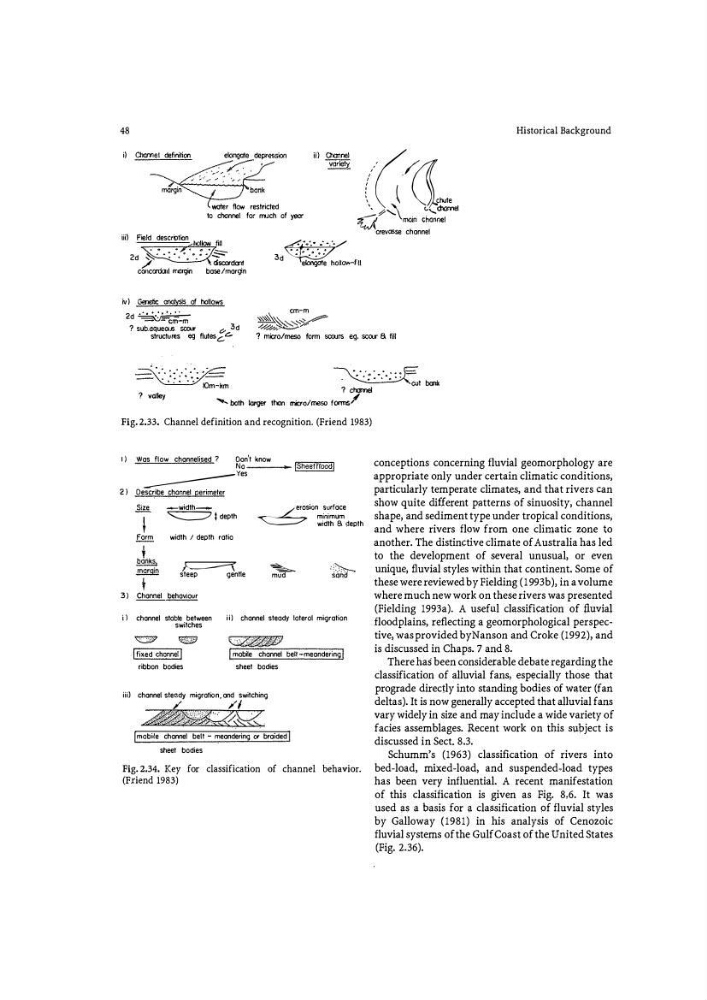
Fig. 2.33. Channel definition and recognition. (Friend 1983)
1 ) Was flow channelised 7
Don't know
No ---- !Sheet rrood!
---- -- -Yes
2 l Describe chomel pe rimeter
Size
-width�si on ��rface
!
�tctepth
m1mmum
width a depth
Form
width I depth ratio
l
boriks,
t===\
�
·•. >,. ..
mcrgin
steep
gentle
m"d
sand
I
3) Channel behaviour
i) channel stob!e between
switches
ii) channel steady loterol migration
'G3'
<®iV
I fixed channel!
ribbon bodies
I mobile channel be!! �meandering I
sheet bodies
iii) channel steady migralkln, and switching
/
/I
�
I mobile channel belt - meandering or braided I
sheet bodies
Fig. 2.34. Key for classification of channel behavior.
(Friend 1983)
conceptions concerning fluvial geomorphology are
appropriate only under certain climatic conditions,
particularly temperate climates, and that rivers can
show quite different patterns of sinuosity, channel
shape, and sediment type under tropical conditions,
and where rivers fl9w from one climatic zone to
another. The distinctive climate of Australia has led
to the development of several unusual, or even
unique, fl uvial styles within that continent. Some of
these were reviewed by Fielding (1993b), in a volume
where much new work on these rivers was presented
(Fielding 1993a). A useful classification of tluvial
tloodplains, reflecting a geomorphological perspective, was provided byNanson and Croke (1992), and
is discussed in Chaps. 7 and 8.
There has been considerable debate regarding the
classification of alluvial fans, esp�cially those that
prograde directly into standing bodies of water (fan
deltas). It is now generally accepted that alluvial fans
vary widely in size and may include a wide variety of
facies assemblages. Recent work on this suPject is
discussed in Sect. 8.3.
Schumm's (1963) classification of rivers into
bed-load, mixed-load, and suspended-load types
has been very influential. A recent manifestation
of this classification is given as Fig. 8,6. It was
used ;,1.5 a l,Jasis for a classification of fluvial styles
by Galloway ( 1981) in his analysis of Cenozoic
fluvial systems of the Gulf Coast of the United States
(Fig. 2.36).
Historical Background
il Chama! definition
'
wotl:r flow restricled
to channel for much of year
/(((}
( l
crute
a���c ���
el
crevasse channel
iii) Field description hollow fill
�Zd :;: • • • • ". • �danf
conccrdall margin
base I margin
iv l Genetic onoNsis of hollows
2d �
? sub.aqueOJS so::u
c;.- 3d
structures eg flutes c., c..
�/
3d ·: �· .·: -:
e!on<;Jote hO!!OI't-flll
�
�- . .. · .· . . . so
-- · .
' : :· . · . · �
m
· �cut borlk
?c """"
? valley
' both larger than micro/meso forms/
Fig. 2.33. Channel definition and recognition. (Friend 1983)
1 ) Was flow channelised 7
Don't know
No ---- !Sheet rrood!
---- -- -Yes
2 l Describe chomel pe rimeter
Size
-width�si on ��rface
!
�tctepth
m1mmum
width a depth
Form
width I depth ratio
l
boriks,
t===\
�
·•. >,. ..
mcrgin
steep
gentle
m"d
sand
I
3) Channel behaviour
i) channel stob!e between
switches
ii) channel steady loterol migration
'G3'
<®iV
I fixed channel!
ribbon bodies
I mobile channel be!! �meandering I
sheet bodies
iii) channel steady migralkln, and switching
/
/I
�
I mobile channel belt - meandering or braided I
sheet bodies
Fig. 2.34. Key for classification of channel behavior.
(Friend 1983)
conceptions concerning fluvial geomorphology are
appropriate only under certain climatic conditions,
particularly temperate climates, and that rivers can
show quite different patterns of sinuosity, channel
shape, and sediment type under tropical conditions,
and where rivers fl9w from one climatic zone to
another. The distinctive climate of Australia has led
to the development of several unusual, or even
unique, fl uvial styles within that continent. Some of
these were reviewed by Fielding (1993b), in a volume
where much new work on these rivers was presented
(Fielding 1993a). A useful classification of tluvial
tloodplains, reflecting a geomorphological perspective, was provided byNanson and Croke (1992), and
is discussed in Chaps. 7 and 8.
There has been considerable debate regarding the
classification of alluvial fans, esp�cially those that
prograde directly into standing bodies of water (fan
deltas). It is now generally accepted that alluvial fans
vary widely in size and may include a wide variety of
facies assemblages. Recent work on this suPject is
discussed in Sect. 8.3.
Schumm's (1963) classification of rivers into
bed-load, mixed-load, and suspended-load types
has been very influential. A recent manifestation
of this classification is given as Fig. 8,6. It was
used ;,1.5 a l,Jasis for a classification of fluvial styles
by Galloway ( 1981) in his analysis of Cenozoic
fluvial systems of the Gulf Coast of the United States
(Fig. 2.36).