

448
What Does Fluvial Lithofacies Reveal About Climate?
1EMPERATURE MOISTURE
TYPES OF STORMS UPLAND SOILS
ALLUVIAL
STRATIGRAPHY
low
high
low
high
Front Conv. Trop.
0
W, Sp,
s
S, F
F
5
"
Sp, F
Sp, S, --""
'�
�
�
lO
"
�
W. Sp,
F
"
•
"'
�
�
I
I
I
Sp, S,
F
15
I
� �
20th Century
Averages
20
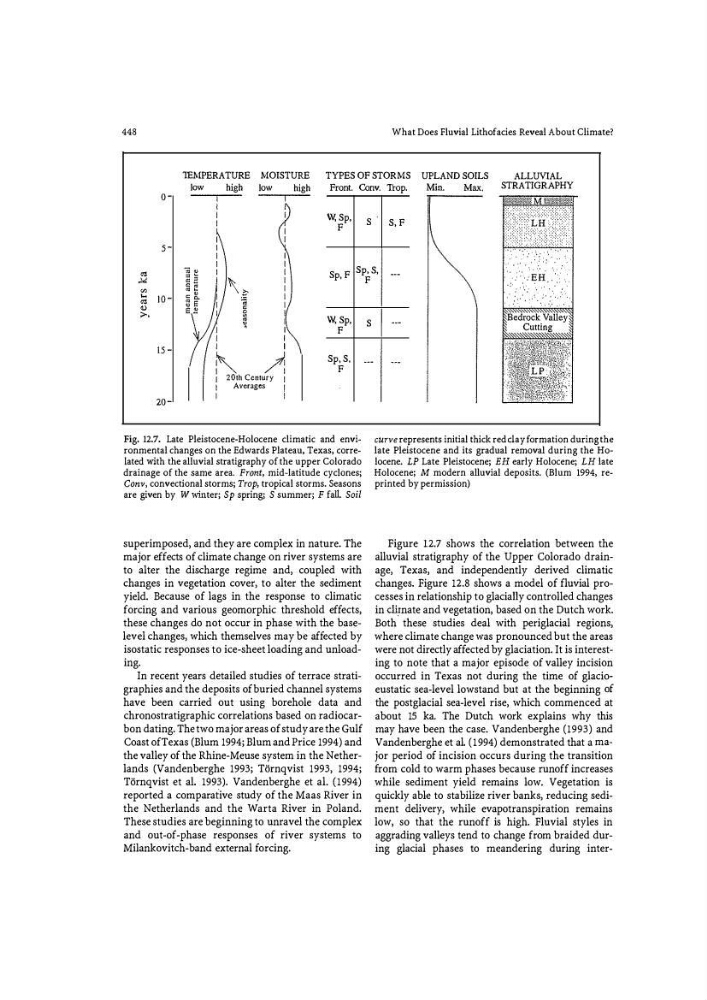
Fig. 12.7. Late Pleistocene�Holocene climatic and envi�
ronmental changes on the Edwards Plateau, Texas, corre�
fated with the alluvial stratigraphy of the upper Colorado
drainage of the same area. Front, mid-latitude cyclones;
Conv, convectional storms; Trop, tropical storms. Seasons
are given by W winter; Sp spring; S summer; F fall. Soil
superimposed, and they are complex in nature. The
major effects of climate change - on river systems are
to alter the discharge regime and, coupled with
changes in vegetation cover, to alter the sediment
yield. Because of lags in the response to climatic
forcing and various geomorphic threshold effects,
these changes do not occur in phase with the baselevel changes, which themselves may be affected by
isostatic responses to ice-sheet loading and unloading.
In recent years detailed studies of terrace stratigraphies and the deposits of buried channel systems
have been carried out using borehole data and
chronostratigraphic correlations based on radiocarbon dating. The two major areas of study are the Gulf
Coast ofTexas (Blum 1994; Blum and Price 1994) and
the valley of the Rhine-Meuse system in the Netherlands (Vandenberghe 1993; Tornqvist 1993, 1994;
Tornqvist et a!. 1993). Vandenberghe et al. (1994)
reported a comparative study of the Maas River in
the Netherlands and the W arta River in Poland.
These studies are beginning to unravel the complex
and out-of-phase responses of river systems to
Milankovitch-band external fo rcing.
F
s
---- -
--curve represents initial thick red day formation during the
late Pleistocene and its gradual removal during the Holocene. LP Late Pleistocene; Eli early Holocene; LH late
Holocene; M modern alluvial deposits. (Blum 1994, reprinted by permission)
Figure 12.7 shows the correlation between the
alluvial stratigraphy of the Upper Colorado drainage, Texas, and independently derived climatic
changes. Figure 12.8 shows a model of fluvial processes in relationship to glacially controlled changes
in di:znate and vegetation, based on the Dutch work.
Both these studies deal with periglacial regions,
where climate change was pronounced but the areas
were not directly affected by glaciation. It is interesting to note that a major episode of valley incision
occurred in Texas not during the time of glacioeustatic sea-level lowstand but at the beginning of
the postglacial sea-level rise, which commenced at
about 15 ka. The Dutch work explains why this
may have been the case. Vandenberghe (1993) and
Vandenberghe et al. (1994) demonstrated that a major period of incision occurs during the transition
from cold to warm phases because runoff increases
while sediment yield remains low. Vegetation is
quickly able to stabilize river banks, reducing sediment delivery, while evapotranspiration remains
low, so that the runoff is high. Fluvial styles in
aggrading valleys tend to change from braided during glacial phases to meandering during inter-
What Does Fluvial Lithofacies Reveal About Climate?
1EMPERATURE MOISTURE
TYPES OF STORMS UPLAND SOILS
ALLUVIAL
STRATIGRAPHY
low
high
low
high
Front Conv. Trop.
0
W, Sp,
s
S, F
F
5
"
Sp, F
Sp, S, --""
'�
�
�
lO
"
�
W. Sp,
F
"
•
"'
�
�
I
I
I
Sp, S,
F
15
I
� �
20th Century
Averages
20
Fig. 12.7. Late Pleistocene�Holocene climatic and envi�
ronmental changes on the Edwards Plateau, Texas, corre�
fated with the alluvial stratigraphy of the upper Colorado
drainage of the same area. Front, mid-latitude cyclones;
Conv, convectional storms; Trop, tropical storms. Seasons
are given by W winter; Sp spring; S summer; F fall. Soil
superimposed, and they are complex in nature. The
major effects of climate change - on river systems are
to alter the discharge regime and, coupled with
changes in vegetation cover, to alter the sediment
yield. Because of lags in the response to climatic
forcing and various geomorphic threshold effects,
these changes do not occur in phase with the baselevel changes, which themselves may be affected by
isostatic responses to ice-sheet loading and unloading.
In recent years detailed studies of terrace stratigraphies and the deposits of buried channel systems
have been carried out using borehole data and
chronostratigraphic correlations based on radiocarbon dating. The two major areas of study are the Gulf
Coast ofTexas (Blum 1994; Blum and Price 1994) and
the valley of the Rhine-Meuse system in the Netherlands (Vandenberghe 1993; Tornqvist 1993, 1994;
Tornqvist et a!. 1993). Vandenberghe et al. (1994)
reported a comparative study of the Maas River in
the Netherlands and the W arta River in Poland.
These studies are beginning to unravel the complex
and out-of-phase responses of river systems to
Milankovitch-band external fo rcing.
F
s
---- -
--curve represents initial thick red day formation during the
late Pleistocene and its gradual removal during the Holocene. LP Late Pleistocene; Eli early Holocene; LH late
Holocene; M modern alluvial deposits. (Blum 1994, reprinted by permission)
Figure 12.7 shows the correlation between the
alluvial stratigraphy of the Upper Colorado drainage, Texas, and independently derived climatic
changes. Figure 12.8 shows a model of fluvial processes in relationship to glacially controlled changes
in di:znate and vegetation, based on the Dutch work.
Both these studies deal with periglacial regions,
where climate change was pronounced but the areas
were not directly affected by glaciation. It is interesting to note that a major episode of valley incision
occurred in Texas not during the time of glacioeustatic sea-level lowstand but at the beginning of
the postglacial sea-level rise, which commenced at
about 15 ka. The Dutch work explains why this
may have been the case. Vandenberghe (1993) and
Vandenberghe et al. (1994) demonstrated that a major period of incision occurs during the transition
from cold to warm phases because runoff increases
while sediment yield remains low. Vegetation is
quickly able to stabilize river banks, reducing sediment delivery, while evapotranspiration remains
low, so that the runoff is high. Fluvial styles in
aggrading valleys tend to change from braided during glacial phases to meandering during inter-