

Orbital Forcing
450
,/
-/
'
�
�
" - -
- -o.. __ _
- - - -.oo
....,-::..::.:::
- -
- -447
eustatic mechanisms generated by the Gondwanan
glaciation (see review in Miall 1990, Chap. 8), but
only recently have studies demonstrated climate
change during the fo rmation of the cyclothems
themselves. In Nova Scotia, calcareous paleosols occur at cyclothem sequence boundaries) formed at
times oflow stands of sea level, indicating seasonally
dry climates during glacial episodes in the southern
hemisphere. This contrasts with the humid (interglacial) climates indicated by coal-bearing deposits of
the highstand systems tracts (Tandon and Gibling
1994; see also Sect. 13.3.1). Yang and Nio (1993)
demonstrated a similar oscillation between arid con350
-
�-- - -
--- -
MEGA-CYCLE A
ditions during lowstand and more humid conditions
during highstand in the eolian-fluvial cycles of the
Rotliegend Sandstone of the southern North Sea Basin.
-
-- -300
- -
.... � - --- - - - --�
-
- - -
- -
/ -
.... .... __
__ __
-
-
-
-
-
- - - - - - - - - - -
250
0
,00
200
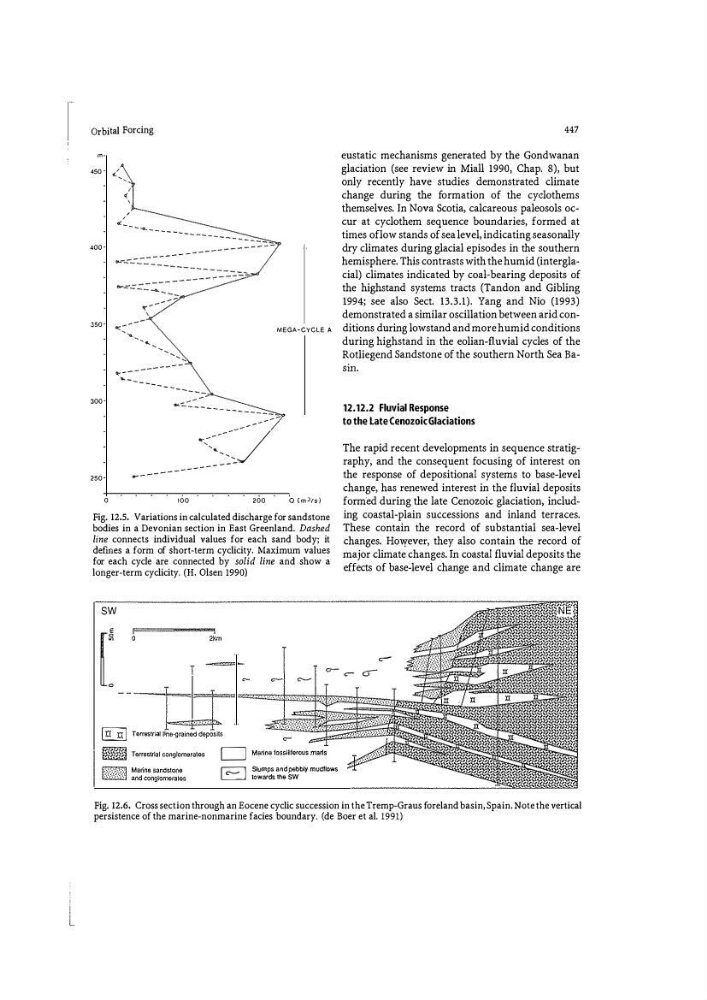
Fig. 12.5. Variations in calculated discharge for sandstone
bodies in a Devonian section in East Greenland. Dashed
line connects individual values for each sand body; it
defmes a form of short-term cyclicity. Maximum values
for each cycle are connected by solid line and show a
longer-term cyclicity. (H. Olsen 1990)
sw
r
� Tarrastrial I
2km
D
a
�
Slumps and pebbly mudflows
towards tha SW
12.12.2 Fluvial Response
to the Late Cenozoic Glaciations
The rapid recent developments in sequence stratigraphy, and the consequent fo cusing of interest on
the response of depositional systems to base-level
change) has renewed interest in the fluvial deposits
formed during the late Cenozoic glaciation, including coastal-plain successions and inland terraces.
These contain the record of substantial sea-level
changes. Hovyever) they also contain the record of
major climate changes. In coastal fluvial deposits the
effects of base-level change and climate change are
c� cr
Fig. 12.6. Cross section through an Eocene cyclic succession in the Tremp-Graus fo reland basin, Spain. Note the vertical
persistence of the marine-nonmarine facies boundary. (de Boer et al. 1991)
450
,/
-/
'
�
�
" - -
- -o.. __ _
- - - -.oo
....,-::..::.:::
- -
- -447
eustatic mechanisms generated by the Gondwanan
glaciation (see review in Miall 1990, Chap. 8), but
only recently have studies demonstrated climate
change during the fo rmation of the cyclothems
themselves. In Nova Scotia, calcareous paleosols occur at cyclothem sequence boundaries) formed at
times oflow stands of sea level, indicating seasonally
dry climates during glacial episodes in the southern
hemisphere. This contrasts with the humid (interglacial) climates indicated by coal-bearing deposits of
the highstand systems tracts (Tandon and Gibling
1994; see also Sect. 13.3.1). Yang and Nio (1993)
demonstrated a similar oscillation between arid con350
-
�-- - -
--- -
MEGA-CYCLE A
ditions during lowstand and more humid conditions
during highstand in the eolian-fluvial cycles of the
Rotliegend Sandstone of the southern North Sea Basin.
-
-- -300
- -
.... � - --- - - - --�
-
- - -
- -
/ -
.... .... __
__ __
-
-
-
-
-
- - - - - - - - - - -
250
0
,00
200
Fig. 12.5. Variations in calculated discharge for sandstone
bodies in a Devonian section in East Greenland. Dashed
line connects individual values for each sand body; it
defmes a form of short-term cyclicity. Maximum values
for each cycle are connected by solid line and show a
longer-term cyclicity. (H. Olsen 1990)
sw
r
� Tarrastrial I
2km
D
a
�
Slumps and pebbly mudflows
towards tha SW
12.12.2 Fluvial Response
to the Late Cenozoic Glaciations
The rapid recent developments in sequence stratigraphy, and the consequent fo cusing of interest on
the response of depositional systems to base-level
change) has renewed interest in the fluvial deposits
formed during the late Cenozoic glaciation, including coastal-plain successions and inland terraces.
These contain the record of substantial sea-level
changes. Hovyever) they also contain the record of
major climate changes. In coastal fluvial deposits the
effects of base-level change and climate change are
c� cr
Fig. 12.6. Cross section through an Eocene cyclic succession in the Tremp-Graus fo reland basin, Spain. Note the vertical
persistence of the marine-nonmarine facies boundary. (de Boer et al. 1991)