

428
What Does Fluvial Lithofacies Reveal About Climate?
- - coal or carbonaceous shale �
I levee 2
0 0
St, Sp
DA
St, S" �Fm
X
o
�
St
A
B
0
5 m
I I I I I I
Sh
LS
�?Fm
LS
-<5o _o � .Sl],_ o -
-
1"'1'
,•'
� � . 6?
L /{ 3 LK �
� Sh
�
;tFm
Sh
LS
o o
. .
LA1
Sh
LS
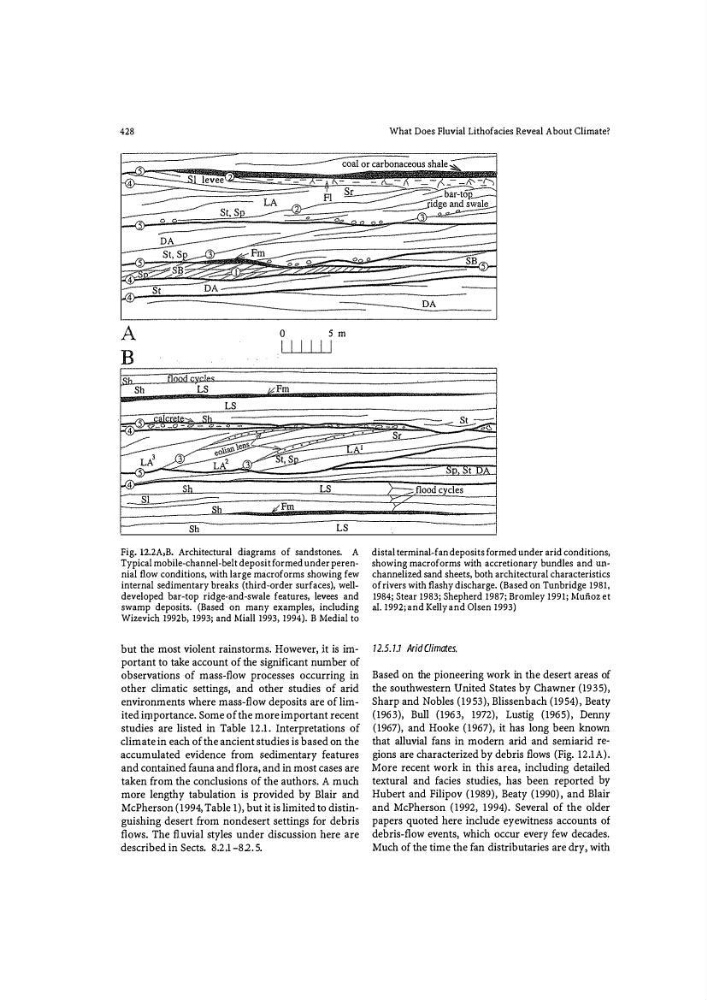
Fig. l2.2A,B. Architectural diagrams of sandstones. A
Typical mobile-channel-belt deposit fo rmed under perennial flow conditions, with large macroforms showing few
internal sedimentary breaks (third-order surfaces), welldeveloped bar-top ridge-and-swale features, levees and
swamp deposits. (Based on many examples, including
Wizevich 1992b, 1993; and Miall 1993, 1994). B Medial to
but the most violent rainstorms. However, it is important to take account of the significant number of
observations of mass-fl ow processes occurring in
other climatic settings, and other studies of arid
environments where mass-flow deposits are of limited importance. Some of the more important recent
studies are listed in Table 12.1. Interpretations of
climate in each of the ancient studies is based on the
accumulated evidence from sedimentary features
and contained fauna and flora, and in most cases are
taken from the conclusions of the authors. A much
more lengthy tabulation is provided by Blair and
McPherson (1994, Table 1), but it is limited to distinguishing desert from nondesert settings for debris
flows. The fluvial styles under discussion here are
described in Sects, 8.2,1- 8.2.5.
DA
St�
-
-
.
�" ""
Sr
t D
)---: :: : .flood cycles
distal terminalFfan deposits formed under arid conditions,
showing macroforms with accretionary bundles and un�
channelized sand sheets, both architectural characteristics
of rivers with flashy discharge. (Based on Tunbridge 1981,
1984; Stear 1983; Shepherd 1987; Bromley 1991; Mufioz et
a!. 1992; and Kelly and Olsen 1993)
12.5.1.1 Arid Climates.
Based on the pioneering work in the desert areas of
the southwestern United States by Chawner (1935 ),
Sharp and Nobles (1953), Blissenbach (195 4), Beaty
(1963), Bull (1963, 1972), Lustig (1965 ), Denny
(1967), and Hooke (1967), it has long been known
that alluvial fans in modern arid and semiarid regions are characterized by debris fl ows (Fig. 12.1A).
More recent work in this area, including detailed
textural and facies studies, has been reported by
Hubert and Filipov (1989), Beaty (1990), and Blair
and McPherson (1992, 1994). Several of the older
papers quoted here include eyewitness accounts of
debris-flow events, which occur every few decades.
Much of the time the fan distributaries are dry, with
What Does Fluvial Lithofacies Reveal About Climate?
- - coal or carbonaceous shale �
I levee 2
0 0
St, Sp
DA
St, S" �Fm
X
o
�
St
A
B
0
5 m
I I I I I I
Sh
LS
�?Fm
LS
-<5o _o � .Sl],_ o -
-
1"'1'
,•'
� � . 6?
L /{ 3 LK �
� Sh
�
;tFm
Sh
LS
o o
. .
LA1
Sh
LS
Fig. l2.2A,B. Architectural diagrams of sandstones. A
Typical mobile-channel-belt deposit fo rmed under perennial flow conditions, with large macroforms showing few
internal sedimentary breaks (third-order surfaces), welldeveloped bar-top ridge-and-swale features, levees and
swamp deposits. (Based on many examples, including
Wizevich 1992b, 1993; and Miall 1993, 1994). B Medial to
but the most violent rainstorms. However, it is important to take account of the significant number of
observations of mass-fl ow processes occurring in
other climatic settings, and other studies of arid
environments where mass-flow deposits are of limited importance. Some of the more important recent
studies are listed in Table 12.1. Interpretations of
climate in each of the ancient studies is based on the
accumulated evidence from sedimentary features
and contained fauna and flora, and in most cases are
taken from the conclusions of the authors. A much
more lengthy tabulation is provided by Blair and
McPherson (1994, Table 1), but it is limited to distinguishing desert from nondesert settings for debris
flows. The fluvial styles under discussion here are
described in Sects, 8.2,1- 8.2.5.
DA
St�
-
-
.
�" ""
Sr
t D
)---: :: : .flood cycles
distal terminalFfan deposits formed under arid conditions,
showing macroforms with accretionary bundles and un�
channelized sand sheets, both architectural characteristics
of rivers with flashy discharge. (Based on Tunbridge 1981,
1984; Stear 1983; Shepherd 1987; Bromley 1991; Mufioz et
a!. 1992; and Kelly and Olsen 1993)
12.5.1.1 Arid Climates.
Based on the pioneering work in the desert areas of
the southwestern United States by Chawner (1935 ),
Sharp and Nobles (1953), Blissenbach (195 4), Beaty
(1963), Bull (1963, 1972), Lustig (1965 ), Denny
(1967), and Hooke (1967), it has long been known
that alluvial fans in modern arid and semiarid regions are characterized by debris fl ows (Fig. 12.1A).
More recent work in this area, including detailed
textural and facies studies, has been reported by
Hubert and Filipov (1989), Beaty (1990), and Blair
and McPherson (1992, 1994). Several of the older
papers quoted here include eyewitness accounts of
debris-flow events, which occur every few decades.
Much of the time the fan distributaries are dry, with