

Growth of Present-Day Concepts, up to 1977
A
.
.
.
. . . '
. .. . .
2
8
3
. . .
27
c
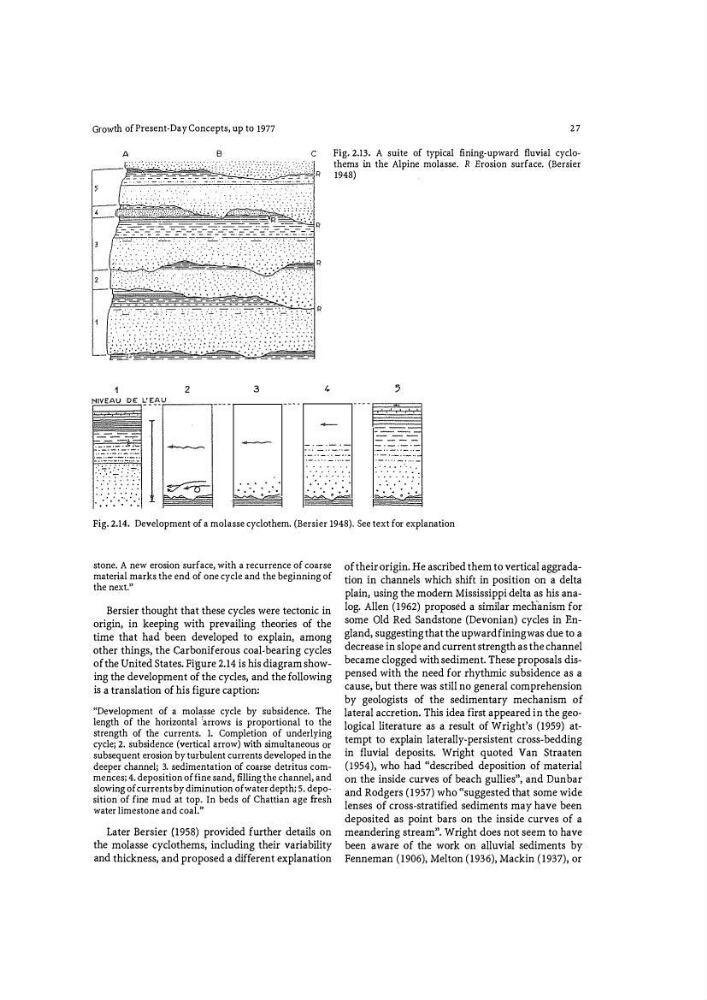
Fig. 2.13. A suite of typical fi ning-upward fluvial cyclothems in the Alpine molasse. R Erosion surface, (Bersier
1948)
4
5
. ..
'' .... .
. . . ' ... .
Fig. 2.14. Development of a molasse cyclothem, (Bersier 1948). See text for explanation
stone. A new erosion surface, with a recurrence of coarse
material marks the end of one cycle and the beginning of
the next''
Bersier thought that these cycles were tectonic in
origin, in keeping with prevailing theories of the
time that had been developed to explain, among
other things, the Carboniferous coal-bearing cycles
of the United States. Figure 2.14 is his diagram showing the development of the cycles, and the fo llowing
is a translation of his figure caption:
"Development of a molasse cycle by subsidence. The
length of the horizontal
'
arrows is proportional to the
strength of the currents. 1. Completion of underlying
cycle; 2. subsidence (vertical arrow) with simultaneous or
subsequent erosion by turbulent currents developed in the
deeper channel; 3. sedimentation of coarse detritus commences; 4. deposition of fine sand, fi lling the channel, and
slowing of currents by diminution of water depth; 5. deposition of fine mud at top. In beds of Chattian age fresh
water limestone and coal."
Later Bersier (1958) provided further details on
the molasse cyclothems, including their variability
and thickness, and proposed a different explanation
of their origin. He ascribed them to vertical aggradation in channels which shift in position on a delta
plain, using the modern Mississippi delta as his analog. Allen (1962) proposed a similar mechanism for
some Old Red Sandstone (Devonian) cycles in England, suggesting that the upward fining was due to a
decrease in slope and current strength as the channel
became clogged with sediment. These proposals dispensed with the need for rhythmic subsidence as a
cause, but there was still no general comprehension
by geologists of the sedimentary mechanism of
lateral accretion. This idea first appeared in the geological literature as a result of Wright's (1959) attempt to explain laterally-persistent cross-bedding
in fluvial deposits. Wright quoted Van Straaten
(1954), who had "described deposition of material
on the inside curves of beach gullies", and Dunbar
and Rodgers (19S7) who "suggested that some wide
lenses of cross�stratified sediments may have been
deposited as point bars on the inside curves of a
meandering stream". Wright does not seem to have
been aware of the work on alluvial sediments by
Fenneman (1906), Melton (1936), Mackin (1937), or
A
.
.
.
. . . '
. .. . .
2
8
3
. . .
27
c
Fig. 2.13. A suite of typical fi ning-upward fluvial cyclothems in the Alpine molasse. R Erosion surface, (Bersier
1948)
4
5
. ..
'' .... .
. . . ' ... .
Fig. 2.14. Development of a molasse cyclothem, (Bersier 1948). See text for explanation
stone. A new erosion surface, with a recurrence of coarse
material marks the end of one cycle and the beginning of
the next''
Bersier thought that these cycles were tectonic in
origin, in keeping with prevailing theories of the
time that had been developed to explain, among
other things, the Carboniferous coal-bearing cycles
of the United States. Figure 2.14 is his diagram showing the development of the cycles, and the fo llowing
is a translation of his figure caption:
"Development of a molasse cycle by subsidence. The
length of the horizontal
'
arrows is proportional to the
strength of the currents. 1. Completion of underlying
cycle; 2. subsidence (vertical arrow) with simultaneous or
subsequent erosion by turbulent currents developed in the
deeper channel; 3. sedimentation of coarse detritus commences; 4. deposition of fine sand, fi lling the channel, and
slowing of currents by diminution of water depth; 5. deposition of fine mud at top. In beds of Chattian age fresh
water limestone and coal."
Later Bersier (1958) provided further details on
the molasse cyclothems, including their variability
and thickness, and proposed a different explanation
of their origin. He ascribed them to vertical aggradation in channels which shift in position on a delta
plain, using the modern Mississippi delta as his analog. Allen (1962) proposed a similar mechanism for
some Old Red Sandstone (Devonian) cycles in England, suggesting that the upward fining was due to a
decrease in slope and current strength as the channel
became clogged with sediment. These proposals dispensed with the need for rhythmic subsidence as a
cause, but there was still no general comprehension
by geologists of the sedimentary mechanism of
lateral accretion. This idea first appeared in the geological literature as a result of Wright's (1959) attempt to explain laterally-persistent cross-bedding
in fluvial deposits. Wright quoted Van Straaten
(1954), who had "described deposition of material
on the inside curves of beach gullies", and Dunbar
and Rodgers (19S7) who "suggested that some wide
lenses of cross�stratified sediments may have been
deposited as point bars on the inside curves of a
meandering stream". Wright does not seem to have
been aware of the work on alluvial sediments by
Fenneman (1906), Melton (1936), Mackin (1937), or