

28
0 t
t
t.
verbank Floodmg
I
I
I
(
Historical Background
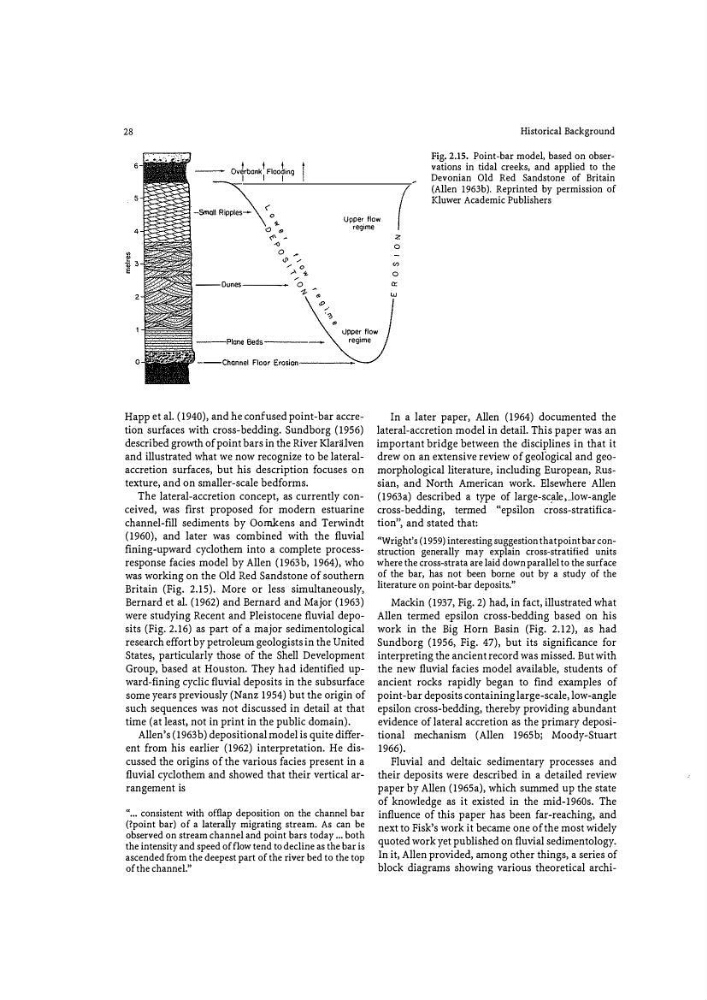
Fig. 2.15. Point�bar model> based on obser�
vations in tidal creeks, and applied to the
Devonian Old Red Sandstone of Britain
(Allen 1963b). Reprinted by permission of
Kluwer Academic Publishers
0
Upper flow
•
-Small Ripples" •
regime
<" -
z
<>
0
0
�
"' /
"'
/ 0
"' , .
0
--Dunes --- - 0
"'
_,_. •
w
"
,.
·�
•
UpPer flow
regime
--Channel Floor Erosion ----•�. ..- -
Happ et al. (1940), and he confused point-bar accretion surfaces with cross-bedding. Sundborg (1956)
described growth of point bars in the River Klariilven
and illustrated what we now recognize to be lateralaccretion surfaces, but his description focuses on
texture, and on smaller-scale bedforms.
The lateral-accretion concept, as currently conceived, was first proposed for modern estuarine
channel-fill sediments by Oomkens and Terwindt
(1960), and later was combined with the fluvial
fining-upward cyclothem into a complete process�
response facies model by Allen (1963b, 1964), who
was working on the Old Red Sandstone of southern
Britain (Fig. 2.15). More or less simultaneously,
Bernard et al. (1962) and Bernard and Major (1963)
were studying Recent and Pleistocene fluvial deposits (Fig. 2.16) as part of a major sedimentological
research effort by petroleum geologists in the United
States, particularly those of the Shell Development
Group, based at Houston. They had identified upward-fining cyclic fluvial deposits in the subsurface
some years previously (Nanz 1954) but the origin of
such sequences was not discussed in detail at that
time (at least, not in print in the public domain).
Allen's (1963b) depositional model is quite different from his earlier (1962) interpretation. He discussed the origins of the various facies present in a
fluvial cyclothem and showed that their vertical arrangement is
" ... consistent with offlap deposition on the channel bar
(?point bar) of a laterally migrating stream. As can be
observed on stream channel and point bars today ... both
the intensity and speed of flow tend to decline as the bar is
ascended fr om the deepest part of the river bed to the top
of the channel."
In a later paper, Allen (1964) documented the
lateral-accretion model in detail. This paper was an
important bridge between the disciplines in that it
drew on an extensive review of geolOgical and geomorphological literature, including European, Russian, and North American work. Elsewhere Allen
(1963a) described a type of large-scale,Jow-angle
cross-bedding, termed "epsilon cross-stratification )) , and stated that:
«wright's (1959) interesting suggestion that point bar construction generally may explain cross�stratified units
where the cross�strata are laid down parallel to the surface
of the bar, has not been borne out by a study of the
literature on point -bar deposits."
Mackin (1937, Fig. 2) had, in fact, illustrated what
Allen termed epsilon cross-bedding based on his
work in the Big Horn Basin (Fig. 2.12), as had
Sundborg (1956, Fig. 47), but its significance for
interpreting the ancient record was missed. But with
the new fluvial facies model available, students of
ancient rocks rapidly began to find examples of
point-bar deposits containing large-scale, low-angle
epsilon cross-bedding, thereby providing abundant
evidence of lateral accretion as the primary depositional mechanism (Allen 1965b; Moody-Stuart
1966).
Fluvial and deltaic sedimentary processes and
their deposits were described in a detailed review
paper by Allen (1965a), which summed up the state
of knowledge as it existed in the mid-1960s. The
influence of this paper has been far-reaching, and
next to Fisk's work it became one of the most widely
quoted work yet published on fluvial sedimentology.
In it, Allen provided, among other things, a series of
block diagrams showing various theoretical archi-
0 t
t
t.
verbank Floodmg
I
I
I
(
Historical Background
Fig. 2.15. Point�bar model> based on obser�
vations in tidal creeks, and applied to the
Devonian Old Red Sandstone of Britain
(Allen 1963b). Reprinted by permission of
Kluwer Academic Publishers
0
Upper flow
•
-Small Ripples" •
regime
<" -
z
<>
0
0
�
"' /
"'
/ 0
"' , .
0
--Dunes --- - 0
"'
_,_. •
w
"
,.
·�
•
UpPer flow
regime
--Channel Floor Erosion ----•�. ..- -
Happ et al. (1940), and he confused point-bar accretion surfaces with cross-bedding. Sundborg (1956)
described growth of point bars in the River Klariilven
and illustrated what we now recognize to be lateralaccretion surfaces, but his description focuses on
texture, and on smaller-scale bedforms.
The lateral-accretion concept, as currently conceived, was first proposed for modern estuarine
channel-fill sediments by Oomkens and Terwindt
(1960), and later was combined with the fluvial
fining-upward cyclothem into a complete process�
response facies model by Allen (1963b, 1964), who
was working on the Old Red Sandstone of southern
Britain (Fig. 2.15). More or less simultaneously,
Bernard et al. (1962) and Bernard and Major (1963)
were studying Recent and Pleistocene fluvial deposits (Fig. 2.16) as part of a major sedimentological
research effort by petroleum geologists in the United
States, particularly those of the Shell Development
Group, based at Houston. They had identified upward-fining cyclic fluvial deposits in the subsurface
some years previously (Nanz 1954) but the origin of
such sequences was not discussed in detail at that
time (at least, not in print in the public domain).
Allen's (1963b) depositional model is quite different from his earlier (1962) interpretation. He discussed the origins of the various facies present in a
fluvial cyclothem and showed that their vertical arrangement is
" ... consistent with offlap deposition on the channel bar
(?point bar) of a laterally migrating stream. As can be
observed on stream channel and point bars today ... both
the intensity and speed of flow tend to decline as the bar is
ascended fr om the deepest part of the river bed to the top
of the channel."
In a later paper, Allen (1964) documented the
lateral-accretion model in detail. This paper was an
important bridge between the disciplines in that it
drew on an extensive review of geolOgical and geomorphological literature, including European, Russian, and North American work. Elsewhere Allen
(1963a) described a type of large-scale,Jow-angle
cross-bedding, termed "epsilon cross-stratification )) , and stated that:
«wright's (1959) interesting suggestion that point bar construction generally may explain cross�stratified units
where the cross�strata are laid down parallel to the surface
of the bar, has not been borne out by a study of the
literature on point -bar deposits."
Mackin (1937, Fig. 2) had, in fact, illustrated what
Allen termed epsilon cross-bedding based on his
work in the Big Horn Basin (Fig. 2.12), as had
Sundborg (1956, Fig. 47), but its significance for
interpreting the ancient record was missed. But with
the new fluvial facies model available, students of
ancient rocks rapidly began to find examples of
point-bar deposits containing large-scale, low-angle
epsilon cross-bedding, thereby providing abundant
evidence of lateral accretion as the primary depositional mechanism (Allen 1965b; Moody-Stuart
1966).
Fluvial and deltaic sedimentary processes and
their deposits were described in a detailed review
paper by Allen (1965a), which summed up the state
of knowledge as it existed in the mid-1960s. The
influence of this paper has been far-reaching, and
next to Fisk's work it became one of the most widely
quoted work yet published on fluvial sedimentology.
In it, Allen provided, among other things, a series of
block diagrams showing various theoretical archi-