

26
A
B
Fisk's main sedimentological contribution was to
demonstrate the magnitude and complexity of the
deposits of a major river, and to demonstrate the
response of that river to fl uctuations in base level, in
the form of variations in channel morphology and
sedimentary facies. This work is still relevant to
studies of channel avulsion (Chap. 10) and sequence
stratigraphy (Chap. 13). Fisk's contributions to deltaic sedimentology were also of fundamental importance, in that they represented the first major
advance in the study of modern deltas since Gilbert's
work on lacustrine deltas in the later part of the
nineteenth century .. In terms of the development of
scientific thought, Fisk provided an authoritative
demonstratiori of the value of combining detailed
sedimentological analysis with a close examination
of sedimentary processes in a modern environment.
This was essential groundwork for the development
of actualistic facies models, which became a major
trend of sedimentological progress in the 1960s,
following an innovative conference on the facies
models concept in 1958 (Potter 1959).
Historical Background
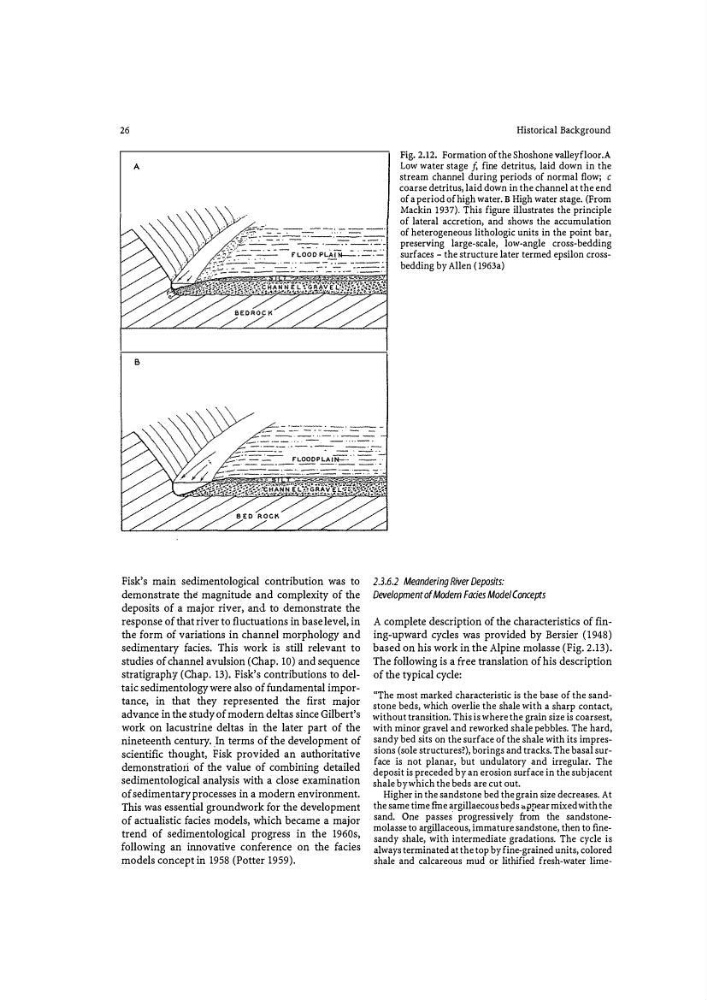
Fig. 2.12. Formation of the Shoshone valleyfloor.A
Low water stage f, fine detritus, laid down in the
stream channel during periods of normal flow; c
coarse detritus, laid down in the channel at the end
of a period of high water. B High water stage. (From
Mackin 1937). This figure illustrates the principle
of lateral accretion, and shows the accumulation
of heterogeneous lithologic units in the point bar,
preserving large-scale, low-angle cross-bedding
surfaces - the structure later termed epsilon crossbedding by Allen (1963a)
2.3.6.2 Meandering River Deposits:
Development of Modern Facies Model Concepts
A complete description of the characteristics of fining-upward cycles was provided by Bersier (1948)
based on his work in tbe Alpine molasse (Fig. 2.13).
The following is a free translation of his description
of the typical cycle:
"The most marked characteristic is the base of the sandstone beds, which overlie the shale with a sharp contact,
without transition. This is where the grain size is coarsest,
with minor gravel and reworked shale pebbles. The hard,
sandy bed sits on the surface of the shale with its impressions (sole structures?), borings and tracks. The basal surface is not planar, but undulatory and irregular. The
deposit is preceded by an erosion surface in the subjacent
shale by which the beds are cut out.
Higher in the sandstone bed the grain size decreases. At
the same time fm e argillaecous beds <:�.ppear mixed with the
sand. One passes
. progressively from the sandstonemolasse to argillaceous, immature sandstone, then to fine�
sandy shale, with intermediate gradations. The cycle is
always terminated at the top by fine-grained units, colored
shale and calcareous mud or lithified fresh-water lime-
A
B
Fisk's main sedimentological contribution was to
demonstrate the magnitude and complexity of the
deposits of a major river, and to demonstrate the
response of that river to fl uctuations in base level, in
the form of variations in channel morphology and
sedimentary facies. This work is still relevant to
studies of channel avulsion (Chap. 10) and sequence
stratigraphy (Chap. 13). Fisk's contributions to deltaic sedimentology were also of fundamental importance, in that they represented the first major
advance in the study of modern deltas since Gilbert's
work on lacustrine deltas in the later part of the
nineteenth century .. In terms of the development of
scientific thought, Fisk provided an authoritative
demonstratiori of the value of combining detailed
sedimentological analysis with a close examination
of sedimentary processes in a modern environment.
This was essential groundwork for the development
of actualistic facies models, which became a major
trend of sedimentological progress in the 1960s,
following an innovative conference on the facies
models concept in 1958 (Potter 1959).
Historical Background
Fig. 2.12. Formation of the Shoshone valleyfloor.A
Low water stage f, fine detritus, laid down in the
stream channel during periods of normal flow; c
coarse detritus, laid down in the channel at the end
of a period of high water. B High water stage. (From
Mackin 1937). This figure illustrates the principle
of lateral accretion, and shows the accumulation
of heterogeneous lithologic units in the point bar,
preserving large-scale, low-angle cross-bedding
surfaces - the structure later termed epsilon crossbedding by Allen (1963a)
2.3.6.2 Meandering River Deposits:
Development of Modern Facies Model Concepts
A complete description of the characteristics of fining-upward cycles was provided by Bersier (1948)
based on his work in tbe Alpine molasse (Fig. 2.13).
The following is a free translation of his description
of the typical cycle:
"The most marked characteristic is the base of the sandstone beds, which overlie the shale with a sharp contact,
without transition. This is where the grain size is coarsest,
with minor gravel and reworked shale pebbles. The hard,
sandy bed sits on the surface of the shale with its impressions (sole structures?), borings and tracks. The basal surface is not planar, but undulatory and irregular. The
deposit is preceded by an erosion surface in the subjacent
shale by which the beds are cut out.
Higher in the sandstone bed the grain size decreases. At
the same time fm e argillaecous beds <:�.ppear mixed with the
sand. One passes
. progressively from the sandstonemolasse to argillaceous, immature sandstone, then to fine�
sandy shale, with intermediate gradations. The cycle is
always terminated at the top by fine-grained units, colored
shale and calcareous mud or lithified fresh-water lime-