

Plate+ Tectonic Setting of Alluvial Basins
w
GUNNISON
PLATEAU.
UTAH
FLUVIAL SS, SH;
LAGOONAL SHALE
-- UNCONFORMITY
MARINE
SANDSTONE
D
E
800KCLIFF$
COLO. · UTAH
LINE
MARINE
SHALE
407
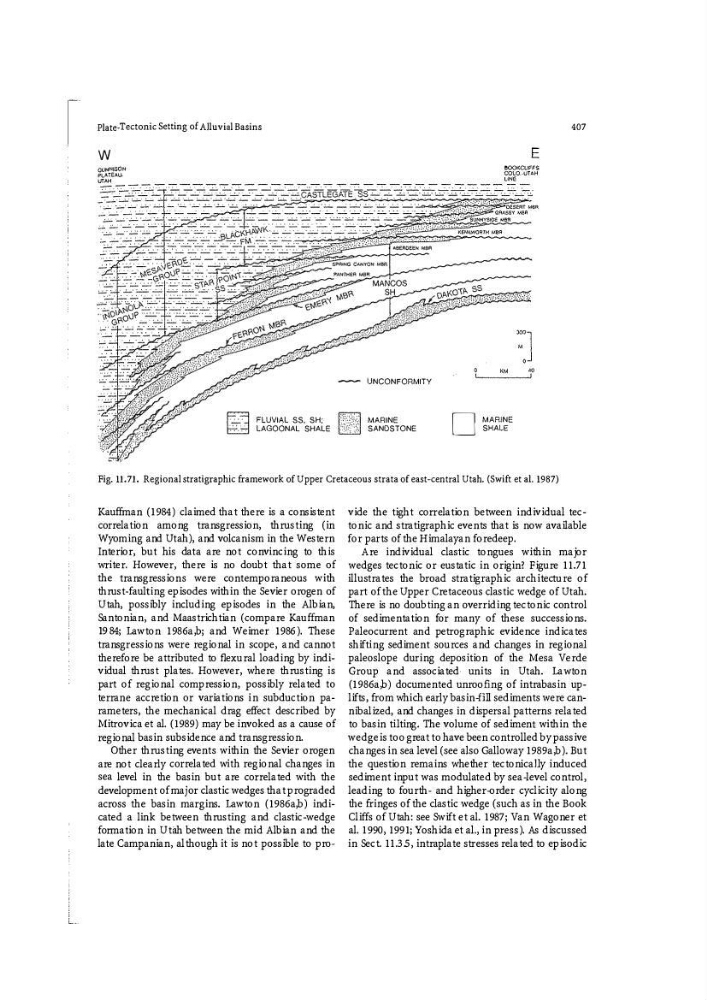
Fig. 11.71. Regional stratigraphic fr amework of Upper Cretaceous strata of east-central Utah. (Swift et al. 1987)
Kauffman (1 984) claimed that there is a consistent
correlation among transgression, thrusting (in
Wyomin g and Ut ah), and volcani sm in the Western
Interior, but hi s dat a are not convincing to this
wr iter. However, there is no doubt that some of
the transgression s were cont emporaneous with
thrust� faulting episodes within the Sevier orogen of
Utah, possibly including episodes in the Albian,
Santonian, and Maastrichtian (compare Kauffman
1984; Lawton 19 86a,b; and Weimer 1986). These
transgr essions wer e regional in scope, and cannot
therefore be attributed to flexural loading by individual thrust plates. However, where thrusting is
part of regional compression, possibly related to
terran e accretion or variations in subduction parameters, the mechanical drag effect described by
Mitr ovica et al. (1 98 9) may be invoked as a cause of
regional basin subsidence and transgression.
Other thrusting event s within the Sevier orogen
are not clearly correlated wi th regional changes in
sea level in the basin but are correlated with the
development of maj or clastic wedges that prograded
across the basin mar gins. Lawton (1 98 6a,b) indicated a lin k between thrustin g and clastic-wedge
formation in Utah between the mi d Albian and the
lat e Campanian, although it is not possible to provide the tight corr elation between individual tectonic and strati gr aphic events that is now available
for parts of the Himalayan foredeep.
Are individual clastic tongues within major
wedges tectonic or eustatic in origin? Figure 11.71
illustrates the br oad st ratigraphic ar chitecture of
part of the Upper Cretaceous clastic wedge of Ut ah.
There is no doubtin g an overriding tectonic control
of sedimentation for many of these successions.
Paleocurrent an d petrographic evidence indicates
shifting sediment sources and changes in regional
paleoslope during deposition of the Mesa Verde
Group and associated· un its in Ut ah. Lawton
(1 98 6a,b) documented unroofing of intrabasin uplifts, fr om whi ch early basin-fill sediments were cannibalized, and changes in dispersal patt erns related
to basin tilting. The volume of sediment within the
wedge is too great to have been controlled by passive
changes in sea level (see also Galloway 1989a,b). But
the question remains whether tectonically induced
sediment input was modulated by sea�level control,
leading to fourth- an d higher-order cyclicity along
the fringes of the clastic wedge (such as in the Book
Cliffs of Utah: see Swift et al. 19 87; Van Wagoner et
al. 1990, 1991; Yoshida et al., in pr ess). As discussed
in Sect. 11.3.5, intraplate str esses related to episodic
w
GUNNISON
PLATEAU.
UTAH
FLUVIAL SS, SH;
LAGOONAL SHALE
-- UNCONFORMITY
MARINE
SANDSTONE
D
E
800KCLIFF$
COLO. · UTAH
LINE
MARINE
SHALE
407
Fig. 11.71. Regional stratigraphic fr amework of Upper Cretaceous strata of east-central Utah. (Swift et al. 1987)
Kauffman (1 984) claimed that there is a consistent
correlation among transgression, thrusting (in
Wyomin g and Ut ah), and volcani sm in the Western
Interior, but hi s dat a are not convincing to this
wr iter. However, there is no doubt that some of
the transgression s were cont emporaneous with
thrust� faulting episodes within the Sevier orogen of
Utah, possibly including episodes in the Albian,
Santonian, and Maastrichtian (compare Kauffman
1984; Lawton 19 86a,b; and Weimer 1986). These
transgr essions wer e regional in scope, and cannot
therefore be attributed to flexural loading by individual thrust plates. However, where thrusting is
part of regional compression, possibly related to
terran e accretion or variations in subduction parameters, the mechanical drag effect described by
Mitr ovica et al. (1 98 9) may be invoked as a cause of
regional basin subsidence and transgression.
Other thrusting event s within the Sevier orogen
are not clearly correlated wi th regional changes in
sea level in the basin but are correlated with the
development of maj or clastic wedges that prograded
across the basin mar gins. Lawton (1 98 6a,b) indicated a lin k between thrustin g and clastic-wedge
formation in Utah between the mi d Albian and the
lat e Campanian, although it is not possible to provide the tight corr elation between individual tectonic and strati gr aphic events that is now available
for parts of the Himalayan foredeep.
Are individual clastic tongues within major
wedges tectonic or eustatic in origin? Figure 11.71
illustrates the br oad st ratigraphic ar chitecture of
part of the Upper Cretaceous clastic wedge of Ut ah.
There is no doubtin g an overriding tectonic control
of sedimentation for many of these successions.
Paleocurrent an d petrographic evidence indicates
shifting sediment sources and changes in regional
paleoslope during deposition of the Mesa Verde
Group and associated· un its in Ut ah. Lawton
(1 98 6a,b) documented unroofing of intrabasin uplifts, fr om whi ch early basin-fill sediments were cannibalized, and changes in dispersal patt erns related
to basin tilting. The volume of sediment within the
wedge is too great to have been controlled by passive
changes in sea level (see also Galloway 1989a,b). But
the question remains whether tectonically induced
sediment input was modulated by sea�level control,
leading to fourth- an d higher-order cyclicity along
the fringes of the clastic wedge (such as in the Book
Cliffs of Utah: see Swift et al. 19 87; Van Wagoner et
al. 1990, 1991; Yoshida et al., in pr ess). As discussed
in Sect. 11.3.5, intraplate str esses related to episodic