

374
RELATIVE
AMPLITUDE
OF VARIATION
. ''---,;c.- -'
�
-decreasing
A
CIJ
E:'
(j)
E
0
�
B
c
CIJ
E:'
-
CD
E
.Q
:52
D
�· i• f + + + I· + � +
T + + + + + � � + + + +
+++ + + ++"!" 25 km +
++++++++ ... ��
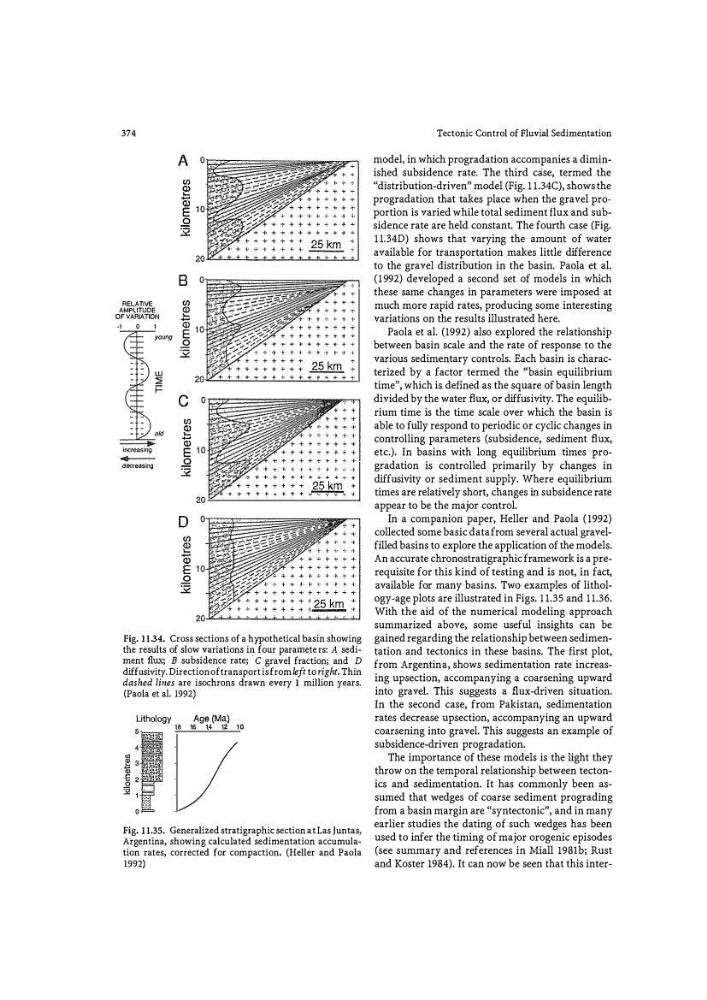
Fig. 11.34. Cross sections of a hypothetical basin showing
the results of slow variations if!. four param.ete.rs: A sedi�
ment flux; B subsidence rate; C gravel fraction; and D
diffusivity. Direction of transport is from left to right. Thin
dashed lines are isochrons drawn every 1 million years.
(Paola et aL 1992)
Lithology
Age (Ma)
18 16
14 12 10
Fig. 11.35. Generalized stratigraphic section at Las Juntas,
Argentina, showing calculated sedimentation accumula�
tion rates, corrected for compaction. (Heller and Paola
1992)
Tectonic Control of Fluvial Sedimentation
model, in which progradation accompanies a diminished subsidence rate. The third case, termed the
«distribution-driven" model (Fig. 11.34C), shows the
progradation that takes place when the gravel pro�
portion is varied while total sediment flux and subsidence rate are held constant. The fourth case (Fig.
1 L34D) shows that varying the amount of water
available for transportation makes little difference
to the gravel distribution in the basin. Paola et al.
(1992) developed a second set of models in which
these same changes in parameters were imposed at
much more rapid rates, producing some interesting
variations on the results illustrated here.
Paola et al. (1992) also explored the relationship
between basin scale and the rate of response to the
various sedimentary controls. Each basin is characterized by a factor termed the "basin equilibrium
time", which is defined as the square of basin length
divided by the water fl ux, or diffusivity. The equilibrium time is the time scale over which the basin is
able to fully respond to periodic or cyclic changes in
controlling parameters (subsidence, sediment fl ux,
etc.). In basins with long equilibrium times progradation is controlled primarily by changes in
diffusivity or sediment supply. Where equilibrium
times are relatively short, changes in subsidence rate
appear to be the major control.
In a companion paper, Heller and Paola (1992)
collected some basic data from several actual gravelfilled basins to explore the application of the models.
An accurate chronostratigraphic framework is a prerequisite for this kind of testing and is not, in fact,
available for many basins. Two examples of lithology-age plots are illustrated in Figs. I 1.35 and 1 1.36.
With the aid of the numerical modeling approach
summarized above, some useful insights can be
gained regarding the relationship between sedimentation and tectonics in these basins. The first plot,
from Argentina,_shows sedimentation rate increasing upsection, accompanying a coarsening upward
into graveL This suggests a flux-driven situation.
In the second case, from Pakistan, sedimentation
rates decrease upsection, accompanying an upward
coarsening into gravel. This suggests an example of
subsidence-driven progradation.
The importance of these models is the light they
throw on the temporal relationship between tectonics and sedimentation. It has commonly been assumed that wedges of coarse sediment prograding
from a basin margin are "syntectonic", and in many
earlier studies the dating of such wedges has been
used to infer the timing of major orogenic episodes
(see summary and references in Miall 198lb; Rust
and Koster 1984). It can now be seen that this inter-
RELATIVE
AMPLITUDE
OF VARIATION
. ''---,;c.- -'
�
-decreasing
A
CIJ
E:'
(j)
E
0
�
B
c
CIJ
E:'
-
CD
E
.Q
:52
D
�· i• f + + + I· + � +
T + + + + + � � + + + +
+++ + + ++"!" 25 km +
++++++++ ... ��
Fig. 11.34. Cross sections of a hypothetical basin showing
the results of slow variations if!. four param.ete.rs: A sedi�
ment flux; B subsidence rate; C gravel fraction; and D
diffusivity. Direction of transport is from left to right. Thin
dashed lines are isochrons drawn every 1 million years.
(Paola et aL 1992)
Lithology
Age (Ma)
18 16
14 12 10
Fig. 11.35. Generalized stratigraphic section at Las Juntas,
Argentina, showing calculated sedimentation accumula�
tion rates, corrected for compaction. (Heller and Paola
1992)
Tectonic Control of Fluvial Sedimentation
model, in which progradation accompanies a diminished subsidence rate. The third case, termed the
«distribution-driven" model (Fig. 11.34C), shows the
progradation that takes place when the gravel pro�
portion is varied while total sediment flux and subsidence rate are held constant. The fourth case (Fig.
1 L34D) shows that varying the amount of water
available for transportation makes little difference
to the gravel distribution in the basin. Paola et al.
(1992) developed a second set of models in which
these same changes in parameters were imposed at
much more rapid rates, producing some interesting
variations on the results illustrated here.
Paola et al. (1992) also explored the relationship
between basin scale and the rate of response to the
various sedimentary controls. Each basin is characterized by a factor termed the "basin equilibrium
time", which is defined as the square of basin length
divided by the water fl ux, or diffusivity. The equilibrium time is the time scale over which the basin is
able to fully respond to periodic or cyclic changes in
controlling parameters (subsidence, sediment fl ux,
etc.). In basins with long equilibrium times progradation is controlled primarily by changes in
diffusivity or sediment supply. Where equilibrium
times are relatively short, changes in subsidence rate
appear to be the major control.
In a companion paper, Heller and Paola (1992)
collected some basic data from several actual gravelfilled basins to explore the application of the models.
An accurate chronostratigraphic framework is a prerequisite for this kind of testing and is not, in fact,
available for many basins. Two examples of lithology-age plots are illustrated in Figs. I 1.35 and 1 1.36.
With the aid of the numerical modeling approach
summarized above, some useful insights can be
gained regarding the relationship between sedimentation and tectonics in these basins. The first plot,
from Argentina,_shows sedimentation rate increasing upsection, accompanying a coarsening upward
into graveL This suggests a flux-driven situation.
In the second case, from Pakistan, sedimentation
rates decrease upsection, accompanying an upward
coarsening into gravel. This suggests an example of
subsidence-driven progradation.
The importance of these models is the light they
throw on the temporal relationship between tectonics and sedimentation. It has commonly been assumed that wedges of coarse sediment prograding
from a basin margin are "syntectonic", and in many
earlier studies the dating of such wedges has been
used to infer the timing of major orogenic episodes
(see summary and references in Miall 198lb; Rust
and Koster 1984). It can now be seen that this inter-