

328
Fluvial Depositional Systems and Autogenic Sedimentary Controls
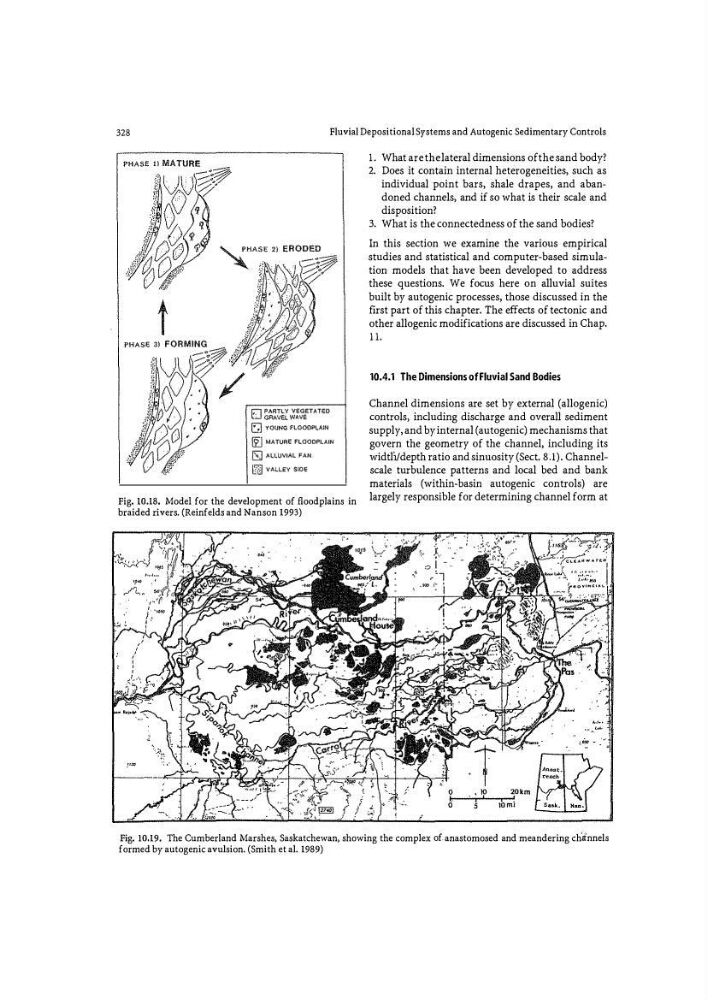
Fig. 10.18. Model for the development of floodplains in
braided rivers. (Reinfelds and Nanson 1993)
!. What are the lateral dimensions of the sand body?
2. Does it contain internal heterogeneities, such as
individual point bars, shale drapes, and abandoned channels, and if so what is their scale and
disposition?
3. What is the connectedness of the sand bodies?
In this section we examine the various empirical
studies and statistical and computer-based simulation models that have been developed to address
these questions. We focus here on alluvial suites
built by autogenic processes, those discussed in the
first part of this chapter. The effects of tectonic and
other allogenic modifications are discussed in Chap.
!!.
10.4.1 The Dimensions of Fluvial Sand Bodies
Channel dimensions are set by external (allogenic)
controls ) including discharge and overall sediment
supply, and by internal (autogenic) mechanisms that
govern the geometry of the channel, including its
widtliidepth ratio and sinuosity (Sect. 8.1). Channelscale turbulence patterns and local bed and bank
materials (within-basin autogenic controls) are
largely responsible for determining channel form at
Fig. 10.19. The Cumberland Marshes, Saskatchewan, showing the complex of anastomosed and meandering ch ' innels
formed by autogenic avulsion. (Smith et al. 1989)
Fluvial Depositional Systems and Autogenic Sedimentary Controls
Fig. 10.18. Model for the development of floodplains in
braided rivers. (Reinfelds and Nanson 1993)
!. What are the lateral dimensions of the sand body?
2. Does it contain internal heterogeneities, such as
individual point bars, shale drapes, and abandoned channels, and if so what is their scale and
disposition?
3. What is the connectedness of the sand bodies?
In this section we examine the various empirical
studies and statistical and computer-based simulation models that have been developed to address
these questions. We focus here on alluvial suites
built by autogenic processes, those discussed in the
first part of this chapter. The effects of tectonic and
other allogenic modifications are discussed in Chap.
!!.
10.4.1 The Dimensions of Fluvial Sand Bodies
Channel dimensions are set by external (allogenic)
controls ) including discharge and overall sediment
supply, and by internal (autogenic) mechanisms that
govern the geometry of the channel, including its
widtliidepth ratio and sinuosity (Sect. 8.1). Channelscale turbulence patterns and local bed and bank
materials (within-basin autogenic controls) are
largely responsible for determining channel form at
Fig. 10.19. The Cumberland Marshes, Saskatchewan, showing the complex of anastomosed and meandering ch ' innels
formed by autogenic avulsion. (Smith et al. 1989)