

I
Methods of Correlation and Mapping
50
100
A
NW
04-25
"
KEY WELL
v
13-24
@
14-24
"
UP OOL
11-24
102/10-24
X!
"
18
07-24
"
SE
01-24
"
305
GLAUCONITIC
VALLEY Flll.
OSTRACOD
SUNBURST
DETRITAL
MISSISSIPPIAN
SE
NW
04-25
•
13-24
•
14-24
11-24
102/10-24
07-24
01-24
•
p
•
•
•
15
0
� > 24% porosfty
�
D 20-24% p�osity • < 20% porosity
«--- -- -- -- -- - 1.6 km ---- -- -- -- -B
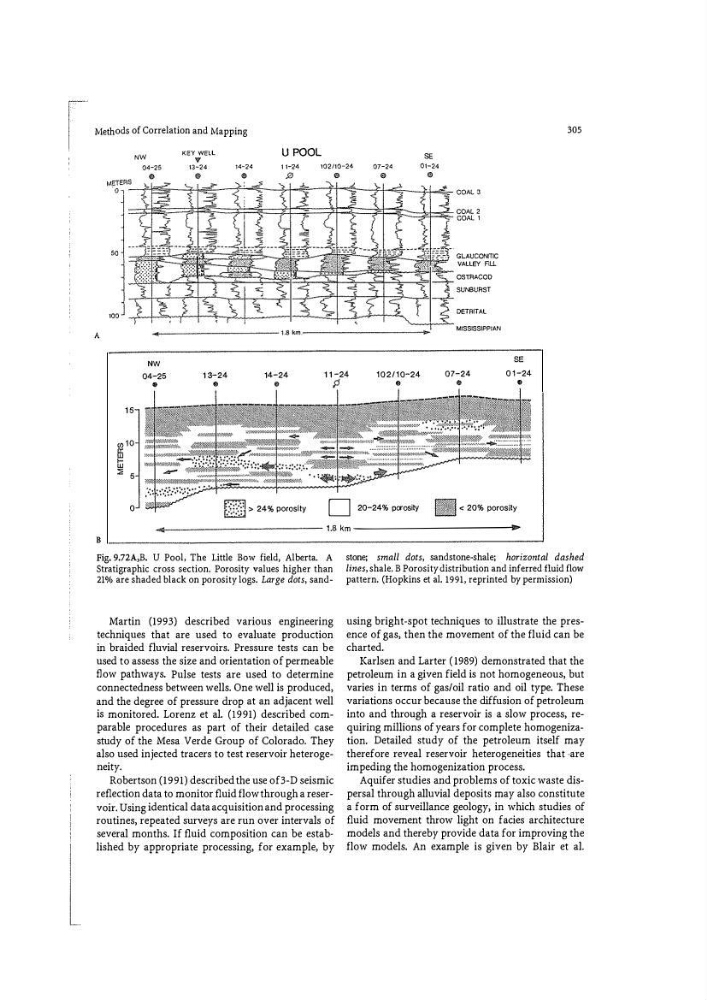
Fig. 9.72A,B. U Pool, The Little Bow field, Alberta. A
Stratigraphic cross section. Porosity values higher than
21% are shaded black on porosity logs. Large dots, sandMartin (1993) described various engineering
techniques that are used to evaluate production
in braided fluvial reservoirs. Pressure tests can be
used to assess the size and orientation of permeable
flow pathways. Pulse tests are used to determine
connectedness between wells. One well is produced,
and the degree of pressure drop at an adjacent well
is monitored. Lorenz et al. (1991) described comparable procedures as part of their detailed case
study of the Mesa Verde Group of Colorado. They
also used injected tracers to test reservoir heterogeneity.
Robertson (1991) described the use of3-D seismic
reflection data to monitor fluid flow through a reservoir. Using identical data acquisition and processing
routines, repeated surveys are run over intervals of
several months. If fluid composition can be established by appropriate processing, for example, by
stone; small dots, sandstone�shale; horizontal dashed
lines, shale. B Porosity distribution and inferred fluid flow
pattern. (Hopkins et al. 1991, reprinted by permission)
using bright-spot techniques to illustrate the presence of gas, then the movement of the fluid can be
charted.
Karlsen and Larter (1989) demonstrated that the
petroleum in a given field is not homogeneous, but
varies in terms of gas/oil ratio and oil type. These
variations occur because the diffusion of petroleum
into and through a reservoir is a slow process, requiring millions of years for complete homogenization. Detailed study of the petroleum itself may
therefore reveal reservoir heterogeneities that are
impeding the homogenization process.
Aquifer studies and problems of toxic waste dispersal through alluvial deposits may also constitute
a form of surveillance geology, in which studies of
fluid movement throw light on facies architecture
models and thereby provide data for improving the
flow models. An example is given by Blair et al.
Methods of Correlation and Mapping
50
100
A
NW
04-25
"
KEY WELL
v
13-24
@
14-24
"
UP OOL
11-24
102/10-24
X!
"
18
07-24
"
SE
01-24
"
305
GLAUCONITIC
VALLEY Flll.
OSTRACOD
SUNBURST
DETRITAL
MISSISSIPPIAN
SE
NW
04-25
•
13-24
•
14-24
11-24
102/10-24
07-24
01-24
•
p
•
•
•
15
0
� > 24% porosfty
�
D 20-24% p�osity • < 20% porosity
«--- -- -- -- -- - 1.6 km ---- -- -- -- -B
Fig. 9.72A,B. U Pool, The Little Bow field, Alberta. A
Stratigraphic cross section. Porosity values higher than
21% are shaded black on porosity logs. Large dots, sandMartin (1993) described various engineering
techniques that are used to evaluate production
in braided fluvial reservoirs. Pressure tests can be
used to assess the size and orientation of permeable
flow pathways. Pulse tests are used to determine
connectedness between wells. One well is produced,
and the degree of pressure drop at an adjacent well
is monitored. Lorenz et al. (1991) described comparable procedures as part of their detailed case
study of the Mesa Verde Group of Colorado. They
also used injected tracers to test reservoir heterogeneity.
Robertson (1991) described the use of3-D seismic
reflection data to monitor fluid flow through a reservoir. Using identical data acquisition and processing
routines, repeated surveys are run over intervals of
several months. If fluid composition can be established by appropriate processing, for example, by
stone; small dots, sandstone�shale; horizontal dashed
lines, shale. B Porosity distribution and inferred fluid flow
pattern. (Hopkins et al. 1991, reprinted by permission)
using bright-spot techniques to illustrate the presence of gas, then the movement of the fluid can be
charted.
Karlsen and Larter (1989) demonstrated that the
petroleum in a given field is not homogeneous, but
varies in terms of gas/oil ratio and oil type. These
variations occur because the diffusion of petroleum
into and through a reservoir is a slow process, requiring millions of years for complete homogenization. Detailed study of the petroleum itself may
therefore reveal reservoir heterogeneities that are
impeding the homogenization process.
Aquifer studies and problems of toxic waste dispersal through alluvial deposits may also constitute
a form of surveillance geology, in which studies of
fluid movement throw light on facies architecture
models and thereby provide data for improving the
flow models. An example is given by Blair et al.