

Facies Models
209
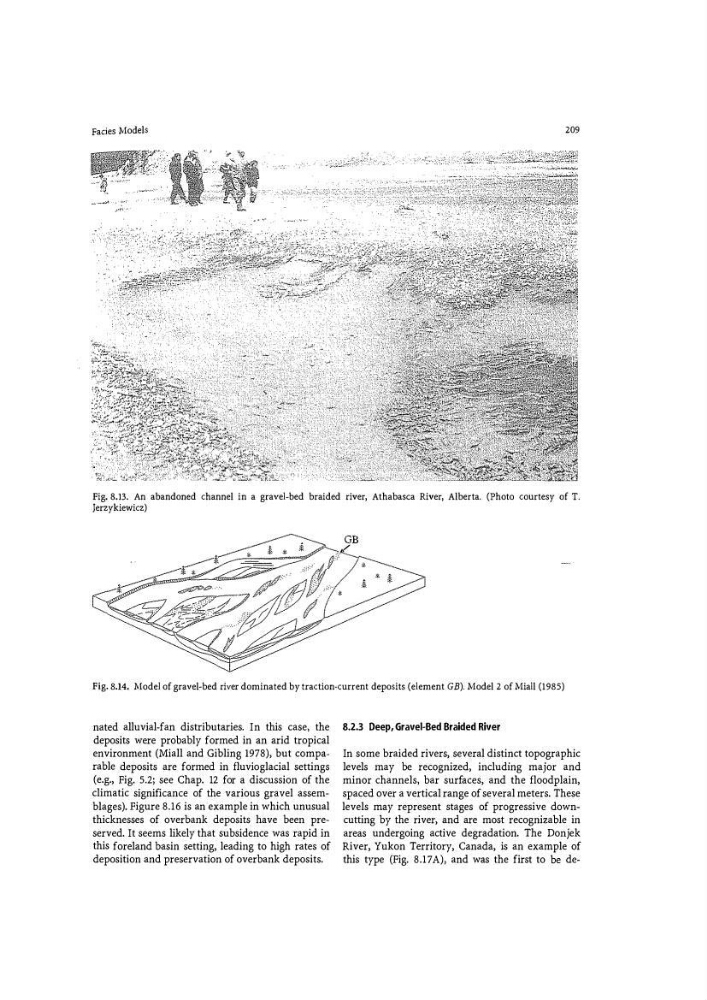
Fig. 8.13. An abandoned channel in a gravel-bed braided river, Athabasca River, Alberta. (Photo courtesy of T.
Jerzykiewicz)
GB
/
Fig. 8.14. Model of gravel-bed river dominated by traction-current deposits (element GB). Model 2 of Miall (1985)
nated alluvial-fan distributaries. In this case, the
deposits were probably formed in an arid tropical
environment (Miall and Gibling 1978), but comparable deposits are formed in fluvioglacial settings
(e.g., Fig. 5.2; see Chap. 12 for a discussion of the
climatic significance of the various gravel assemblages). Figure 8.16 is an example in which unusual
thicknesses of overbank deposits have been preserved. It seems likely that subsidence was rapid in
this foreland basin setting, leading to high rates of
deposition and preservation of overbank deposits.
8.2.3 Deep, Gravel-Bed Braided River
In some braided rivers, several distinct topographic
levels may be recognized, including major and
minor channels, bar surfaces, and the floodplain,
spaced over a vertical range of several meters. These
levels may represent stages of progressive downcutting by the river, and are most recognizable in
areas undergoing active degradation. The Donjek
River, Yukon Territory, Canada, is an example of
this type (Fig. 8.17 A), and was the first to be de-
209
Fig. 8.13. An abandoned channel in a gravel-bed braided river, Athabasca River, Alberta. (Photo courtesy of T.
Jerzykiewicz)
GB
/
Fig. 8.14. Model of gravel-bed river dominated by traction-current deposits (element GB). Model 2 of Miall (1985)
nated alluvial-fan distributaries. In this case, the
deposits were probably formed in an arid tropical
environment (Miall and Gibling 1978), but comparable deposits are formed in fluvioglacial settings
(e.g., Fig. 5.2; see Chap. 12 for a discussion of the
climatic significance of the various gravel assemblages). Figure 8.16 is an example in which unusual
thicknesses of overbank deposits have been preserved. It seems likely that subsidence was rapid in
this foreland basin setting, leading to high rates of
deposition and preservation of overbank deposits.
8.2.3 Deep, Gravel-Bed Braided River
In some braided rivers, several distinct topographic
levels may be recognized, including major and
minor channels, bar surfaces, and the floodplain,
spaced over a vertical range of several meters. These
levels may represent stages of progressive downcutting by the river, and are most recognizable in
areas undergoing active degradation. The Donjek
River, Yukon Territory, Canada, is an example of
this type (Fig. 8.17 A), and was the first to be de-