

186
Architectural Elements of the Overbank Environment
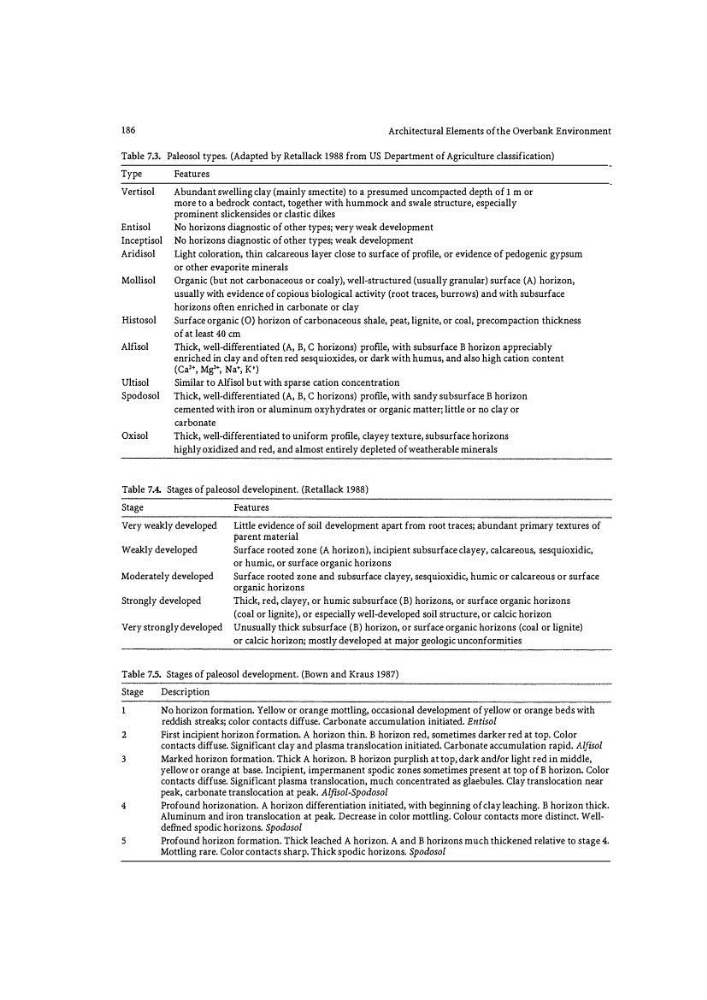
Table 7.3. Paleosol types. (Adapted by Retallack 1988 from US Department of Agriculture classification)
Type
Features
Vertisol
Entisol
Inceptisol
Aridisol
Mollisol
Histosol
Alfisol
Ultisol
Spodosol
Oxisol
Abundant swelling clay (mainly smectite) to a presumed uncompacted depth of 1m or
more to a bedrock contact, together with hummock and swale structure, especially
prominent slickensides or clastic dikes
No horizons diagnostic of other types; very weak development
No horizons diagnostic of other types; weak development
Light coloration, thin calcareous layer close to surface of proftle, or evidence of pedogenic gypsum
or other evaporite minerals
Organic (but not carbonaceous or coaly), well-structured (usually granular) surface (A) horizon,
usually with evidence of copious biological activity (root traces, burrows) and with subsurface
horizons often enriched in carbonate or day
Surface organic ( 0) horizon of carbonaceous shale, peat, lignite, or coal, precompaction thickness
of at least 40 em
Thick, well-differentiated (A, B, C horizons) profl.le, with subsurface B horizon appreciably
enriched in clay and often red sesquioxides, or dark with humus, and also high cation content
(CaH, Mlf+, Na"', K+)
Similar to Alfisol but with sparse cation concentration
Thick, well-differentiated (A, B, C horizons) prof.t.le, with sandy subsurface B horizon
cemented with iron or aluminum oxyhydrates or organic matter; little or no day or
carbonate
Thick, well-differentiated to uniform prof.t .le, clayey texture, subsurface horizons
highly oxidized and red, and almost entirely depleted of weatherable minerals
Table 7.4. Stages of paleosol developinent. (Retallack 1988)
Stage
Features
Very weakly developed
Little evidence of soil development apart from root traces; abundant primary textures of
parent material
Weakly developed
Surface rooted zone (A horizon), incipient subsurface clayey, calcareous, sesquioxidic,
or humic, or surface organic horizons
Moderately developed
Surface rooted zone and subsurface clayey, sesquioxidic, humic or calcareous or surface
organic horizons
Strongly developed
Thick, red, clayey, or humic subsurface (B) horizons, or surface organic horizons
(coal or lignite), or especially well-developed soil structure, or calcic horizon
Very strongly developed Unusually thick subsurface (B) horizon, or surface organic horizons (coal or lignite)
or calcic horizon; mostly developed at major geologic unconformities
Table 7.5. Stages of paleosol development. (Bown and Kraus 1987)
Stage
Description
1
No. horizon formation. Yellow or orange mottling, occasional development of yellow or orange beds with
reddish streaks; color contacts diffuse. Carbonate accumulation initiated. Entisol
2
First incipient horizon formation. A horizon thin. B horizon red, sometimes darker red at top. Color
contacts diffuse. Significant day and plasma translocation initiated, Carbonate accumulation rapid. Alfisol
3
Marked horizon fo rmation. Thick A horizon. B horizon purplish at top, dark and/or light red in middle,
yellow or orange at base. Incipient, impermanent spodic zones sometimes present at top ofB horizon. Color
contacts diffuse. Significant plasma translocation, much concentrated as glaebules. Clay translocation near
peak, carbonate translocation at peak, Alfisol-Spodosol
4
Profound horizonation. A horizon differentiation initiated, with beginning of clay leaching. B horizon thick.
Aluminum and iron translocation at peale. Decrease in color mottling. Colour contacts more distinct. Welldefmed spodic horizons. Spodosol
5
Profound horizon fo rmation. Thick leached A horizon. A and B horizons much thickened relative to stage 4.
Mottling rare. Color contacts sharp. Thick spodic horizons. Spodosol
Architectural Elements of the Overbank Environment
Table 7.3. Paleosol types. (Adapted by Retallack 1988 from US Department of Agriculture classification)
Type
Features
Vertisol
Entisol
Inceptisol
Aridisol
Mollisol
Histosol
Alfisol
Ultisol
Spodosol
Oxisol
Abundant swelling clay (mainly smectite) to a presumed uncompacted depth of 1m or
more to a bedrock contact, together with hummock and swale structure, especially
prominent slickensides or clastic dikes
No horizons diagnostic of other types; very weak development
No horizons diagnostic of other types; weak development
Light coloration, thin calcareous layer close to surface of proftle, or evidence of pedogenic gypsum
or other evaporite minerals
Organic (but not carbonaceous or coaly), well-structured (usually granular) surface (A) horizon,
usually with evidence of copious biological activity (root traces, burrows) and with subsurface
horizons often enriched in carbonate or day
Surface organic ( 0) horizon of carbonaceous shale, peat, lignite, or coal, precompaction thickness
of at least 40 em
Thick, well-differentiated (A, B, C horizons) profl.le, with subsurface B horizon appreciably
enriched in clay and often red sesquioxides, or dark with humus, and also high cation content
(CaH, Mlf+, Na"', K+)
Similar to Alfisol but with sparse cation concentration
Thick, well-differentiated (A, B, C horizons) prof.t.le, with sandy subsurface B horizon
cemented with iron or aluminum oxyhydrates or organic matter; little or no day or
carbonate
Thick, well-differentiated to uniform prof.t .le, clayey texture, subsurface horizons
highly oxidized and red, and almost entirely depleted of weatherable minerals
Table 7.4. Stages of paleosol developinent. (Retallack 1988)
Stage
Features
Very weakly developed
Little evidence of soil development apart from root traces; abundant primary textures of
parent material
Weakly developed
Surface rooted zone (A horizon), incipient subsurface clayey, calcareous, sesquioxidic,
or humic, or surface organic horizons
Moderately developed
Surface rooted zone and subsurface clayey, sesquioxidic, humic or calcareous or surface
organic horizons
Strongly developed
Thick, red, clayey, or humic subsurface (B) horizons, or surface organic horizons
(coal or lignite), or especially well-developed soil structure, or calcic horizon
Very strongly developed Unusually thick subsurface (B) horizon, or surface organic horizons (coal or lignite)
or calcic horizon; mostly developed at major geologic unconformities
Table 7.5. Stages of paleosol development. (Bown and Kraus 1987)
Stage
Description
1
No. horizon formation. Yellow or orange mottling, occasional development of yellow or orange beds with
reddish streaks; color contacts diffuse. Carbonate accumulation initiated. Entisol
2
First incipient horizon formation. A horizon thin. B horizon red, sometimes darker red at top. Color
contacts diffuse. Significant day and plasma translocation initiated, Carbonate accumulation rapid. Alfisol
3
Marked horizon fo rmation. Thick A horizon. B horizon purplish at top, dark and/or light red in middle,
yellow or orange at base. Incipient, impermanent spodic zones sometimes present at top ofB horizon. Color
contacts diffuse. Significant plasma translocation, much concentrated as glaebules. Clay translocation near
peak, carbonate translocation at peak, Alfisol-Spodosol
4
Profound horizonation. A horizon differentiation initiated, with beginning of clay leaching. B horizon thick.
Aluminum and iron translocation at peale. Decrease in color mottling. Colour contacts more distinct. Welldefmed spodic horizons. Spodosol
5
Profound horizon fo rmation. Thick leached A horizon. A and B horizons much thickened relative to stage 4.
Mottling rare. Color contacts sharp. Thick spodic horizons. Spodosol