

Biochemical Sediments
187
A
B
Cravaaoa. Splay
Crevaaae Splay
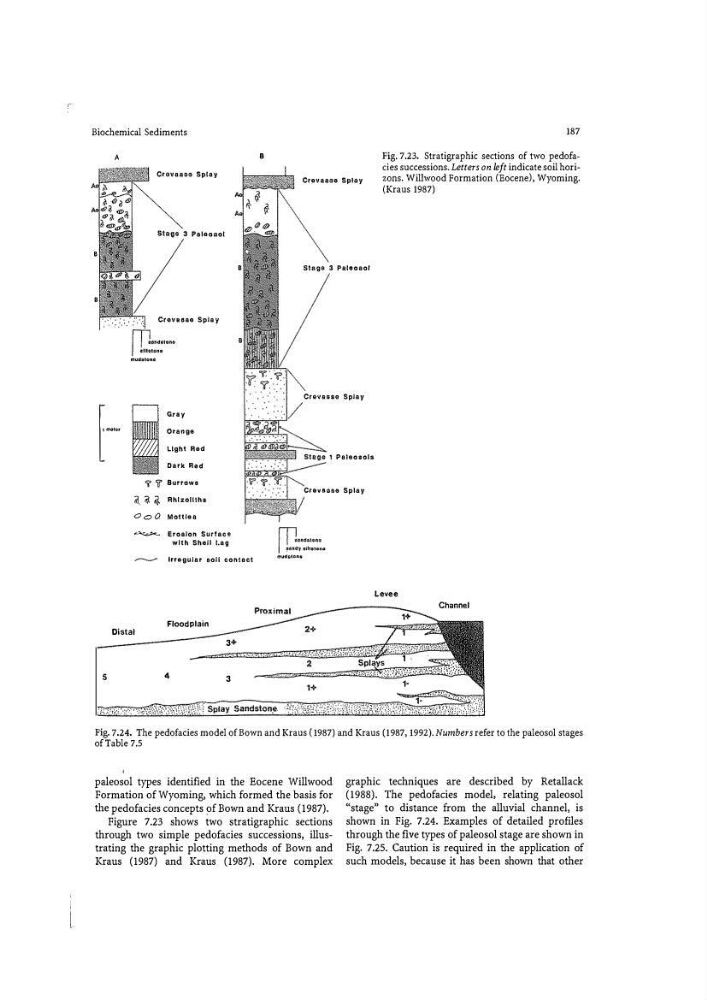
Fig. 7.23. Stratigraphic sections of two pedofa�
des successions. Letters on left indicate soil horizons. Willwood Formation (Eocene), Wyoming.
(Kraus 1987)
Paleoool
Palaoaol
Crevuae Splay
C""'"' Splay
molar
Orange
[ i . . .
,
Light Red
Dark R0d
1 Paleosoi>S
? 'if' Burrows
c""''"' Splay
5
rt1, � � Rhlzolltha
0 o 0 Mottle a
� Eroalon Surface
with Shell l..ag
Irregular soli contact
Floodplain
Distal
3+
4
3
m.ndoto��
I ;�n�v •llt�tono
mudotono
Levee
Fig. 7.24. The pedofacies model of Bown and Kraus ( 1987) and Kraus (1987, 199 2). Numbers refer to the paleosol stages
of Table 7.5
paleosol types identifi ed in the Eocene Willwood
Formation of Wyoming, which formed the basis for
the pedofacies concepts of Bown and Kraus (1987).
Figure 7.23 shows two stratigraphic sections
through two simple pedofacies successions, illustrating the graphic plotting methods of Bown and
Kraus (1987) and Kraus (1987). More complex
graphic techniques are described by Retallack
(1988). The pedofacies model, relating paleosol
''stage'' to distance from the alluvial channel, is
shown in Fig. 7.24. Examples of detailed profiles
through the five types of paleosol stage are shown in
Fig. 7.25. Caution is required in the application of
such models, because it has been shown that other
187
A
B
Cravaaoa. Splay
Crevaaae Splay
Fig. 7.23. Stratigraphic sections of two pedofa�
des successions. Letters on left indicate soil horizons. Willwood Formation (Eocene), Wyoming.
(Kraus 1987)
Paleoool
Palaoaol
Crevuae Splay
C""'"' Splay
molar
Orange
[ i . . .
,
Light Red
Dark R0d
1 Paleosoi>S
? 'if' Burrows
c""''"' Splay
5
rt1, � � Rhlzolltha
0 o 0 Mottle a
� Eroalon Surface
with Shell l..ag
Irregular soli contact
Floodplain
Distal
3+
4
3
m.ndoto��
I ;�n�v •llt�tono
mudotono
Levee
Fig. 7.24. The pedofacies model of Bown and Kraus ( 1987) and Kraus (1987, 199 2). Numbers refer to the paleosol stages
of Table 7.5
paleosol types identifi ed in the Eocene Willwood
Formation of Wyoming, which formed the basis for
the pedofacies concepts of Bown and Kraus (1987).
Figure 7.23 shows two stratigraphic sections
through two simple pedofacies successions, illustrating the graphic plotting methods of Bown and
Kraus (1987) and Kraus (1987). More complex
graphic techniques are described by Retallack
(1988). The pedofacies model, relating paleosol
''stage'' to distance from the alluvial channel, is
shown in Fig. 7.24. Examples of detailed profiles
through the five types of paleosol stage are shown in
Fig. 7.25. Caution is required in the application of
such models, because it has been shown that other