

L
Bio�h�rnical Sediments
A
B
C
, . : �:==�---7 �---7�
.... .. .. .... ..
-- -3 '
.... .. ..
.... .. ..
5-6
.... ..
.... .. .
'
�
�
�
2
'.... .. .
6
1
1
1
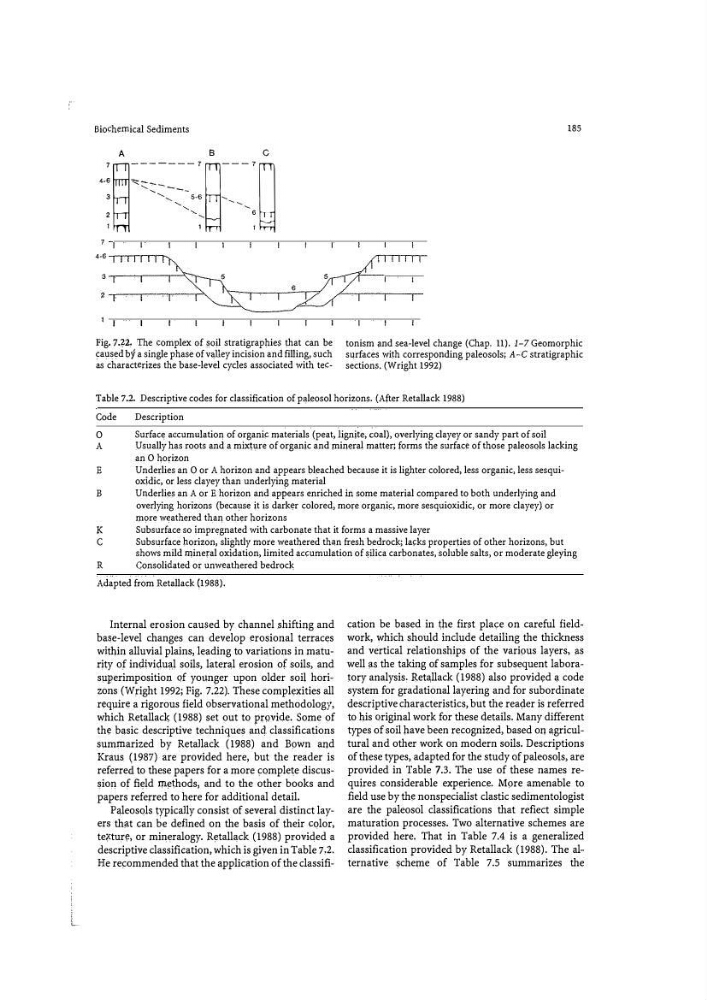
Fig. 7.2.2� The complex of §Oil stratigraphie,:; that can be
caused bY a single phase of V
185
! II
tonism and sea-level change (Chap. 11). 1-7 Geomorphic
surfaces with corresponding paleosols; A-C stratigraphic
section,s. (Wright 1992)
Table 7.2. Descriptive codes for classification of p�leosol horizons. (After Retallack 1988)
Code
Description
0
Surface a<:: cumulation of organic materials (peat, lignite, ��al), overlying clayey or sandy part of soil
A
Usually has roots and a mixture of organic and mineral matter; forms the surface of those paleosols lacking
an 0 horizon
E
Underlies an 0 or A horizon and appears bleached because it is lighter colored, less organic, less sesqui¥
ox!.dic, or less clayey than underlying material
B
Underlies an A orE horizon and appears enriched in some material compared to both underlying and
overlying horizons (beca�se it is dark¢r colored, more organic;, more sesquioxidic, or more clayey) or
m9re w�athered than other horizons
K
Subsurface so �mpr�gnated with carbonate that it forms a massive layer
C
Subsurface horizon, slightly more weathered than fresh bedrock; la�ks prop?rties of other horizons, but
shows mild mineral oxidation, limited aq:umulation of !!ilica carbonates, soluble salts, or moderate gleying
R
c;onsoli9,ated or unw�athered bedrock
Adapted from Retallack (1988).
Internal erosion cau!)ed by channel _ shifting and
ba�e-level changes can develop .\!rosional terraces
wjthin alluvial plains, leading to variations in maturity of inJ,#viclua,l soils, lateral erosion of soils, and
superimposition of yo1.1.nger upon older soil horizons (Wright 1992; Fig. 7.22). These complexities all
r�quir� a rigorous field observational methodology,
which Retallack (1988) set out to pr0vi<)e. Some of
th� bf.!.sic descriptive techniques a.O.cl classifi cations
summarized by Retallack ( 1988) and Bown and
Kraus (1987) are provided here, but the reader is
referred to these papers for a more complete discussion of field methods, and to the other books and
papers referred to here for additional detail.
Paleosols typically consist of several distinct layers that can be defined on the basis of their color,
te�ture, or mineralogy. Retallack (1988) provided a
descriptive classification, which is given in Table 7,2.
He recommended that the f.!.pplic;:ttion of the classifi¥
cation be based in �he firpt pla�e on careful fieldwork, which should include detailing the thickness
and vertical relationships of the various layers, �s
well !3-S the taking of samples for subsequent laboratory analysis, Retallack (1988) also provided a code
system for gradational layering and for subordinate
descriptive characteristics, but the rea9.er is referred
to his qriginal work for these 4etails. Many different
types of soil have been recognized, based on �gricultural and other work on modern soils. Descriptions
of these types, adapted for the study of paleosols, are
provided in Table 7.3. The use of these names requires considerable experience. More amenable to
fi eld use by th� nonspecialist clastic sedimentologist
are the paleosol classifications that refl ect simple
maturation processes. Two alternative schemes are
provided here. That in Table 7.4 is a generalized
classifi cation provided by Retallack (1988). The alternative scheme of Table 7.5 summarizes the
Bio�h�rnical Sediments
A
B
C
, . : �:==�---7 �---7�
.... .. .. .... ..
-- -3 '
.... .. ..
.... .. ..
5-6
.... ..
.... .. .
'
�
�
�
2
'.... .. .
6
1
1
1
Fig. 7.2.2� The complex of §Oil stratigraphie,:; that can be
caused bY a single phase of V
185
! II
tonism and sea-level change (Chap. 11). 1-7 Geomorphic
surfaces with corresponding paleosols; A-C stratigraphic
section,s. (Wright 1992)
Table 7.2. Descriptive codes for classification of p�leosol horizons. (After Retallack 1988)
Code
Description
0
Surface a<:: cumulation of organic materials (peat, lignite, ��al), overlying clayey or sandy part of soil
A
Usually has roots and a mixture of organic and mineral matter; forms the surface of those paleosols lacking
an 0 horizon
E
Underlies an 0 or A horizon and appears bleached because it is lighter colored, less organic, less sesqui¥
ox!.dic, or less clayey than underlying material
B
Underlies an A orE horizon and appears enriched in some material compared to both underlying and
overlying horizons (beca�se it is dark¢r colored, more organic;, more sesquioxidic, or more clayey) or
m9re w�athered than other horizons
K
Subsurface so �mpr�gnated with carbonate that it forms a massive layer
C
Subsurface horizon, slightly more weathered than fresh bedrock; la�ks prop?rties of other horizons, but
shows mild mineral oxidation, limited aq:umulation of !!ilica carbonates, soluble salts, or moderate gleying
R
c;onsoli9,ated or unw�athered bedrock
Adapted from Retallack (1988).
Internal erosion cau!)ed by channel _ shifting and
ba�e-level changes can develop .\!rosional terraces
wjthin alluvial plains, leading to variations in maturity of inJ,#viclua,l soils, lateral erosion of soils, and
superimposition of yo1.1.nger upon older soil horizons (Wright 1992; Fig. 7.22). These complexities all
r�quir� a rigorous field observational methodology,
which Retallack (1988) set out to pr0vi<)e. Some of
th� bf.!.sic descriptive techniques a.O.cl classifi cations
summarized by Retallack ( 1988) and Bown and
Kraus (1987) are provided here, but the reader is
referred to these papers for a more complete discussion of field methods, and to the other books and
papers referred to here for additional detail.
Paleosols typically consist of several distinct layers that can be defined on the basis of their color,
te�ture, or mineralogy. Retallack (1988) provided a
descriptive classification, which is given in Table 7,2.
He recommended that the f.!.pplic;:ttion of the classifi¥
cation be based in �he firpt pla�e on careful fieldwork, which should include detailing the thickness
and vertical relationships of the various layers, �s
well !3-S the taking of samples for subsequent laboratory analysis, Retallack (1988) also provided a code
system for gradational layering and for subordinate
descriptive characteristics, but the rea9.er is referred
to his qriginal work for these 4etails. Many different
types of soil have been recognized, based on �gricultural and other work on modern soils. Descriptions
of these types, adapted for the study of paleosols, are
provided in Table 7.3. The use of these names requires considerable experience. More amenable to
fi eld use by th� nonspecialist clastic sedimentologist
are the paleosol classifications that refl ect simple
maturation processes. Two alternative schemes are
provided here. That in Table 7.4 is a generalized
classifi cation provided by Retallack (1988). The alternative scheme of Table 7.5 summarizes the