

r
Biochemical Sediments
179
(A)
(B)
500
1000
1500
2000
2500
B
16
12
8
4
500
1000
1500
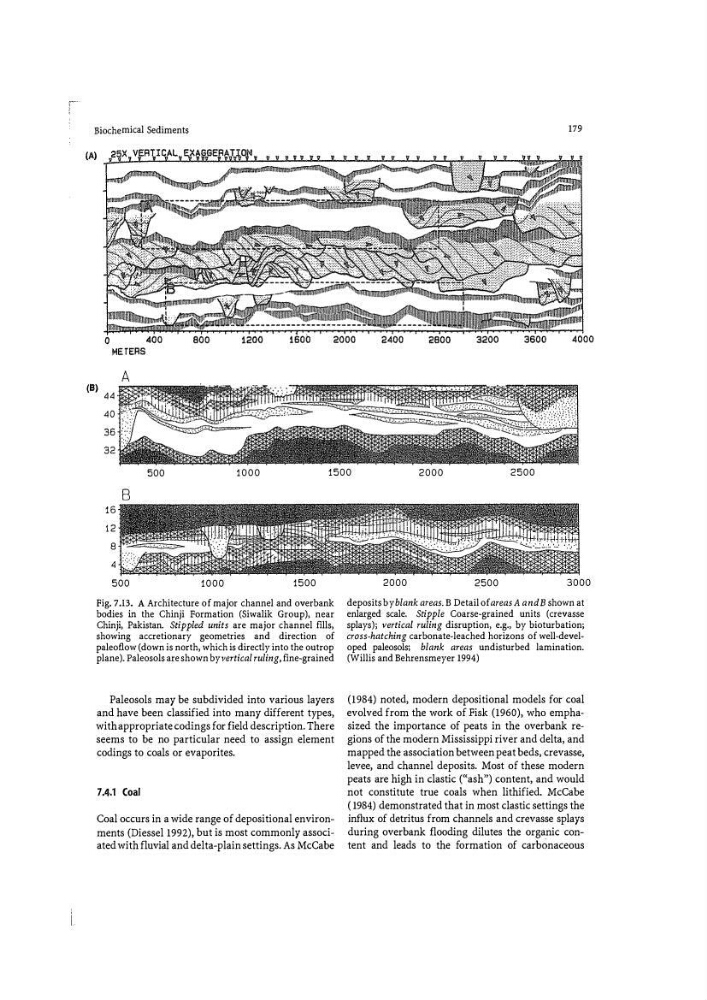
Fig. 7.13. A Architecture of major channel and overbank
bodies in the Chinji Formation (Siwalik Group), near
Chinji, Pakistan. Stippled units are major channel fills,
showing accretionary geometries and direction of
paleotlow (down is north, which is directly into the outrop
plane). Paleosols are shown by vertical ruling, fine�grained
Paleosols may be subdivided into various layers
and have been classified into many different types,
with appropriate codings for field description. There
seems to be no particular need to assign element
codings to coals or evaporites.
7.4.1 Coal
Coal occurs in a wide range of depositional environments (Diessel 1992), but is most commonly associated with fluvial and delta-plain settings. As McCabe
2000
2500
3000
deposits by blank areas. B Detail of areas A and B shown at
enlarged scale, Stipple Coarse�grained units (crevasse
splays); vertical ruling disruption, e.g., by bioturbation;
cross* hatching carbonate� leached horizons of well-developed paleosols; blank areas undisturbed lamination.
(Willis and Behrensmeyer 1994)
(1984) noted, modern depositional models for coal
evolved from the work of Fisk (1960), who emphasized the importance of peats in the overbank regions of the modern Mississippi river and delta, and
mapped the association between peat beds, crevasse,
levee, and channel deposits. Most of these modern
peats are high in clastic ("ashn) content, and would
not constitute true coals when lithified. McCabe
( 1984) demonstrated that in most clastic settings the
influx of detritus from channels and crevasse splays
during overbank flooding dilutes the organic content and leads to the fo rmation of carb O naceous
Biochemical Sediments
179
(A)
(B)
500
1000
1500
2000
2500
B
16
12
8
4
500
1000
1500
Fig. 7.13. A Architecture of major channel and overbank
bodies in the Chinji Formation (Siwalik Group), near
Chinji, Pakistan. Stippled units are major channel fills,
showing accretionary geometries and direction of
paleotlow (down is north, which is directly into the outrop
plane). Paleosols are shown by vertical ruling, fine�grained
Paleosols may be subdivided into various layers
and have been classified into many different types,
with appropriate codings for field description. There
seems to be no particular need to assign element
codings to coals or evaporites.
7.4.1 Coal
Coal occurs in a wide range of depositional environments (Diessel 1992), but is most commonly associated with fluvial and delta-plain settings. As McCabe
2000
2500
3000
deposits by blank areas. B Detail of areas A and B shown at
enlarged scale, Stipple Coarse�grained units (crevasse
splays); vertical ruling disruption, e.g., by bioturbation;
cross* hatching carbonate� leached horizons of well-developed paleosols; blank areas undisturbed lamination.
(Willis and Behrensmeyer 1994)
(1984) noted, modern depositional models for coal
evolved from the work of Fisk (1960), who emphasized the importance of peats in the overbank regions of the modern Mississippi river and delta, and
mapped the association between peat beds, crevasse,
levee, and channel deposits. Most of these modern
peats are high in clastic ("ashn) content, and would
not constitute true coals when lithified. McCabe
( 1984) demonstrated that in most clastic settings the
influx of detritus from channels and crevasse splays
during overbank flooding dilutes the organic content and leads to the fo rmation of carb O naceous