

178
ROOTED CLAY UNIT
KEY
� C0NGLOM£!RATIC MUOBAI.I.S
..
6 CROSS LAMINATIONS
"
<
§ PELLeTAL FABRIC
3:
�
� WORMY FABRIC
0
w
1/)
z
;;
a:
cr
w
0
Iii
'
�
::;
�
w
FE- 3:
CARBONATE CONCRETIONS
SILTY SAND UNIT
BLUE CLAY UNIT
4o KRINITZSKY AND SMITH (1969)
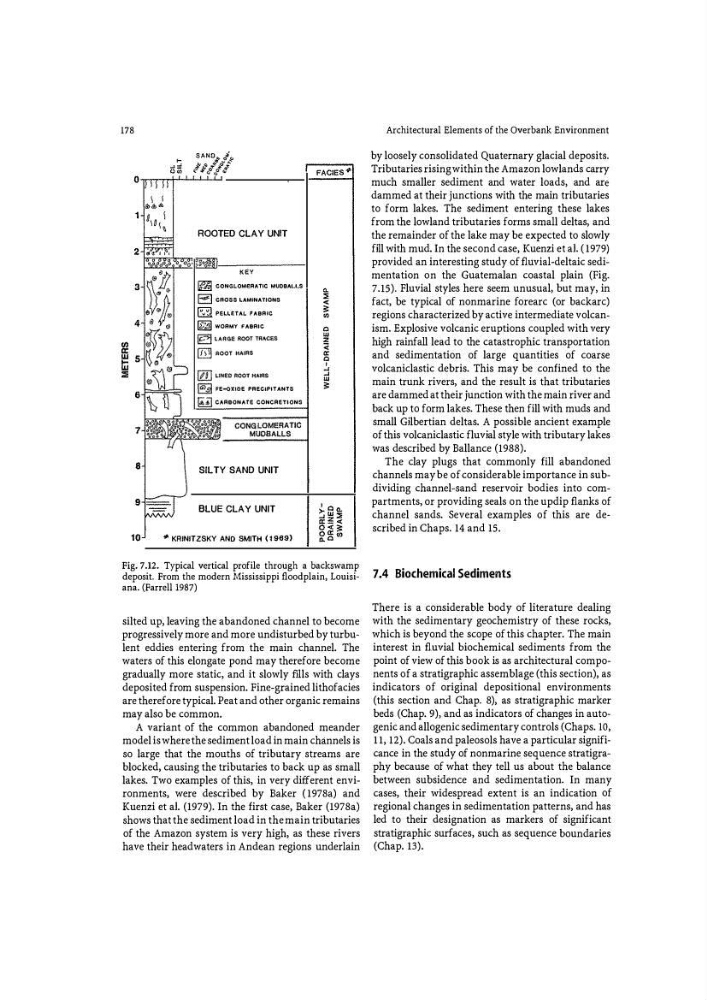
Fig. 7.12. Typical vertical profile through a backswamp
deposit. From the modern Mississippi floodplain, Louisiana. (Farrell l987)
silted up, leaving the abandoned channel to become
progressively more and more undisturbed by turbulent eddies entering from the main channel. The
waters of this elongate pond may therefore become
gradually more static, and it slowly fi lls with clays
deposited from suspension. Fine-grained lithofacies
are therefore typical. Peat and other organic remains
may also be common.
A variant of the common abandoned meander
model is where the sediment load in main channels is
so large that the mouths of tributary streams are
blocked, causing the tributaries to back up as small
lakes. Two examples of this, in very different environments, were described by Baker (1978a) and
Kuenzi et a!. (1979). In the first case, Baker (1978a)
shows that the sediment load in the main tributaries
of the Amazon system is very high, as these rivers
have their headwaters in Andean regions underlain
Architectural Elements of the Overbank Environment
by loosely consolidated Quaternary glacial deposits.
Tributaries rising within the Amazon lowlands carry
much smaller sediment and water loads, and are
dammed at their junctions with the main tributaries
to form lakes. The sediment entering these lakes
from the lowland tributaries forms small deltas, and
the remainder of the lake may be expected to slowly
fill with mud. In the second case, Kuenzi et a!. (1979)
provided an interesting study of fl uvial-deltaic sedimentation on the Guatemalan coastal plain (Fig.
7.15). Fluvial styles here seem unusual, but may, in
fact, be typical of nonmarine forearc (or backarc)
regions characterized by active intermediate volcan�
ism. Explosive volcanic eruptions coupled with very
high rainfall lead to the catastrophic transportation
and sedimentation of large quantities of coarse
volcaniclastic debris. This may be confined to the
main trunk rivers, and the result is that tributaries
are dammed at their junction with the main river and
back up to form lakes. These then fill with muds and
small Gilbertian deltas. A possible ancient example
of this volcaniclastic fluvial style with tributary lakes
was described by Ballance (1988).
The clay plugs that commonly fill abandoned
channels may be of considerable importance in sub�
dividing channel-sand reservoir bodies into com�
partments, or providing seals on the updip fl anks of
channel sands. Several examples of this are described in Chaps. 14 and 15.
7.4 Biochemical Sediments
There is a considerable body of literature dealing
with the sedimentary geochemistry of these rocks,
which is beyond the scope of this chapter. The main
interest in fl uvial biochemical sediments from the
point of view of this book is as architectural components of a stratigraphic assemblage (this section), as
indicators of original depositional environments
(this section and Chap. 8), as stratigraphic marker
beds (Chap. 9), and as indicators of changes in auto�
genic and allogenic sedimentary controls (Chaps. lO,
11, 12). Coals and paleosols have a particular significance in the study of nonmarine sequence stratigraphy because of what they tell us about the balance
between subsidence and sedimentation. In many
cases, their widespread extent is an indication of
regional changes in sedimentation patterns, and has
led to their designation as markers of significant
stratigraphic surfaces, such as sequence boundaries
(Chap. 13).
ROOTED CLAY UNIT
KEY
� C0NGLOM£!RATIC MUOBAI.I.S
..
6 CROSS LAMINATIONS
"
<
§ PELLeTAL FABRIC
3:
�
� WORMY FABRIC
0
w
1/)
z
;;
a:
cr
w
0
Iii
'
�
::;
�
w
FE- 3:
CARBONATE CONCRETIONS
SILTY SAND UNIT
BLUE CLAY UNIT
4o KRINITZSKY AND SMITH (1969)
Fig. 7.12. Typical vertical profile through a backswamp
deposit. From the modern Mississippi floodplain, Louisiana. (Farrell l987)
silted up, leaving the abandoned channel to become
progressively more and more undisturbed by turbulent eddies entering from the main channel. The
waters of this elongate pond may therefore become
gradually more static, and it slowly fi lls with clays
deposited from suspension. Fine-grained lithofacies
are therefore typical. Peat and other organic remains
may also be common.
A variant of the common abandoned meander
model is where the sediment load in main channels is
so large that the mouths of tributary streams are
blocked, causing the tributaries to back up as small
lakes. Two examples of this, in very different environments, were described by Baker (1978a) and
Kuenzi et a!. (1979). In the first case, Baker (1978a)
shows that the sediment load in the main tributaries
of the Amazon system is very high, as these rivers
have their headwaters in Andean regions underlain
Architectural Elements of the Overbank Environment
by loosely consolidated Quaternary glacial deposits.
Tributaries rising within the Amazon lowlands carry
much smaller sediment and water loads, and are
dammed at their junctions with the main tributaries
to form lakes. The sediment entering these lakes
from the lowland tributaries forms small deltas, and
the remainder of the lake may be expected to slowly
fill with mud. In the second case, Kuenzi et a!. (1979)
provided an interesting study of fl uvial-deltaic sedimentation on the Guatemalan coastal plain (Fig.
7.15). Fluvial styles here seem unusual, but may, in
fact, be typical of nonmarine forearc (or backarc)
regions characterized by active intermediate volcan�
ism. Explosive volcanic eruptions coupled with very
high rainfall lead to the catastrophic transportation
and sedimentation of large quantities of coarse
volcaniclastic debris. This may be confined to the
main trunk rivers, and the result is that tributaries
are dammed at their junction with the main river and
back up to form lakes. These then fill with muds and
small Gilbertian deltas. A possible ancient example
of this volcaniclastic fluvial style with tributary lakes
was described by Ballance (1988).
The clay plugs that commonly fill abandoned
channels may be of considerable importance in sub�
dividing channel-sand reservoir bodies into com�
partments, or providing seals on the updip fl anks of
channel sands. Several examples of this are described in Chaps. 14 and 15.
7.4 Biochemical Sediments
There is a considerable body of literature dealing
with the sedimentary geochemistry of these rocks,
which is beyond the scope of this chapter. The main
interest in fl uvial biochemical sediments from the
point of view of this book is as architectural components of a stratigraphic assemblage (this section), as
indicators of original depositional environments
(this section and Chap. 8), as stratigraphic marker
beds (Chap. 9), and as indicators of changes in auto�
genic and allogenic sedimentary controls (Chaps. lO,
11, 12). Coals and paleosols have a particular significance in the study of nonmarine sequence stratigraphy because of what they tell us about the balance
between subsidence and sedimentation. In many
cases, their widespread extent is an indication of
regional changes in sedimentation patterns, and has
led to their designation as markers of significant
stratigraphic surfaces, such as sequence boundaries
(Chap. 13).