

'
l
Fine-G rained Clastic Deposits
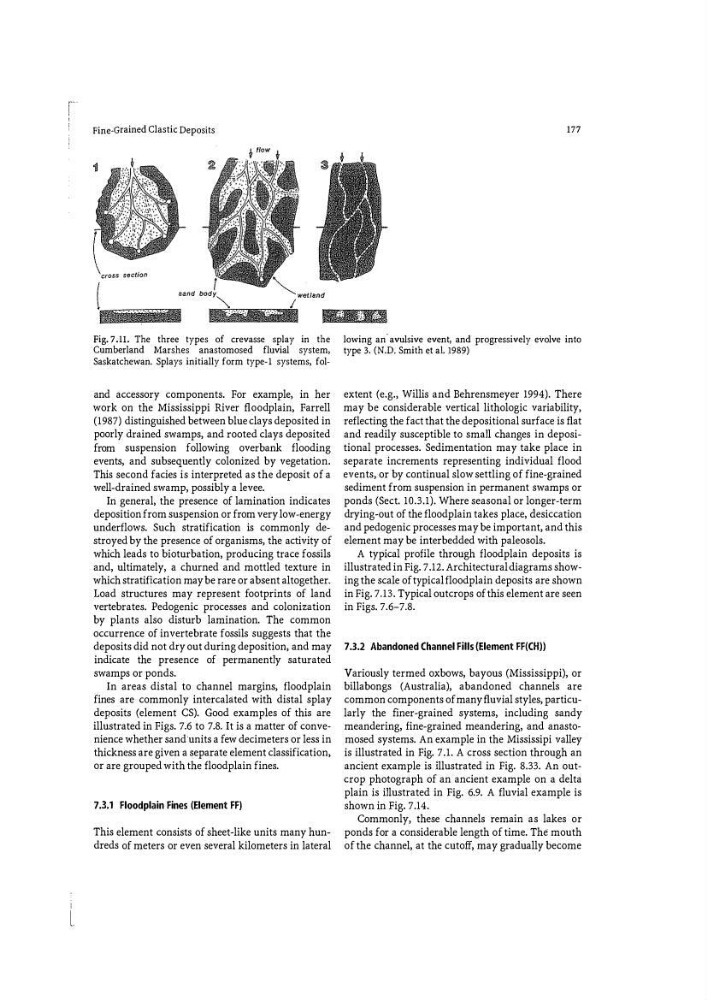
Fig. 7.11. The three types of crevasse splay in the
Cumberland Marshes anastomosed fluvial system,
Saskatchewan. Splays initially form type� l systems, foland accessory components. For example, in her
work on the Mississippi River floodplain, Farrell
(1987) distinguished between blue clays deposited in
poorly drained swamps, and rooted clays deposited
from suspension following overbank flooding
events, and subsequently colonized by vegetation.
This second facies is interpreted as the deposit of a
well-drained swamp, possibly a levee.
In general, the presence of lamination indicates
deposition from suspension or from very low-energy
underflows. Such stratification is commonly destroyed by the presence of organisms, the activity of
which leads to bioturbation, producing trace fossils
and, ultimately, a churned and mottled texture in
which stratification may be rare or absent altogether.
Load structures may represent fo otprints of land
vertebrates. Pedogenic processes and colonization
by plants also disturb lamination. The common
occurrence of invertebrate fossils suggests that the
deposits did not dty out during deposition, and may
indicate the presence of permanently saturated
swamps or ponds.
In areas distal to channel margins, floodplain
fines are commonly intercalated with distal splay
deposits (element CS). Good examples of this are
illustrated in Figs. 7.6 to 7.8. It is a matter of convenience whether sand ·units a few decimeters or less in
thickness are given a separate element classification,
or are grouped with the floodplain fines.
7.3.1 Floodplain Fines (Element FF)
This element consists of sheet-like units many hundreds of meters or even several kilometers in lateral
177
lowing an
" avulsive event, and progressively eVolve into
type 3. (N.D. Smith et a!. !989)
extent (e.g., Willis and Behrensmeyer 1994). There
may be considerable vertical lithologic variability,
reflectin g the fact that the depositional surface is flat
and readily susceptible to small changes in depositional processes. Sedimentation may take place in
separate increments representing individual flood
events, or by continual slow settling of fine-grained
sediment from suspension in permanent swamps or
ponds (Sect. 10.3.1). Where seasonal or longer-term
drying-out of the floodplain takes place, desiccatibn
and pedogenic processes may be important, and this
element may be interbedded with paleosols.
A typical profile through floodplain deposits is
illustrated in Fig. 7.12. Architectural diagrams showing the scale of typical floodplain deposits are shown
in Fig. 7 .13. Typical outcrops of this element are seen
in Figs. 7.6-7.8.
7.3.2 Abandoned Channel Fills (Element FF(CH))
Variously termed oxbows, bayous (Mississippi), or
billabongs (Australia), abandoned channels are
common components of many fluvial styles, particularly the finer-grained systems, including sandy
meandering, fine-grained meandering, and anastomosed systems. An example in the Mississipi valley
is illustrated in Fig. 7.1. A cross section through an
ancient example is illustrated in Fig. 8.33. An outcrop photograph of an ancient example on a delta
plain is illustrated in Fig. 6.9. A fluvial example is
shown in Fig. 7.14.
Commonly, these channels remain as lakes or
ponds for a considerable length of time. The mouth
of the channel, at the cutoff, may gradually become
l
Fine-G rained Clastic Deposits
Fig. 7.11. The three types of crevasse splay in the
Cumberland Marshes anastomosed fluvial system,
Saskatchewan. Splays initially form type� l systems, foland accessory components. For example, in her
work on the Mississippi River floodplain, Farrell
(1987) distinguished between blue clays deposited in
poorly drained swamps, and rooted clays deposited
from suspension following overbank flooding
events, and subsequently colonized by vegetation.
This second facies is interpreted as the deposit of a
well-drained swamp, possibly a levee.
In general, the presence of lamination indicates
deposition from suspension or from very low-energy
underflows. Such stratification is commonly destroyed by the presence of organisms, the activity of
which leads to bioturbation, producing trace fossils
and, ultimately, a churned and mottled texture in
which stratification may be rare or absent altogether.
Load structures may represent fo otprints of land
vertebrates. Pedogenic processes and colonization
by plants also disturb lamination. The common
occurrence of invertebrate fossils suggests that the
deposits did not dty out during deposition, and may
indicate the presence of permanently saturated
swamps or ponds.
In areas distal to channel margins, floodplain
fines are commonly intercalated with distal splay
deposits (element CS). Good examples of this are
illustrated in Figs. 7.6 to 7.8. It is a matter of convenience whether sand ·units a few decimeters or less in
thickness are given a separate element classification,
or are grouped with the floodplain fines.
7.3.1 Floodplain Fines (Element FF)
This element consists of sheet-like units many hundreds of meters or even several kilometers in lateral
177
lowing an
" avulsive event, and progressively eVolve into
type 3. (N.D. Smith et a!. !989)
extent (e.g., Willis and Behrensmeyer 1994). There
may be considerable vertical lithologic variability,
reflectin g the fact that the depositional surface is flat
and readily susceptible to small changes in depositional processes. Sedimentation may take place in
separate increments representing individual flood
events, or by continual slow settling of fine-grained
sediment from suspension in permanent swamps or
ponds (Sect. 10.3.1). Where seasonal or longer-term
drying-out of the floodplain takes place, desiccatibn
and pedogenic processes may be important, and this
element may be interbedded with paleosols.
A typical profile through floodplain deposits is
illustrated in Fig. 7.12. Architectural diagrams showing the scale of typical floodplain deposits are shown
in Fig. 7 .13. Typical outcrops of this element are seen
in Figs. 7.6-7.8.
7.3.2 Abandoned Channel Fills (Element FF(CH))
Variously termed oxbows, bayous (Mississippi), or
billabongs (Australia), abandoned channels are
common components of many fluvial styles, particularly the finer-grained systems, including sandy
meandering, fine-grained meandering, and anastomosed systems. An example in the Mississipi valley
is illustrated in Fig. 7.1. A cross section through an
ancient example is illustrated in Fig. 8.33. An outcrop photograph of an ancient example on a delta
plain is illustrated in Fig. 6.9. A fluvial example is
shown in Fig. 7.14.
Commonly, these channels remain as lakes or
ponds for a considerable length of time. The mouth
of the channel, at the cutoff, may gradually become