

174
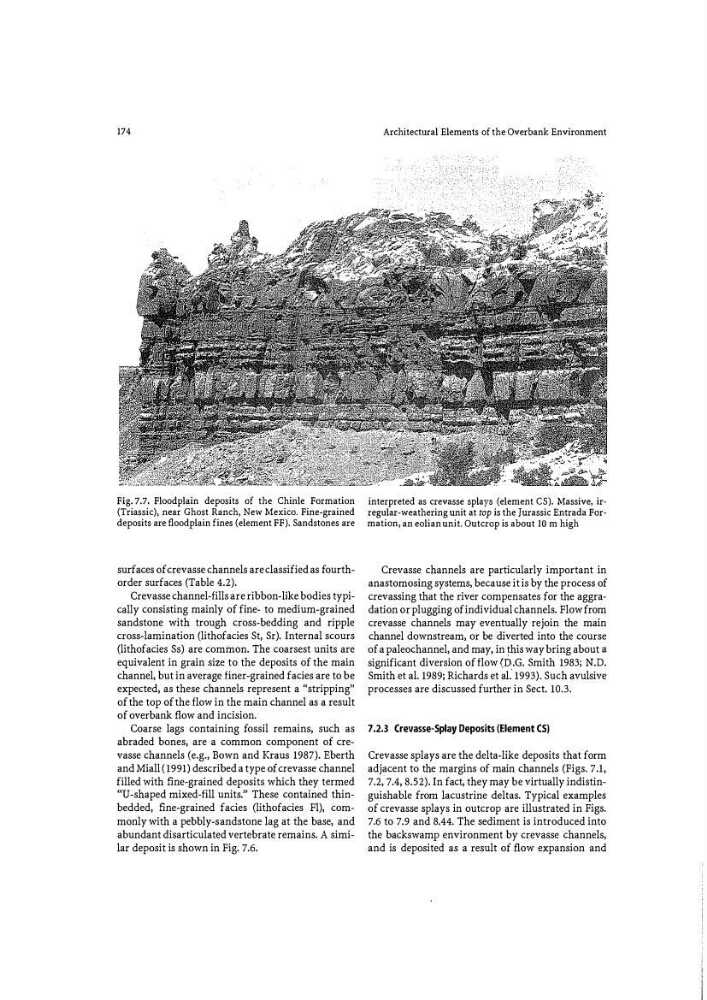
Fig. 7.7. Floodplain deposits of the Chinle Formation
(Triassic), near Ghost Ranch, New Mexico. Fine-grained
deposits are floodplain fines (element FF). Sandstones are
surfaces of crevasse channels are classified as fourthorder surfaces (Table 4.2).
Crevasse channel-fills are ribbon-like bodies typically consisting mainly of fine- to medium-grained
sandstone with trough cross-bedding and ripple
cross-lamination (lithofacies St, Sr). Internal scours
(lithofacies Ss) are common. The coarsest units are
equivalent in grain size to the deposits of the main
channel, but in average finer-grained facies are to be
expected, as these channels represent a «stripping"
of the top of the flow in the main channel as a result
of overbank flow and incision.
Coarse lags containing fo ssil remains, such as
abraded bones, are a common component of crevasse channels (e.g., Bown and Kraus 1987). Eberth
and Miall ( 1991) described a type of crevasse channel
filled with fine-grained deposits which they termed
''U-shaped mixed-fill units." These contained thinbedded, fine-grained facies (lithofacies Fl), commonly with a pebbly-sandstone lag at the base, and
abundant disarticulated vertebrate remains. A similar deposit is shown in Fig. 7.6.
Architectural Elements of the Overbank Environment
interpreted as crevasse splays (element CS). Massive, irregular-weathering unit at top is the Jurassic Entrada Formation, an eolian unit. Outcrop is about 10 m high
Crevasse channels are particularly important in
anastomosing systems, because it is by the process of
crevassing that the river compensates for the aggradation or plugging of individual channels. Flow from
crevasse channels may eventually rejoin the main
channel downstream, or be diverted into the course
of a paleochannel, and may, in �his way bring about a
significant diversion of flow (D. G. Smith 1983; N.D.
Smith et al. 1989; Richards et al.. 1993). Such avulsive
processes are discussed further in Sect. 10.3.
7 .2.3 Crevasse-Splay Deposits (Element CS)
Crevasse splays are the delta-like deposits that form
adjacent to the margins of main channels (Figs. 7.1,
7.2, 7.4, 8.52). In fact, they may be virtually indistinguishable from lacustrine deltas. Typical examples
of crevasse splays in outcrop are illustrated in Figs.
7.6 to 7.9 and 8.44. The sediment is introduced into
the backswamp environment by crevasse channels,
and is deposited as a result of flow expansion and
Fig. 7.7. Floodplain deposits of the Chinle Formation
(Triassic), near Ghost Ranch, New Mexico. Fine-grained
deposits are floodplain fines (element FF). Sandstones are
surfaces of crevasse channels are classified as fourthorder surfaces (Table 4.2).
Crevasse channel-fills are ribbon-like bodies typically consisting mainly of fine- to medium-grained
sandstone with trough cross-bedding and ripple
cross-lamination (lithofacies St, Sr). Internal scours
(lithofacies Ss) are common. The coarsest units are
equivalent in grain size to the deposits of the main
channel, but in average finer-grained facies are to be
expected, as these channels represent a «stripping"
of the top of the flow in the main channel as a result
of overbank flow and incision.
Coarse lags containing fo ssil remains, such as
abraded bones, are a common component of crevasse channels (e.g., Bown and Kraus 1987). Eberth
and Miall ( 1991) described a type of crevasse channel
filled with fine-grained deposits which they termed
''U-shaped mixed-fill units." These contained thinbedded, fine-grained facies (lithofacies Fl), commonly with a pebbly-sandstone lag at the base, and
abundant disarticulated vertebrate remains. A similar deposit is shown in Fig. 7.6.
Architectural Elements of the Overbank Environment
interpreted as crevasse splays (element CS). Massive, irregular-weathering unit at top is the Jurassic Entrada Formation, an eolian unit. Outcrop is about 10 m high
Crevasse channels are particularly important in
anastomosing systems, because it is by the process of
crevassing that the river compensates for the aggradation or plugging of individual channels. Flow from
crevasse channels may eventually rejoin the main
channel downstream, or be diverted into the course
of a paleochannel, and may, in �his way bring about a
significant diversion of flow (D. G. Smith 1983; N.D.
Smith et al. 1989; Richards et al.. 1993). Such avulsive
processes are discussed further in Sect. 10.3.
7 .2.3 Crevasse-Splay Deposits (Element CS)
Crevasse splays are the delta-like deposits that form
adjacent to the margins of main channels (Figs. 7.1,
7.2, 7.4, 8.52). In fact, they may be virtually indistinguishable from lacustrine deltas. Typical examples
of crevasse splays in outcrop are illustrated in Figs.
7.6 to 7.9 and 8.44. The sediment is introduced into
the backswamp environment by crevasse channels,
and is deposited as a result of flow expansion and