

Sand Facies
.......
......
3 0 '
lN!TlAl
ACCUMULATION
II
ASYMMETRICAL DUNE
y
BURSTING
/�@@
Ill
DUNE TRANSITION
IV
v
VI
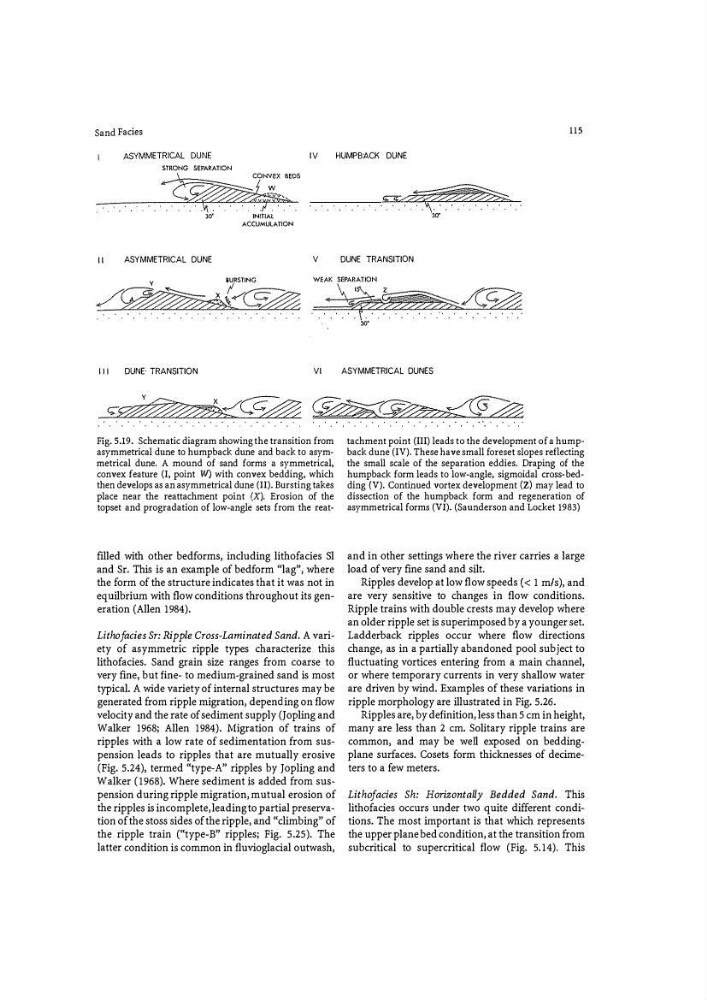
Fig. 5.19. Schematic diagram showing the transition from
asymmetrical dune to humpback dune and back to asym�
metrical dune. A mound of sand forms a symmetrical,
convex feature (I, point W) with convex bedding, which
then develops as an asymmetrical dune (II). Bursting takes
place near the reattachment point (X). Erosion of the
topset and progradation of low�angle sets from the reat�
filled with other bedforms, including lithofacies Sl
and Sr. This is an example of bedform "lag", where
the form of the structure indicates that it was not in
equilbrium with flow conditions throughout its generation (Allen 1984).
Lithofacies Sr: Ripple Cross-Laminated Sand. A variety of asymmetric ripple types characterize this
lithofacies. Sand grain size ranges from coarse to
very fine1 but fine� to medium�grained sand is most
typical. A wide variety of internal structures may be
generated from ripple migration, depenc:l ing on flow
velocity and the rate of sediment supply (Jopling and
Walker 1968; Allen 1984). Migration of trains of
ripples with a low rate of sedimentation from suspension leads to ripples that are mutually erosive
(Fig. 5.24), termed "type-A" ripples by Jopling and
Walker (1968). Where sediment is added from suspension during ripple migration, mutual erosion of
the ripples is incomplete, leading to partial preservation of the stoss sides of the ripple, and "climbingn of
the ripple train ("type-B" ripples; Fig. 5.25). The
latter condition is common in fluvioglacial outwash,
115
HUMPBACK DUNE
DUNE TRANSITION
ASYMMETRICAL DUNES
tachment point (III) leads to the development of a hump�
back dune (IV). These have small fo reset slopes reflecting
the small scale of the separation eddies. Draping of the
humpback form leads to low�angle, sigmoidal cross� bedding {V). Continued vortex development (Z) may lead to
dissection of the humpback form and regeneration of
asymmetrical forms (VI). (Saunderson and Locket 1983)
and in other settings where the river carries a large
load of very fine sand and silt.
Ripples develop at low flow speeds ( < 1 m/s), and
are very sensitive to changes in flow conditions.
Ripple trains with double crests may develop where
an older ripple set is superimposed by a younger set.
Ladderback ripples occur where flow directions
change, as in a partially abandoned pool subject to
fluctuating vortices entering from a main channel,
or where temporary currents in very shallow water
are driven by wind. Examples of these variations in
ripple morphology are illustrated in Fig. 5.26.
Ripples are, by definition, less than 5 em in height,
many are less than 2 em. Solitary ripple trains are
common, and may be well exposed on beddingplane surfaces. Cosets form thicknesses of decime�
ters to a few meters.
Lithofa cies Sh: Horizontally Bedded Sand. This
lithofacies occurs under two quite different conditions. The most important is that which represents
the upper plane bed condition, at the transition from
subcritical to supercritical flow (Fig. 5.14). This
.......
......
3 0 '
lN!TlAl
ACCUMULATION
II
ASYMMETRICAL DUNE
y
BURSTING
/�@@
Ill
DUNE TRANSITION
IV
v
VI
Fig. 5.19. Schematic diagram showing the transition from
asymmetrical dune to humpback dune and back to asym�
metrical dune. A mound of sand forms a symmetrical,
convex feature (I, point W) with convex bedding, which
then develops as an asymmetrical dune (II). Bursting takes
place near the reattachment point (X). Erosion of the
topset and progradation of low�angle sets from the reat�
filled with other bedforms, including lithofacies Sl
and Sr. This is an example of bedform "lag", where
the form of the structure indicates that it was not in
equilbrium with flow conditions throughout its generation (Allen 1984).
Lithofacies Sr: Ripple Cross-Laminated Sand. A variety of asymmetric ripple types characterize this
lithofacies. Sand grain size ranges from coarse to
very fine1 but fine� to medium�grained sand is most
typical. A wide variety of internal structures may be
generated from ripple migration, depenc:l ing on flow
velocity and the rate of sediment supply (Jopling and
Walker 1968; Allen 1984). Migration of trains of
ripples with a low rate of sedimentation from suspension leads to ripples that are mutually erosive
(Fig. 5.24), termed "type-A" ripples by Jopling and
Walker (1968). Where sediment is added from suspension during ripple migration, mutual erosion of
the ripples is incomplete, leading to partial preservation of the stoss sides of the ripple, and "climbingn of
the ripple train ("type-B" ripples; Fig. 5.25). The
latter condition is common in fluvioglacial outwash,
115
HUMPBACK DUNE
DUNE TRANSITION
ASYMMETRICAL DUNES
tachment point (III) leads to the development of a hump�
back dune (IV). These have small fo reset slopes reflecting
the small scale of the separation eddies. Draping of the
humpback form leads to low�angle, sigmoidal cross� bedding {V). Continued vortex development (Z) may lead to
dissection of the humpback form and regeneration of
asymmetrical forms (VI). (Saunderson and Locket 1983)
and in other settings where the river carries a large
load of very fine sand and silt.
Ripples develop at low flow speeds ( < 1 m/s), and
are very sensitive to changes in flow conditions.
Ripple trains with double crests may develop where
an older ripple set is superimposed by a younger set.
Ladderback ripples occur where flow directions
change, as in a partially abandoned pool subject to
fluctuating vortices entering from a main channel,
or where temporary currents in very shallow water
are driven by wind. Examples of these variations in
ripple morphology are illustrated in Fig. 5.26.
Ripples are, by definition, less than 5 em in height,
many are less than 2 em. Solitary ripple trains are
common, and may be well exposed on beddingplane surfaces. Cosets form thicknesses of decime�
ters to a few meters.
Lithofa cies Sh: Horizontally Bedded Sand. This
lithofacies occurs under two quite different conditions. The most important is that which represents
the upper plane bed condition, at the transition from
subcritical to supercritical flow (Fig. 5.14). This