

a
b
88
1-?
0
4m
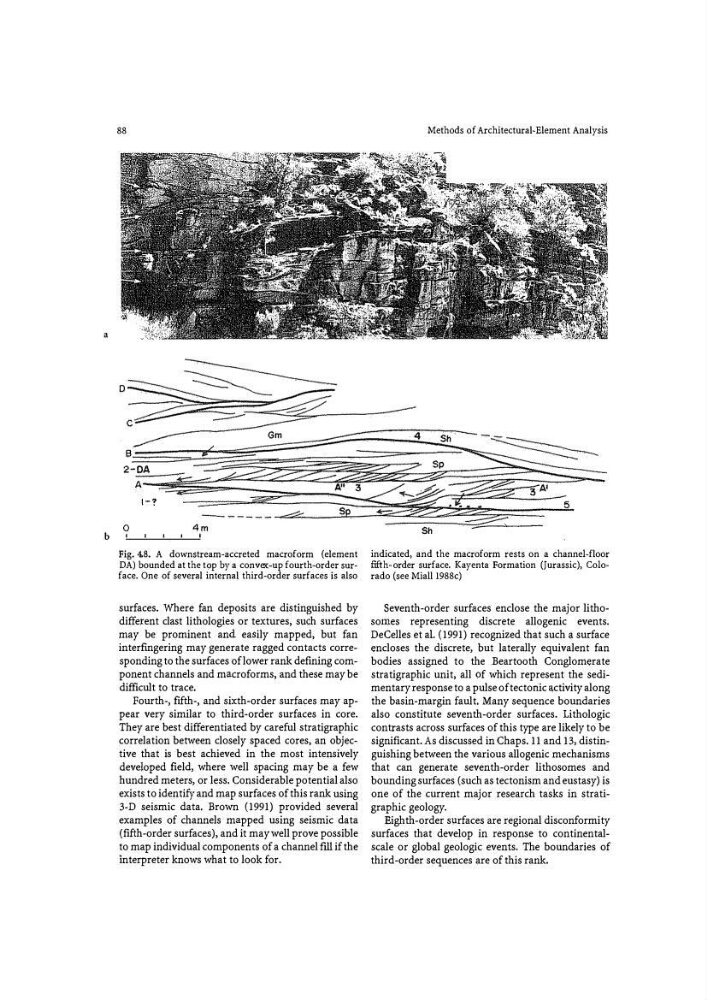
Fig. 4.8. A downstream-accreted macroform (element
DA) bounded at the t() p by a convex-up fourth-order surface. One of several internal third-order surfaces is also
surfaces. Where fan deposits are distinguished by
different clast lithologies or textures, suGh surfaces
may be prominent and easily mapped, but fan
interfingering may generate ragged contacts corresponding to the surfaces of lower rank defining component channels and macro forms, and these may be
difficult to trace.
Fourth-, fifth-, and sixth-order surfaces may appear very similar to third-order surfaces in core.
They are best differentiated by careful stratigraphic
correlation between closely spaced cores, an objective that is best achieved in the most intensively
developed field, where well spacing may be a few
hundred meters, or less. Considerable potential also
exists to identify and map surfaces of this rank using
3-D seismic data. Brown (1991) provided several
examples of channels m:;tpped using seismic data
(fifth-order surfaces), and it may well prove possible
to map individual components of a channel fill if the
interpreter knows what to look for.
Methods of Architectural� Element Analysis
Sh
5
Sh
indicated, and the macroform rests on a channel-floor
fifth -order surface. Kayenta Formation (Jurassic), Colorado (see Miall 1988c)
Seventh-order surfaces enclose the major lithosomes representing discrete allogenic events.
DeCelles et a!. ( 1991) recognized that such a surface
encloses the discrete, but laterally equivalent fan
bodies assigned to the .Beartooth Conglomerate
stratigraphic unit, all of which represent the sedimentary response to a pulse of tectoriic activity along
the basin-margin fault. Many sequence boundaries
also constitute seventh-order surfaces. Lithologic
contrasts across surfaces of this type are likely to be
significant. As discussed in Chaps. 11 and 13, distinguishing between the various allogenic mechanisms
that can generate seventh-order lithosomes and
bounding surfaces (such as tectonism and eustasy) is
one of the current major research tasks in stratigraphic geology.
Eighth-order surfaces are regional disconformity
surfaces that develop in response to continentalscale or global geologic events. The boundaries of
third -order sequences are of this rank.
b
88
1-?
0
4m
Fig. 4.8. A downstream-accreted macroform (element
DA) bounded at the t() p by a convex-up fourth-order surface. One of several internal third-order surfaces is also
surfaces. Where fan deposits are distinguished by
different clast lithologies or textures, suGh surfaces
may be prominent and easily mapped, but fan
interfingering may generate ragged contacts corresponding to the surfaces of lower rank defining component channels and macro forms, and these may be
difficult to trace.
Fourth-, fifth-, and sixth-order surfaces may appear very similar to third-order surfaces in core.
They are best differentiated by careful stratigraphic
correlation between closely spaced cores, an objective that is best achieved in the most intensively
developed field, where well spacing may be a few
hundred meters, or less. Considerable potential also
exists to identify and map surfaces of this rank using
3-D seismic data. Brown (1991) provided several
examples of channels m:;tpped using seismic data
(fifth-order surfaces), and it may well prove possible
to map individual components of a channel fill if the
interpreter knows what to look for.
Methods of Architectural� Element Analysis
Sh
5
Sh
indicated, and the macroform rests on a channel-floor
fifth -order surface. Kayenta Formation (Jurassic), Colorado (see Miall 1988c)
Seventh-order surfaces enclose the major lithosomes representing discrete allogenic events.
DeCelles et a!. ( 1991) recognized that such a surface
encloses the discrete, but laterally equivalent fan
bodies assigned to the .Beartooth Conglomerate
stratigraphic unit, all of which represent the sedimentary response to a pulse of tectoriic activity along
the basin-margin fault. Many sequence boundaries
also constitute seventh-order surfaces. Lithologic
contrasts across surfaces of this type are likely to be
significant. As discussed in Chaps. 11 and 13, distinguishing between the various allogenic mechanisms
that can generate seventh-order lithosomes and
bounding surfaces (such as tectonism and eustasy) is
one of the current major research tasks in stratigraphic geology.
Eighth-order surfaces are regional disconformity
surfaces that develop in response to continentalscale or global geologic events. The boundaries of
third -order sequences are of this rank.