

Cl assi fication of Bounding Surfaces
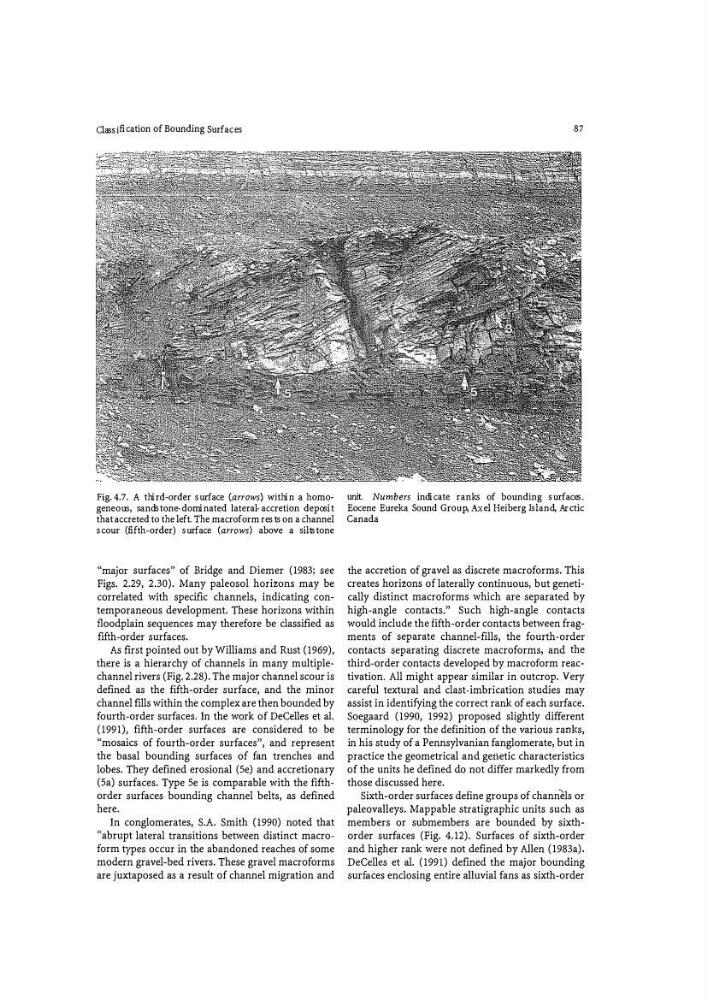
Fig. 4.7. A third�order surface (arrows) within a homo�
geneous, sa ndstone-dominated lateral-accretion deposit
that accreted to the left. The macro form rests on a channel
scour (fifth �o rder) surface (arrows) above a siltstone
"major surfaces" of Bridge and Diemer (1983; see
Figs. 2.29, 2.30). Many paleosol horizons may be
correlated with specific channels, indicating contemporaneous development. These horizons within
floodplain sequences may therefore be classified as
fifth-order surfaces.
As first pointed out by Williams and Rust (1969),
there is a hierarchy of channels in many multiplechannel rivers (Fig. 2.28). The major channel scour is
defined as the fifth-order surface, and the minor
channel fills within the complex are then bounded by
fourth-order surfaces. In the work of DeCelles et aL
(1991), fifth-order surfaces are considered to be
"mosaics of fourth-order surfaces", and represent
the basal bounding surfaces of fan trenches and
lobes. They defined erosional (Se) and accretionary
(Sa) surfaces. Type Se is comparable with the fifthorder surfaces bounding channel belts, as defined
here.
In conglomerates, S.A. Smith (1990) noted that
('abrupt lateral transitions between distinct macroform types occur in the abandoned reaches of some
modern gravel-bed rivers. These gravel macroforms
are juxtaposed as a result of channel migration and
87
unit Numbers indicate ranks of bounding surfaces.
Eocene Eureka Sound Group, Axel Heiberg Island, Arctic
Canada
the accretion of gravel as discrete macroforms. This
creates horizons of laterally continuous, but genetically distinct macroforms which are separated by
high-angle contacts." Such high-angle contacts
would include the fifth-order contacts between fragments of separate channel-fills, the fourth�order
contacts separating discrete macroforms, and the
third-order contacts developed by macroform reactivation. All might appear similar in outcrop. Very
careful textural and clast-imbrication studies may
assist in identifying the correct rank of each surface.
Soegaard (1990, 1992) proposed slightly different
terminology for the definition of the various ranlcs,
in his study of a Pennsylvanian fanglomerate, but in
practice the geometrical and gerietic characteristics
of the units he defined do not differ markedly from
those discussed here.
Sixth-order surfaces define groups of channels or
paleovalleys. Mappable stratigraphic units such as
members or submembers are bounded by sixthorder surfaces (Fig. 4.12). Surfaces of sixth-order
and higher rank were not defined by Allen (1983a).
DeCelles et al. (199!) defined the major bounding
surfaces enclosing entire alluvial fans as sixth-order
Fig. 4.7. A third�order surface (arrows) within a homo�
geneous, sa ndstone-dominated lateral-accretion deposit
that accreted to the left. The macro form rests on a channel
scour (fifth �o rder) surface (arrows) above a siltstone
"major surfaces" of Bridge and Diemer (1983; see
Figs. 2.29, 2.30). Many paleosol horizons may be
correlated with specific channels, indicating contemporaneous development. These horizons within
floodplain sequences may therefore be classified as
fifth-order surfaces.
As first pointed out by Williams and Rust (1969),
there is a hierarchy of channels in many multiplechannel rivers (Fig. 2.28). The major channel scour is
defined as the fifth-order surface, and the minor
channel fills within the complex are then bounded by
fourth-order surfaces. In the work of DeCelles et aL
(1991), fifth-order surfaces are considered to be
"mosaics of fourth-order surfaces", and represent
the basal bounding surfaces of fan trenches and
lobes. They defined erosional (Se) and accretionary
(Sa) surfaces. Type Se is comparable with the fifthorder surfaces bounding channel belts, as defined
here.
In conglomerates, S.A. Smith (1990) noted that
('abrupt lateral transitions between distinct macroform types occur in the abandoned reaches of some
modern gravel-bed rivers. These gravel macroforms
are juxtaposed as a result of channel migration and
87
unit Numbers indicate ranks of bounding surfaces.
Eocene Eureka Sound Group, Axel Heiberg Island, Arctic
Canada
the accretion of gravel as discrete macroforms. This
creates horizons of laterally continuous, but genetically distinct macroforms which are separated by
high-angle contacts." Such high-angle contacts
would include the fifth-order contacts between fragments of separate channel-fills, the fourth�order
contacts separating discrete macroforms, and the
third-order contacts developed by macroform reactivation. All might appear similar in outcrop. Very
careful textural and clast-imbrication studies may
assist in identifying the correct rank of each surface.
Soegaard (1990, 1992) proposed slightly different
terminology for the definition of the various ranlcs,
in his study of a Pennsylvanian fanglomerate, but in
practice the geometrical and gerietic characteristics
of the units he defined do not differ markedly from
those discussed here.
Sixth-order surfaces define groups of channels or
paleovalleys. Mappable stratigraphic units such as
members or submembers are bounded by sixthorder surfaces (Fig. 4.12). Surfaces of sixth-order
and higher rank were not defined by Allen (1983a).
DeCelles et al. (199!) defined the major bounding
surfaces enclosing entire alluvial fans as sixth-order