

Classification of Bounding Surfaces
@ bounding surface
heirarchy
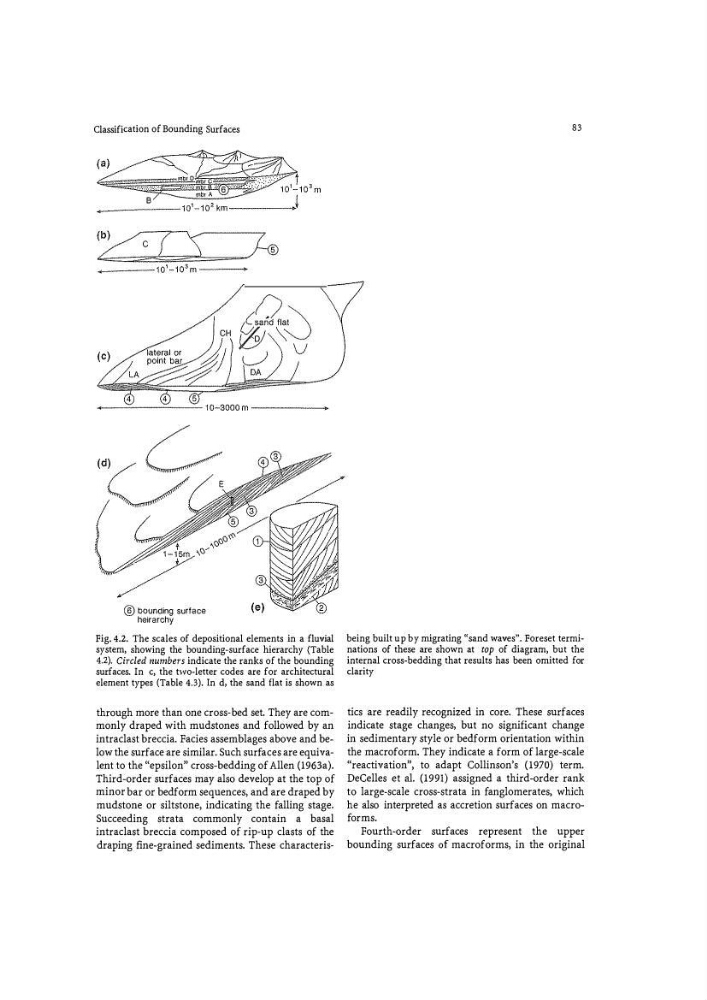
Fig. 4.2. The scales of depositional elements in a fluvial
system, showing the bounding-surface hierarchy (Table
4.2). Circled numbers indicate the ranks of the bounding
surfaces. In c, the tw"o�letter codes are for architectural
element types (Table 4.3). In d, the sand flat is shown as
through more than one cross� bed set. They are commonly draped with mudstones and followed by an
intraclast breccia. Facies assemblages above and below the surface are similar. Such surfaces are equivalent to the "epsilon" cross-bedding of Allen (1963a).
Third-order surfaces may also develop at the top of
minor bar or bedform sequences, and are draped by
mudstone or siltstone, indicating the falling stage.
Succeeding strata commonly contain a basal
intraclast breccia composed of rip� up clasts of the
draping fi ne-grained sediments. These characteris�
83
being built up by migrating "sand waves". Foreset termi�
nations of these are shown at top of diagram, but the
internal cross�bedding that results has been omitted for
clarity
tics are readily recognized in core. These surfaces
indicate stage changes, but no significant change
in sedimentary style or bedform orientation within
the macroform. They indicate a form of large-scale
"reactivation", to adapt Collinson's (1970) term.
DeCelles et a!. (1991) assigned a third-order rank
to large-scale cross-strata in fanglomerates, which
he also interpreted as accretion surfaces on macroforms.
Fourth-order surfaces represent the upper
bounding surfaces of macroforms, in the original
@ bounding surface
heirarchy
Fig. 4.2. The scales of depositional elements in a fluvial
system, showing the bounding-surface hierarchy (Table
4.2). Circled numbers indicate the ranks of the bounding
surfaces. In c, the tw"o�letter codes are for architectural
element types (Table 4.3). In d, the sand flat is shown as
through more than one cross� bed set. They are commonly draped with mudstones and followed by an
intraclast breccia. Facies assemblages above and below the surface are similar. Such surfaces are equivalent to the "epsilon" cross-bedding of Allen (1963a).
Third-order surfaces may also develop at the top of
minor bar or bedform sequences, and are draped by
mudstone or siltstone, indicating the falling stage.
Succeeding strata commonly contain a basal
intraclast breccia composed of rip� up clasts of the
draping fi ne-grained sediments. These characteris�
83
being built up by migrating "sand waves". Foreset termi�
nations of these are shown at top of diagram, but the
internal cross�bedding that results has been omitted for
clarity
tics are readily recognized in core. These surfaces
indicate stage changes, but no significant change
in sedimentary style or bedform orientation within
the macroform. They indicate a form of large-scale
"reactivation", to adapt Collinson's (1970) term.
DeCelles et a!. (1991) assigned a third-order rank
to large-scale cross-strata in fanglomerates, which
he also interpreted as accretion surfaces on macroforms.
Fourth-order surfaces represent the upper
bounding surfaces of macroforms, in the original