

5.6 Prototypical Implementation
147
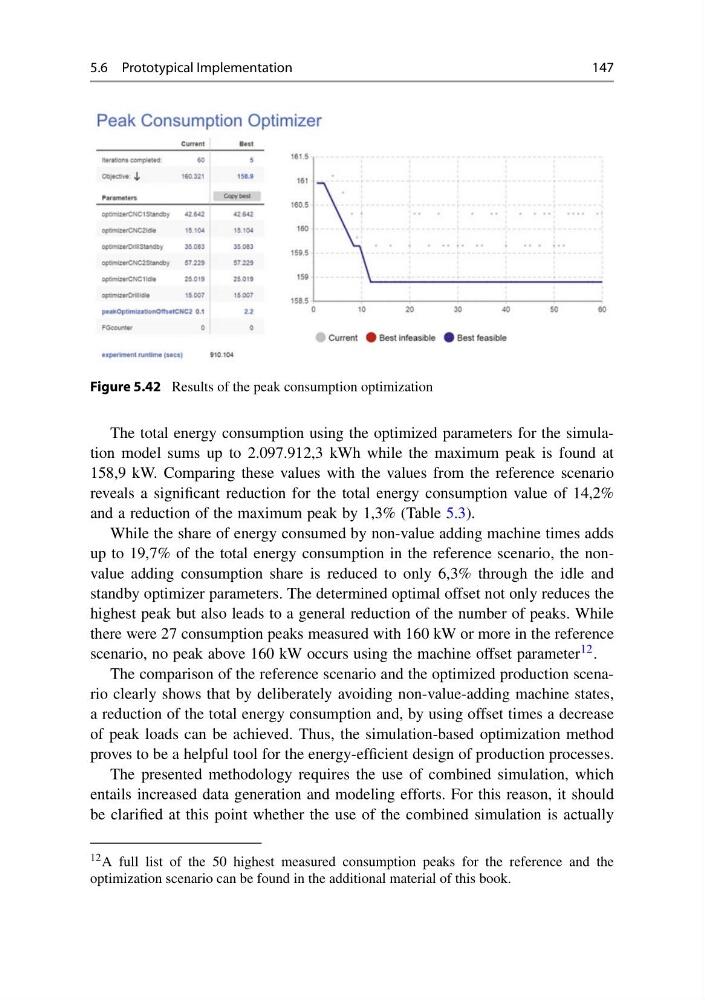
Figure 5.42 Results of the peak consumption optimization
The total energy consumption using the optimized parameters for the simulation model sums up to 2.097.912,3 kWh while the maximum peak is found at
158,9 kW. Comparing these values with the values from the reference scenario
reveals a significant reduction for the total energy consumption value of 14,2%
and a reduction of the maximum peak by 1,3% (Table 5.3).
While the share of energy consumed by non-value adding machine times adds
up to 19,7% of the total energy consumption in the reference scenario, the nonvalue adding consumption share is reduced to only 6,3% through the idle and
standby optimizer parameters. The determined optimal offset not only reduces the
highest peak but also leads to a general reduction of the number of peaks. While
there were 27 consumption peaks measured with 160 kW or more in the reference
scenario, no peak above 160 kW occurs using the machine offset parameter 12 .
The comparison of the reference scenario and the optimized production scenario clearly shows that by deliberately avoiding non-value-adding machine states,
a reduction of the total energy consumption and, by using offset times a decrease
of peak loads can be achieved. Thus, the simulation-based optimization method
proves to be a helpful tool for the energy-efficient design of production processes.
The presented methodology requires the use of combined simulation, which
entails increased data generation and modeling efforts. For this reason, it should
be clarified at this point whether the use of the combined simulation is actually
12 A full list of the 50 highest measured consumption peaks for the reference and the
optimization scenario can be found in the additional material of this book.
147
Figure 5.42 Results of the peak consumption optimization
The total energy consumption using the optimized parameters for the simulation model sums up to 2.097.912,3 kWh while the maximum peak is found at
158,9 kW. Comparing these values with the values from the reference scenario
reveals a significant reduction for the total energy consumption value of 14,2%
and a reduction of the maximum peak by 1,3% (Table 5.3).
While the share of energy consumed by non-value adding machine times adds
up to 19,7% of the total energy consumption in the reference scenario, the nonvalue adding consumption share is reduced to only 6,3% through the idle and
standby optimizer parameters. The determined optimal offset not only reduces the
highest peak but also leads to a general reduction of the number of peaks. While
there were 27 consumption peaks measured with 160 kW or more in the reference
scenario, no peak above 160 kW occurs using the machine offset parameter 12 .
The comparison of the reference scenario and the optimized production scenario clearly shows that by deliberately avoiding non-value-adding machine states,
a reduction of the total energy consumption and, by using offset times a decrease
of peak loads can be achieved. Thus, the simulation-based optimization method
proves to be a helpful tool for the energy-efficient design of production processes.
The presented methodology requires the use of combined simulation, which
entails increased data generation and modeling efforts. For this reason, it should
be clarified at this point whether the use of the combined simulation is actually
12 A full list of the 50 highest measured consumption peaks for the reference and the
optimization scenario can be found in the additional material of this book.