

146
5 Development of a Simulation-based Methodology …
production flow do not trigger any machine state changes. The machines remain
in a non-value-adding but energy-consuming machine state for the duration of the
disturbance. The reference scenario is thus very similar to the reference scenario
of the practical example discussed later in this book.
This scenario is reproduced in the simulation model, setting the idle and
standby optimizer parameters to 480 minutes which assures, that the machines
do not leave the non-productive states during an eight-hour shift. To be able to
compare the results, the minimum output quantity of the production line is set
to 2000 pieces for a four-week period 11 . The total energy consumption sums up
to 2.395.082,3 kWh for the production of 2.028 pieces. The maximum occurring
peak consumption in the reference scenario is measured with 161,0 kW.
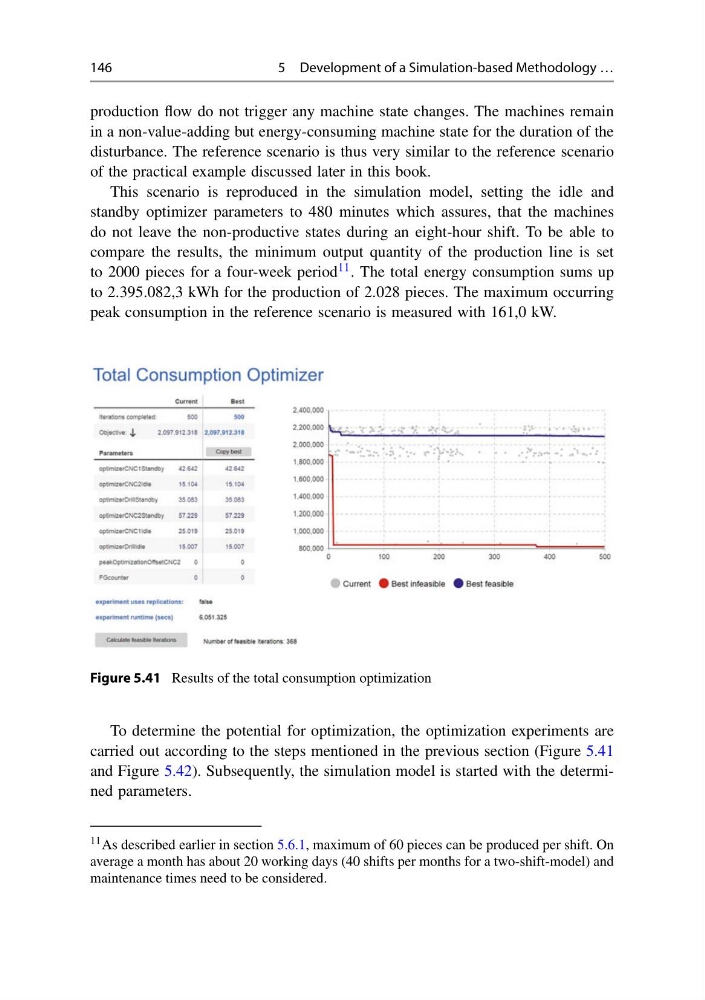
Figure 5.41 Results of the total consumption optimization
To determine the potential for optimization, the optimization experiments are
carried out according to the steps mentioned in the previous section (Figure 5.41
and Figure 5.42). Subsequently, the simulation model is started with the determined parameters.
11 As described earlier in section 5.6.1, maximum of 60 pieces can be produced per shift. On
average a month has about 20 working days (40 shifts per months for a two-shift-model) and
maintenance times need to be considered.
5 Development of a Simulation-based Methodology …
production flow do not trigger any machine state changes. The machines remain
in a non-value-adding but energy-consuming machine state for the duration of the
disturbance. The reference scenario is thus very similar to the reference scenario
of the practical example discussed later in this book.
This scenario is reproduced in the simulation model, setting the idle and
standby optimizer parameters to 480 minutes which assures, that the machines
do not leave the non-productive states during an eight-hour shift. To be able to
compare the results, the minimum output quantity of the production line is set
to 2000 pieces for a four-week period 11 . The total energy consumption sums up
to 2.395.082,3 kWh for the production of 2.028 pieces. The maximum occurring
peak consumption in the reference scenario is measured with 161,0 kW.
Figure 5.41 Results of the total consumption optimization
To determine the potential for optimization, the optimization experiments are
carried out according to the steps mentioned in the previous section (Figure 5.41
and Figure 5.42). Subsequently, the simulation model is started with the determined parameters.
11 As described earlier in section 5.6.1, maximum of 60 pieces can be produced per shift. On
average a month has about 20 working days (40 shifts per months for a two-shift-model) and
maintenance times need to be considered.