

1.7 Suggested Exercises
1. Rigel A is a blue-white star in the constellation Orion with surface gases around
~12,000 K. The way astronomers use the word, Rigel is the 7th “brightest” star in
the night sky. Stellar “apparent brightness” is based on the apparent visual
magnitude as perceived by the human eye, so it does not separately take into
account the distance or size of the star. Assuming a blackbody spectrum, calculate
the peak spectral brightness of Rigel A.
An additional metric used by astronomers is “luminosity.” By some estimates,
the luminosity of Rigel is >100,000 suns (https://en.wikipedia.org/wiki/Rigel).
Compare the astronomical apparent brightness, peak spectral brightness, and
luminosity of Rigel and our sun. Another star in Orion, Bellatrix, has a temperature of 21,500 K. Among stars in the sky, it ranks about 22nd on an astronomy
apparent stellar brightness scale. How does it compare with Rigel on an intrinsic
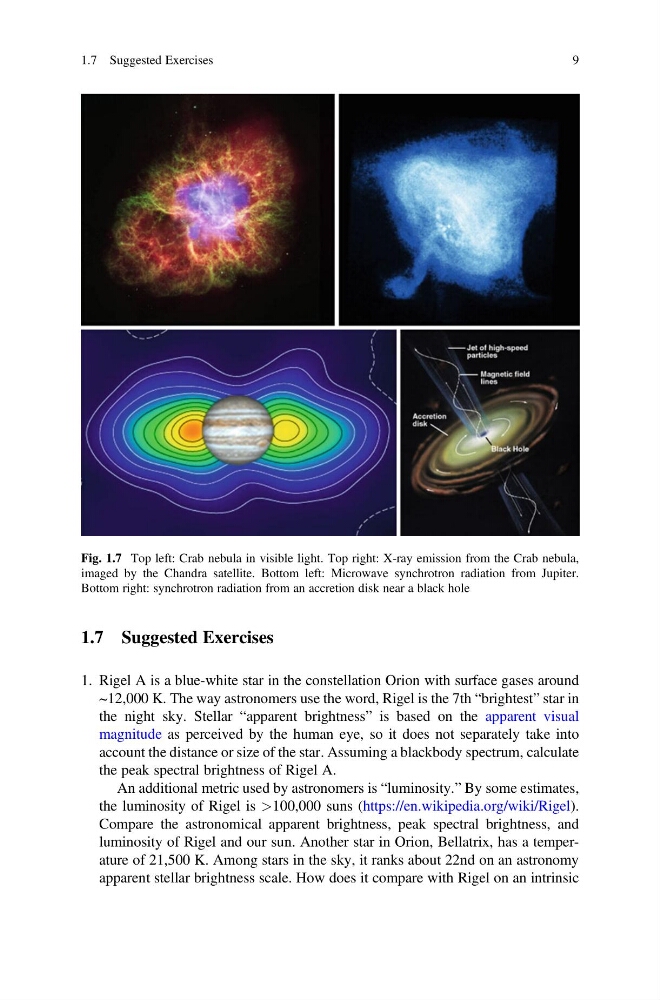
Fig. 1.7 Top left: Crab nebula in visible light. Top right: X-ray emission from the Crab nebula,
imaged by the Chandra satellite. Bottom left: Microwave synchrotron radiation from Jupiter.
Bottom right: synchrotron radiation from an accretion disk near a black hole
1.7 Suggested Exercises
9
1. Rigel A is a blue-white star in the constellation Orion with surface gases around
~12,000 K. The way astronomers use the word, Rigel is the 7th “brightest” star in
the night sky. Stellar “apparent brightness” is based on the apparent visual
magnitude as perceived by the human eye, so it does not separately take into
account the distance or size of the star. Assuming a blackbody spectrum, calculate
the peak spectral brightness of Rigel A.
An additional metric used by astronomers is “luminosity.” By some estimates,
the luminosity of Rigel is >100,000 suns (https://en.wikipedia.org/wiki/Rigel).
Compare the astronomical apparent brightness, peak spectral brightness, and
luminosity of Rigel and our sun. Another star in Orion, Bellatrix, has a temperature of 21,500 K. Among stars in the sky, it ranks about 22nd on an astronomy
apparent stellar brightness scale. How does it compare with Rigel on an intrinsic
Fig. 1.7 Top left: Crab nebula in visible light. Top right: X-ray emission from the Crab nebula,
imaged by the Chandra satellite. Bottom left: Microwave synchrotron radiation from Jupiter.
Bottom right: synchrotron radiation from an accretion disk near a black hole
1.7 Suggested Exercises
9