

5.5 Photodiodes and Diode Arrays
Photodiodes operating in integrated current mode are the solid-state equivalent of
ion chambers. They normally consist of a p-type material at one surface and an
n-type material at the other, with a depleted or “intrinsic” region in between,
resulting in a “PIN” structure. A reverse bias is applied across the diode so that, as
with ion chambers, the gap between electrodes normally functions as an insulator.
(Some charge carriers are generated by thermal excitations, and the devices work
better when cooled.) When X-rays are absorbed within the depletion region, charge
carriers (holes and electrons) are freed and are swept to their respective collecting
electrode by the electric field (Fig. 5.5).
The average number of electron-hole pairs generated by an X-ray is related to the
X-ray energy, the band gap of the semiconductor, and the amount of heat
produced (Table 5.3). As with gases, the average electron-hole pair energy is
referred to as “W,” and it is much smaller for semiconductors than for typical
gases. The distribution of the number of electrons is reduced from Poisson statistics
by the “Fano factor” “F” [170]. With a sufficient bias, nearly all the charge carriers
can be collected, and if an external circuit is connected between the P- and N-layers,
the average current will be a measure of the photon flux. The charge involved in
discrete current pulses can be collected to reveal the X-ray energy, as discussed in
Sect. 5.10.
Photodiodes are ideal for absolute measurements of the X-ray flux in the soft
X-ray region under UHV conditions. They can also yield spatial resolution. For
example, a series of diodes can be fabricated on a single piece of silicon, such as the
quadrant detector in Fig. 5.5.
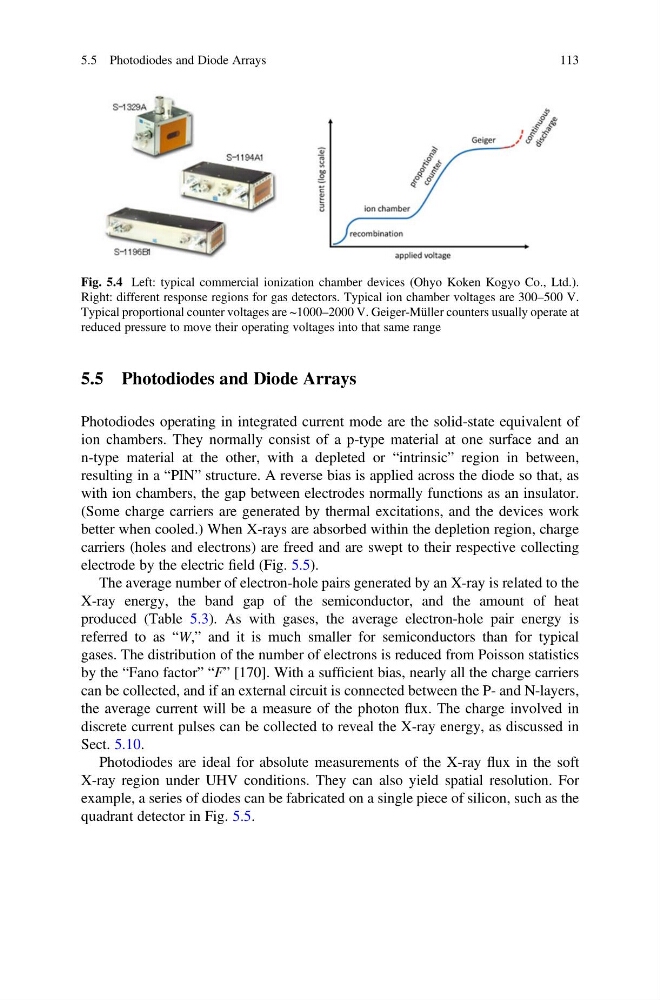
Fig. 5.4 Left: typical commercial ionization chamber devices (Ohyo Koken Kogyo Co., Ltd.).
Right: different response regions for gas detectors. Typical ion chamber voltages are 300–500 V.
Typical proportional counter voltages are ~1000–2000 V. Geiger-Müller counters usually operate at
reduced pressure to move their operating voltages into that same range
5.5 Photodiodes and Diode Arrays
113
Photodiodes operating in integrated current mode are the solid-state equivalent of
ion chambers. They normally consist of a p-type material at one surface and an
n-type material at the other, with a depleted or “intrinsic” region in between,
resulting in a “PIN” structure. A reverse bias is applied across the diode so that, as
with ion chambers, the gap between electrodes normally functions as an insulator.
(Some charge carriers are generated by thermal excitations, and the devices work
better when cooled.) When X-rays are absorbed within the depletion region, charge
carriers (holes and electrons) are freed and are swept to their respective collecting
electrode by the electric field (Fig. 5.5).
The average number of electron-hole pairs generated by an X-ray is related to the
X-ray energy, the band gap of the semiconductor, and the amount of heat
produced (Table 5.3). As with gases, the average electron-hole pair energy is
referred to as “W,” and it is much smaller for semiconductors than for typical
gases. The distribution of the number of electrons is reduced from Poisson statistics
by the “Fano factor” “F” [170]. With a sufficient bias, nearly all the charge carriers
can be collected, and if an external circuit is connected between the P- and N-layers,
the average current will be a measure of the photon flux. The charge involved in
discrete current pulses can be collected to reveal the X-ray energy, as discussed in
Sect. 5.10.
Photodiodes are ideal for absolute measurements of the X-ray flux in the soft
X-ray region under UHV conditions. They can also yield spatial resolution. For
example, a series of diodes can be fabricated on a single piece of silicon, such as the
quadrant detector in Fig. 5.5.
Fig. 5.4 Left: typical commercial ionization chamber devices (Ohyo Koken Kogyo Co., Ltd.).
Right: different response regions for gas detectors. Typical ion chamber voltages are 300–500 V.
Typical proportional counter voltages are ~1000–2000 V. Geiger-Müller counters usually operate at
reduced pressure to move their operating voltages into that same range
5.5 Photodiodes and Diode Arrays
113