

References
Agosto, M.A., Zhang, Z., He, F., Anastassov, I.A., Wright, S.J., McGehee, J., Wensel, T.G. (2014) Oligomeric state of
purified TRPM1, a protein essential for dim light vision. J. Biol. Chem. 289:27019–27033.
Althoff, T. (2011) Strukturelle Untersuchungen am Superkomplex I 1 III 2 IV 1 der Atmungskette mittels Kryoelektronenmikroskopie, Fachbereich Biochemie, Chemie und Pharmazie. Ph. D. Dissertation, Johann Wolfgang GoetheUniversität, Frankfurt-am-Main, 248 p.
Althoff, T., Mills, D.J., Popot, J.-L., Kühlbrandt, W. (2011) Assembly of electron transport chain components in bovine
mitochondrial supercomplex I 1 III 2 IV 1 . EMBO J. 30:4652–4664.
Arunmanee, W., Harris, J.R., Lakey, J.H. (2014) Outer membrane protein F stabilised with minimal amphipol forms
linear arrays and LPS-dependent 2D crystals. J. Membr. Biol. 247:949–956.
Bazzacco, P. (2009) Non-ionic amphipols: new tools for in vitro studies of membrane proteins. Validation and
development of biochemical and biophysical applications. Thèse de Doctorat, Université Paris-7, Paris, 176 p.
Bazzacco, P., Sharma, K.S., Durand, G., Giusti, F., Ebel, C., Popot, J.-L., Pucci, B. (2009) Trapping and stabilization of
integral membrane proteins by hydrophobically grafted glucose-based telomeres. Biomacromolecules 10:3317–3326.
Bazzacco, P., Billon-Denis, E., Sharma, K.S., Catoire, L.J., Mary, S., Le Bon, C., Point, E., Banères, J.-L., Durand, G.,
Zito, F., Pucci, B., Popot, J.-L. (2012) Non-ionic homopolymeric amphipols: Application to membrane protein
folding, cell-free synthesis, and solution NMR. Biochemistry 51:1416–1430.
Belrhali, H., Nollert, P., Royant, A., Menzel, C., Rosenbusch, J.P., Landau, E.M., Pebay-Peyroula, E. (1999) Protein,
lipid and water organization in bacteriorhodopsin crystals: a molecular view of the purple membrane at 1.9 Å
resolution. Structure 7:909–917.
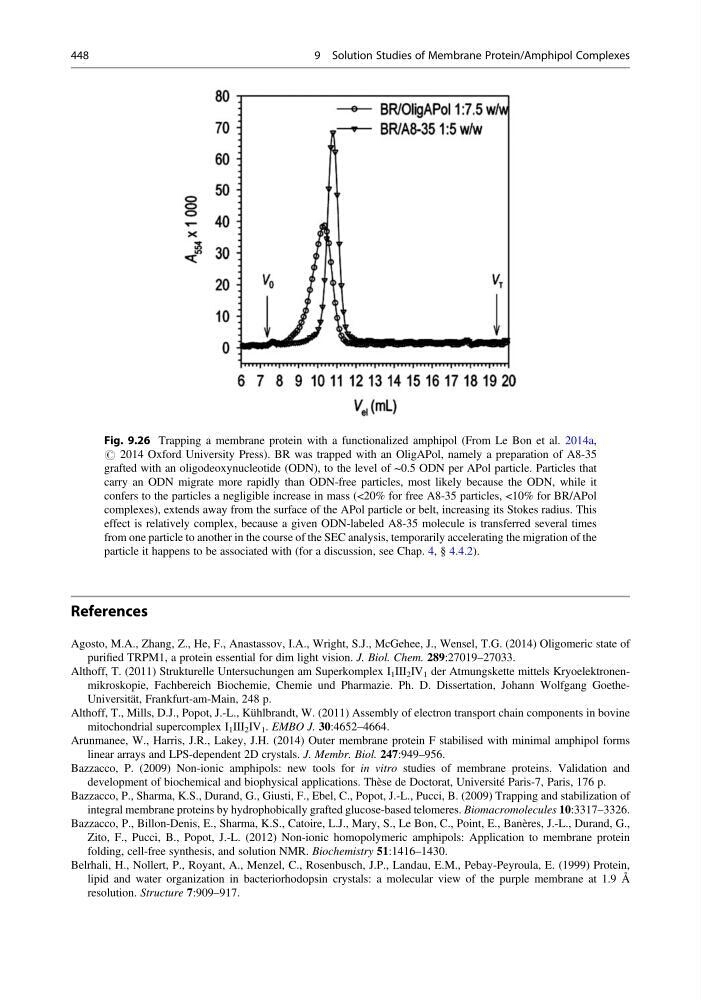
Fig. 9.26 Trapping a membrane protein with a functionalized amphipol (From Le Bon et al. 2014a,
# 2014 Oxford University Press). BR was trapped with an OligAPol, namely a preparation of A8-35
grafted with an oligodeoxynucleotide (ODN), to the level of ~0.5 ODN per APol particle. Particles that
carry an ODN migrate more rapidly than ODN-free particles, most likely because the ODN, while it
confers to the particles a negligible increase in mass (<20% for free A8-35 particles, <10% for BR/APol
complexes), extends away from the surface of the APol particle or belt, increasing its Stokes radius. This
effect is relatively complex, because a given ODN-labeled A8-35 molecule is transferred several times
from one particle to another in the course of the SEC analysis, temporarily accelerating the migration of the
particle it happens to be associated with (for a discussion, see Chap. 4, § 4.4.2).
448
9 Solution Studies of Membrane Protein/Amphipol Complexes
Agosto, M.A., Zhang, Z., He, F., Anastassov, I.A., Wright, S.J., McGehee, J., Wensel, T.G. (2014) Oligomeric state of
purified TRPM1, a protein essential for dim light vision. J. Biol. Chem. 289:27019–27033.
Althoff, T. (2011) Strukturelle Untersuchungen am Superkomplex I 1 III 2 IV 1 der Atmungskette mittels Kryoelektronenmikroskopie, Fachbereich Biochemie, Chemie und Pharmazie. Ph. D. Dissertation, Johann Wolfgang GoetheUniversität, Frankfurt-am-Main, 248 p.
Althoff, T., Mills, D.J., Popot, J.-L., Kühlbrandt, W. (2011) Assembly of electron transport chain components in bovine
mitochondrial supercomplex I 1 III 2 IV 1 . EMBO J. 30:4652–4664.
Arunmanee, W., Harris, J.R., Lakey, J.H. (2014) Outer membrane protein F stabilised with minimal amphipol forms
linear arrays and LPS-dependent 2D crystals. J. Membr. Biol. 247:949–956.
Bazzacco, P. (2009) Non-ionic amphipols: new tools for in vitro studies of membrane proteins. Validation and
development of biochemical and biophysical applications. Thèse de Doctorat, Université Paris-7, Paris, 176 p.
Bazzacco, P., Sharma, K.S., Durand, G., Giusti, F., Ebel, C., Popot, J.-L., Pucci, B. (2009) Trapping and stabilization of
integral membrane proteins by hydrophobically grafted glucose-based telomeres. Biomacromolecules 10:3317–3326.
Bazzacco, P., Billon-Denis, E., Sharma, K.S., Catoire, L.J., Mary, S., Le Bon, C., Point, E., Banères, J.-L., Durand, G.,
Zito, F., Pucci, B., Popot, J.-L. (2012) Non-ionic homopolymeric amphipols: Application to membrane protein
folding, cell-free synthesis, and solution NMR. Biochemistry 51:1416–1430.
Belrhali, H., Nollert, P., Royant, A., Menzel, C., Rosenbusch, J.P., Landau, E.M., Pebay-Peyroula, E. (1999) Protein,
lipid and water organization in bacteriorhodopsin crystals: a molecular view of the purple membrane at 1.9 Å
resolution. Structure 7:909–917.
Fig. 9.26 Trapping a membrane protein with a functionalized amphipol (From Le Bon et al. 2014a,
# 2014 Oxford University Press). BR was trapped with an OligAPol, namely a preparation of A8-35
grafted with an oligodeoxynucleotide (ODN), to the level of ~0.5 ODN per APol particle. Particles that
carry an ODN migrate more rapidly than ODN-free particles, most likely because the ODN, while it
confers to the particles a negligible increase in mass (<20% for free A8-35 particles, <10% for BR/APol
complexes), extends away from the surface of the APol particle or belt, increasing its Stokes radius. This
effect is relatively complex, because a given ODN-labeled A8-35 molecule is transferred several times
from one particle to another in the course of the SEC analysis, temporarily accelerating the migration of the
particle it happens to be associated with (for a discussion, see Chap. 4, § 4.4.2).
448
9 Solution Studies of Membrane Protein/Amphipol Complexes