

1.1.4.3 Mitochondria and Ecological System on the Earth
Plant cell has mitochondria in addition to chloroplast. However, animal cell has only
mitochondria which use glucose at the first step of metabolic system. And ATP and
NADH are generated in inner membrane of mitochondria (Fig. 1.7). In the ecological
system on the earth, photosynthetic system of flora and mitochondria of fauna are
coupled with mediation of hydrogen oxide (water) (Fig. 1.8).
1.2 Thermodynamics of Biological System
1.2.1 Kinetics of Chemical Reaction
The simplest chemical reaction between reactants A and B and product C is shown as
following scheme.
A þ B
ν À1
!
νþ1
C
Rate of association and rate of dissociation are defined as v +1 ¼ k +1 [A][B] and
v À1 ¼ k À1 [C] respectively, where k +1 and k -1 are rate constants.
Using equilibrium condition v +1 ¼ v À1 results in
k þ1 = k À1 ¼
C
½
= A
½ B
½ ¼ K eq
K eq is equilibrium constant. In equilibrium state, association reaction and dissociation reaction are proceeding, and equilibrium constant is obtained as ratio of
reactants to products.
Light
Light
LHC
PS II complex PQ
Cyt–b6
Cyt–f
LHC PS I complex
FAD enzyme
IPC
OEC
2H 2 O
4H + + O 2
2H + + 2NAD –
2NADPH +
8H +
2e –
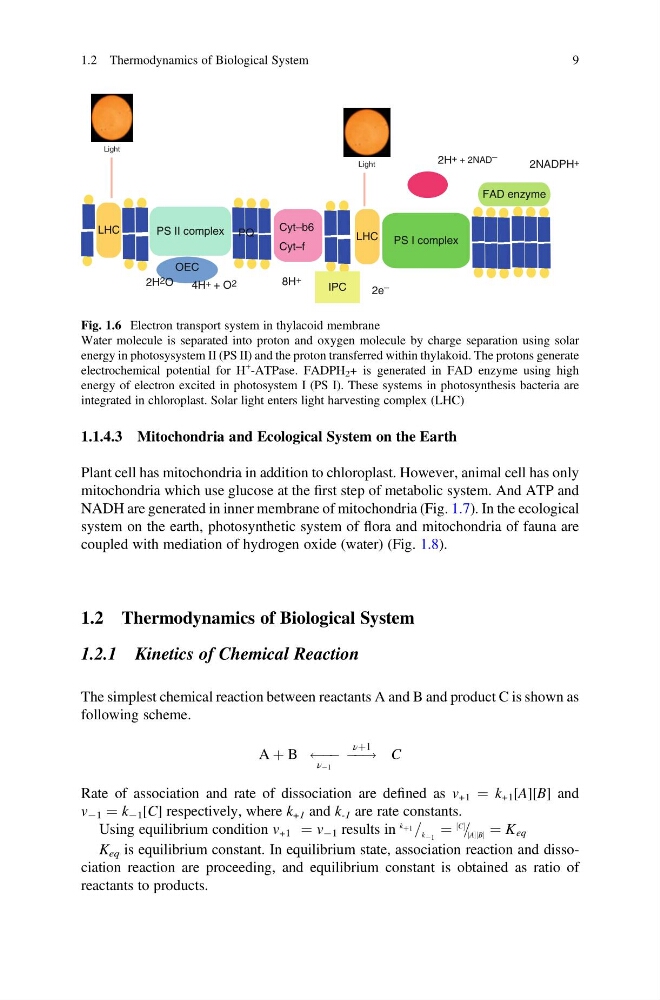
Fig. 1.6 Electron transport system in thylacoid membrane
Water molecule is separated into proton and oxygen molecule by charge separation using solar
energy in photosysystem II (PS II) and the proton transferred within thylakoid. The protons generate
electrochemical potential for H
+ -ATPase. FADPH 2 + is generated in FAD enzyme using high
energy of electron excited in photosystem I (PS I). These systems in photosynthesis bacteria are
integrated in chloroplast. Solar light enters light harvesting complex (LHC)
1.2 Thermodynamics of Biological System
9
Plant cell has mitochondria in addition to chloroplast. However, animal cell has only
mitochondria which use glucose at the first step of metabolic system. And ATP and
NADH are generated in inner membrane of mitochondria (Fig. 1.7). In the ecological
system on the earth, photosynthetic system of flora and mitochondria of fauna are
coupled with mediation of hydrogen oxide (water) (Fig. 1.8).
1.2 Thermodynamics of Biological System
1.2.1 Kinetics of Chemical Reaction
The simplest chemical reaction between reactants A and B and product C is shown as
following scheme.
A þ B
ν À1
!
νþ1
C
Rate of association and rate of dissociation are defined as v +1 ¼ k +1 [A][B] and
v À1 ¼ k À1 [C] respectively, where k +1 and k -1 are rate constants.
Using equilibrium condition v +1 ¼ v À1 results in
k þ1 = k À1 ¼
C
½
= A
½ B
½ ¼ K eq
K eq is equilibrium constant. In equilibrium state, association reaction and dissociation reaction are proceeding, and equilibrium constant is obtained as ratio of
reactants to products.
Light
Light
LHC
PS II complex PQ
Cyt–b6
Cyt–f
LHC PS I complex
FAD enzyme
IPC
OEC
2H 2 O
4H + + O 2
2H + + 2NAD –
2NADPH +
8H +
2e –
Fig. 1.6 Electron transport system in thylacoid membrane
Water molecule is separated into proton and oxygen molecule by charge separation using solar
energy in photosysystem II (PS II) and the proton transferred within thylakoid. The protons generate
electrochemical potential for H
+ -ATPase. FADPH 2 + is generated in FAD enzyme using high
energy of electron excited in photosystem I (PS I). These systems in photosynthesis bacteria are
integrated in chloroplast. Solar light enters light harvesting complex (LHC)
1.2 Thermodynamics of Biological System
9