

1.2 The Conceptualisation of Green and Ecological Infrastructures
5
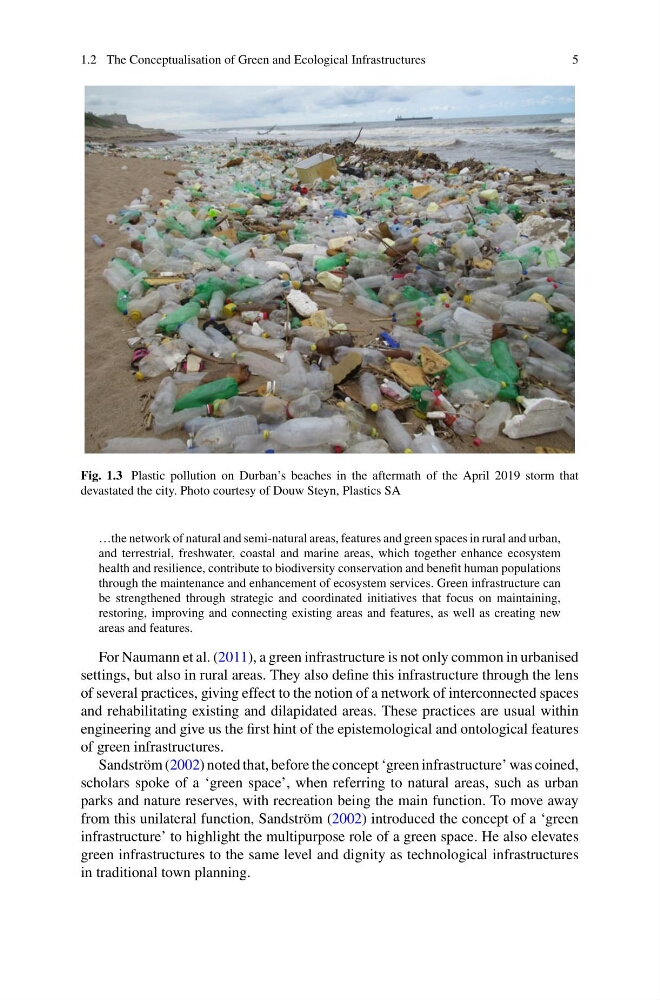
Fig. 1.3 Plastic pollution on Durban’s beaches in the aftermath of the April 2019 storm that
devastated the city. Photo courtesy of Douw Steyn, Plastics SA
…the network of natural and semi-natural areas, features and green spaces in rural and urban,
and terrestrial, freshwater, coastal and marine areas, which together enhance ecosystem
health and resilience, contribute to biodiversity conservation and benefit human populations
through the maintenance and enhancement of ecosystem services. Green infrastructure can
be strengthened through strategic and coordinated initiatives that focus on maintaining,
restoring, improving and connecting existing areas and features, as well as creating new
areas and features.
For Naumann et al. (2011), a green infrastructure is not only common in urbanised
settings, but also in rural areas. They also define this infrastructure through the lens
of several practices, giving effect to the notion of a network of interconnected spaces
and rehabilitating existing and dilapidated areas. These practices are usual within
engineering and give us the first hint of the epistemological and ontological features
of green infrastructures.
Sandström (2002) noted that, before the concept ‘green infrastructure’ was coined,
scholars spoke of a ‘green space’, when referring to natural areas, such as urban
parks and nature reserves, with recreation being the main function. To move away
from this unilateral function, Sandström (2002) introduced the concept of a ‘green
infrastructure’ to highlight the multipurpose role of a green space. He also elevates
green infrastructures to the same level and dignity as technological infrastructures
in traditional town planning.
5
Fig. 1.3 Plastic pollution on Durban’s beaches in the aftermath of the April 2019 storm that
devastated the city. Photo courtesy of Douw Steyn, Plastics SA
…the network of natural and semi-natural areas, features and green spaces in rural and urban,
and terrestrial, freshwater, coastal and marine areas, which together enhance ecosystem
health and resilience, contribute to biodiversity conservation and benefit human populations
through the maintenance and enhancement of ecosystem services. Green infrastructure can
be strengthened through strategic and coordinated initiatives that focus on maintaining,
restoring, improving and connecting existing areas and features, as well as creating new
areas and features.
For Naumann et al. (2011), a green infrastructure is not only common in urbanised
settings, but also in rural areas. They also define this infrastructure through the lens
of several practices, giving effect to the notion of a network of interconnected spaces
and rehabilitating existing and dilapidated areas. These practices are usual within
engineering and give us the first hint of the epistemological and ontological features
of green infrastructures.
Sandström (2002) noted that, before the concept ‘green infrastructure’ was coined,
scholars spoke of a ‘green space’, when referring to natural areas, such as urban
parks and nature reserves, with recreation being the main function. To move away
from this unilateral function, Sandström (2002) introduced the concept of a ‘green
infrastructure’ to highlight the multipurpose role of a green space. He also elevates
green infrastructures to the same level and dignity as technological infrastructures
in traditional town planning.