

4
1 Green and Ecological Infrastructures and Water Security …
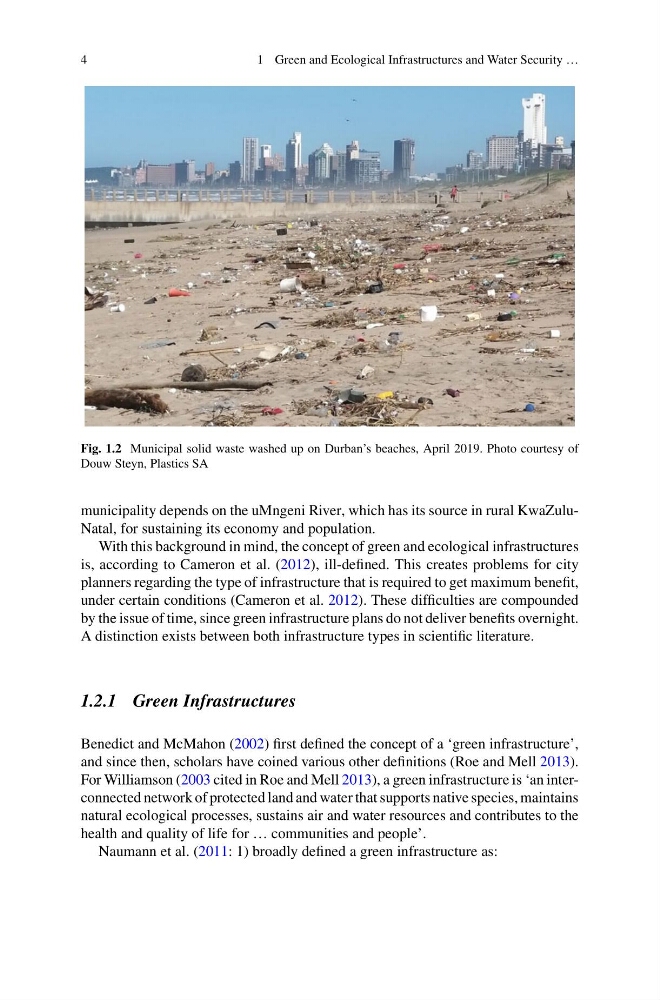
Fig. 1.2 Municipal solid waste washed up on Durban’s beaches, April 2019. Photo courtesy of
Douw Steyn, Plastics SA
municipality depends on the uMngeni River, which has its source in rural KwaZuluNatal, for sustaining its economy and population.
With this background in mind, the concept of green and ecological infrastructures
is, according to Cameron et al. (2012), ill-defined. This creates problems for city
planners regarding the type of infrastructure that is required to get maximum benefit,
under certain conditions (Cameron et al. 2012). These difficulties are compounded
by the issue of time, since green infrastructure plans do not deliver benefits overnight.
A distinction exists between both infrastructure types in scientific literature.
1.2.1 Green Infrastructures
Benedict and McMahon (2002) first defined the concept of a ‘green infrastructure’,
and since then, scholars have coined various other definitions (Roe and Mell 2013).
For Williamson (2003 cited in Roe and Mell 2013), a green infrastructure is ‘an interconnected network of protected land and water that supports native species, maintains
natural ecological processes, sustains air and water resources and contributes to the
health and quality of life for … communities and people’.
Naumann et al. (2011: 1) broadly defined a green infrastructure as:
1 Green and Ecological Infrastructures and Water Security …
Fig. 1.2 Municipal solid waste washed up on Durban’s beaches, April 2019. Photo courtesy of
Douw Steyn, Plastics SA
municipality depends on the uMngeni River, which has its source in rural KwaZuluNatal, for sustaining its economy and population.
With this background in mind, the concept of green and ecological infrastructures
is, according to Cameron et al. (2012), ill-defined. This creates problems for city
planners regarding the type of infrastructure that is required to get maximum benefit,
under certain conditions (Cameron et al. 2012). These difficulties are compounded
by the issue of time, since green infrastructure plans do not deliver benefits overnight.
A distinction exists between both infrastructure types in scientific literature.
1.2.1 Green Infrastructures
Benedict and McMahon (2002) first defined the concept of a ‘green infrastructure’,
and since then, scholars have coined various other definitions (Roe and Mell 2013).
For Williamson (2003 cited in Roe and Mell 2013), a green infrastructure is ‘an interconnected network of protected land and water that supports native species, maintains
natural ecological processes, sustains air and water resources and contributes to the
health and quality of life for … communities and people’.
Naumann et al. (2011: 1) broadly defined a green infrastructure as: