

1.2 The Conceptualisation of Green and Ecological Infrastructures
3
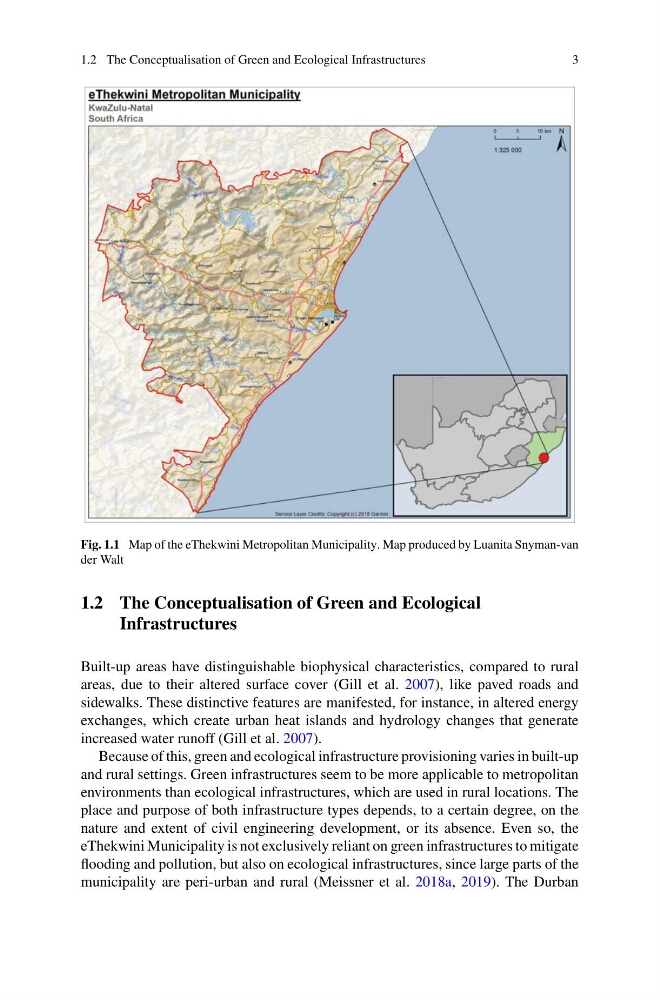
Fig. 1.1 Map of the eThekwini Metropolitan Municipality. Map produced by Luanita Snyman-van
der Walt
1.2 The Conceptualisation of Green and Ecological
Infrastructures
Built-up areas have distinguishable biophysical characteristics, compared to rural
areas, due to their altered surface cover (Gill et al. 2007), like paved roads and
sidewalks. These distinctive features are manifested, for instance, in altered energy
exchanges, which create urban heat islands and hydrology changes that generate
increased water runoff (Gill et al. 2007).
Because of this, green and ecological infrastructure provisioning varies in built-up
and rural settings. Green infrastructures seem to be more applicable to metropolitan
environments than ecological infrastructures, which are used in rural locations. The
place and purpose of both infrastructure types depends, to a certain degree, on the
nature and extent of civil engineering development, or its absence. Even so, the
eThekwini Municipality is not exclusively reliant on green infrastructures to mitigate
flooding and pollution, but also on ecological infrastructures, since large parts of the
municipality are peri-urban and rural (Meissner et al. 2018a, 2019). The Durban
3
Fig. 1.1 Map of the eThekwini Metropolitan Municipality. Map produced by Luanita Snyman-van
der Walt
1.2 The Conceptualisation of Green and Ecological
Infrastructures
Built-up areas have distinguishable biophysical characteristics, compared to rural
areas, due to their altered surface cover (Gill et al. 2007), like paved roads and
sidewalks. These distinctive features are manifested, for instance, in altered energy
exchanges, which create urban heat islands and hydrology changes that generate
increased water runoff (Gill et al. 2007).
Because of this, green and ecological infrastructure provisioning varies in built-up
and rural settings. Green infrastructures seem to be more applicable to metropolitan
environments than ecological infrastructures, which are used in rural locations. The
place and purpose of both infrastructure types depends, to a certain degree, on the
nature and extent of civil engineering development, or its absence. Even so, the
eThekwini Municipality is not exclusively reliant on green infrastructures to mitigate
flooding and pollution, but also on ecological infrastructures, since large parts of the
municipality are peri-urban and rural (Meissner et al. 2018a, 2019). The Durban