

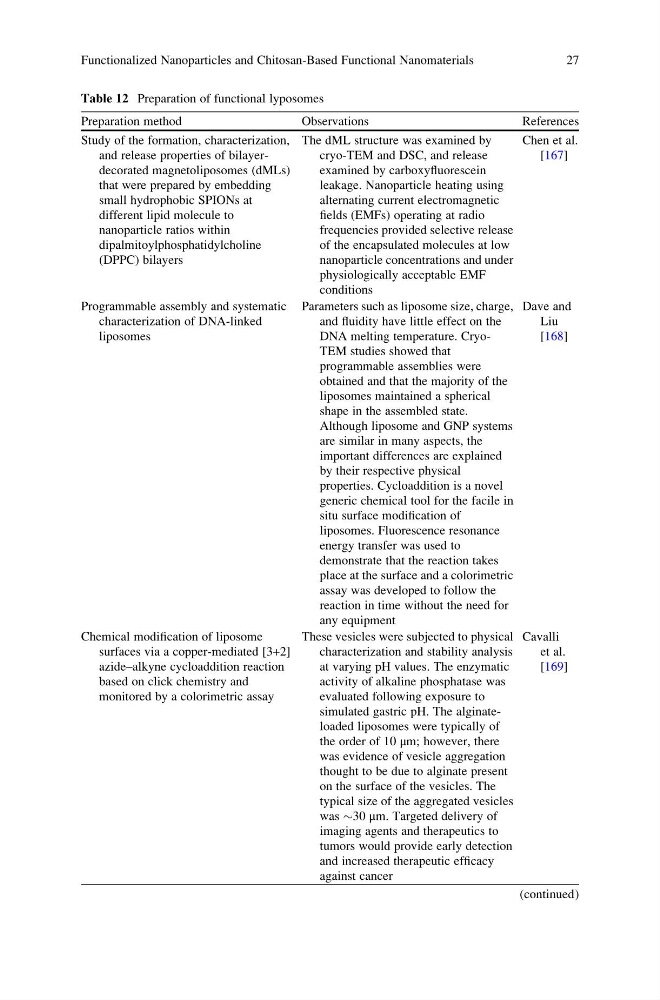
Table 12 Preparation of functional lyposomes
Preparation method
Observations
References
Study of the formation, characterization,
and release properties of bilayerdecorated magnetoliposomes (dMLs)
that were prepared by embedding
small hydrophobic SPIONs at
different lipid molecule to
nanoparticle ratios within
dipalmitoylphosphatidylcholine
(DPPC) bilayers
The dML structure was examined by
cryo-TEM and DSC, and release
examined by carboxyfluorescein
leakage. Nanoparticle heating using
alternating current electromagnetic
fields (EMFs) operating at radio
frequencies provided selective release
of the encapsulated molecules at low
nanoparticle concentrations and under
physiologically acceptable EMF
conditions
Chen et al.
[167]
Programmable assembly and systematic
characterization of DNA-linked
liposomes
Parameters such as liposome size, charge,
and fluidity have little effect on the
DNA melting temperature. CryoTEM studies showed that
programmable assemblies were
obtained and that the majority of the
liposomes maintained a spherical
shape in the assembled state.
Although liposome and GNP systems
are similar in many aspects, the
important differences are explained
by their respective physical
properties. Cycloaddition is a novel
generic chemical tool for the facile in
situ surface modification of
liposomes. Fluorescence resonance
energy transfer was used to
demonstrate that the reaction takes
place at the surface and a colorimetric
assay was developed to follow the
reaction in time without the need for
any equipment
Dave and
Liu
[168]
Chemical modification of liposome
surfaces via a copper-mediated [3+2]
azide–alkyne cycloaddition reaction
based on click chemistry and
monitored by a colorimetric assay
These vesicles were subjected to physical
characterization and stability analysis
at varying pH values. The enzymatic
activity of alkaline phosphatase was
evaluated following exposure to
simulated gastric pH. The alginateloaded liposomes were typically of
the order of 10 μm; however, there
was evidence of vesicle aggregation
thought to be due to alginate present
on the surface of the vesicles. The
typical size of the aggregated vesicles
was $30 μm. Targeted delivery of
imaging agents and therapeutics to
tumors would provide early detection
and increased therapeutic efficacy
against cancer
Cavalli
et al.
[169]
(continued)
Functionalized Nanoparticles and Chitosan-Based Functional Nanomaterials
27
Preparation method
Observations
References
Study of the formation, characterization,
and release properties of bilayerdecorated magnetoliposomes (dMLs)
that were prepared by embedding
small hydrophobic SPIONs at
different lipid molecule to
nanoparticle ratios within
dipalmitoylphosphatidylcholine
(DPPC) bilayers
The dML structure was examined by
cryo-TEM and DSC, and release
examined by carboxyfluorescein
leakage. Nanoparticle heating using
alternating current electromagnetic
fields (EMFs) operating at radio
frequencies provided selective release
of the encapsulated molecules at low
nanoparticle concentrations and under
physiologically acceptable EMF
conditions
Chen et al.
[167]
Programmable assembly and systematic
characterization of DNA-linked
liposomes
Parameters such as liposome size, charge,
and fluidity have little effect on the
DNA melting temperature. CryoTEM studies showed that
programmable assemblies were
obtained and that the majority of the
liposomes maintained a spherical
shape in the assembled state.
Although liposome and GNP systems
are similar in many aspects, the
important differences are explained
by their respective physical
properties. Cycloaddition is a novel
generic chemical tool for the facile in
situ surface modification of
liposomes. Fluorescence resonance
energy transfer was used to
demonstrate that the reaction takes
place at the surface and a colorimetric
assay was developed to follow the
reaction in time without the need for
any equipment
Dave and
Liu
[168]
Chemical modification of liposome
surfaces via a copper-mediated [3+2]
azide–alkyne cycloaddition reaction
based on click chemistry and
monitored by a colorimetric assay
These vesicles were subjected to physical
characterization and stability analysis
at varying pH values. The enzymatic
activity of alkaline phosphatase was
evaluated following exposure to
simulated gastric pH. The alginateloaded liposomes were typically of
the order of 10 μm; however, there
was evidence of vesicle aggregation
thought to be due to alginate present
on the surface of the vesicles. The
typical size of the aggregated vesicles
was $30 μm. Targeted delivery of
imaging agents and therapeutics to
tumors would provide early detection
and increased therapeutic efficacy
against cancer
Cavalli
et al.
[169]
(continued)
Functionalized Nanoparticles and Chitosan-Based Functional Nanomaterials
27