

IONPs have unique interaction with biological entities and magnetic nanoparticles,
assisted by biological recognition elements attached to their surface, can access the
target specifically. Methods of preparation for functional IONPs are enumerated in
Table 5.
3.2.1 Iron Oxide Nanoparticles in Polymers
The preparation of wholly organic polymeric materials possessing high magnetic
movements and susceptibilities comparable to inorganic systems remains a challenge. To overcome this inherent problem, the synthesis of composites combining
organic polymers and inorganic magnetic particles has been conducted to prepare
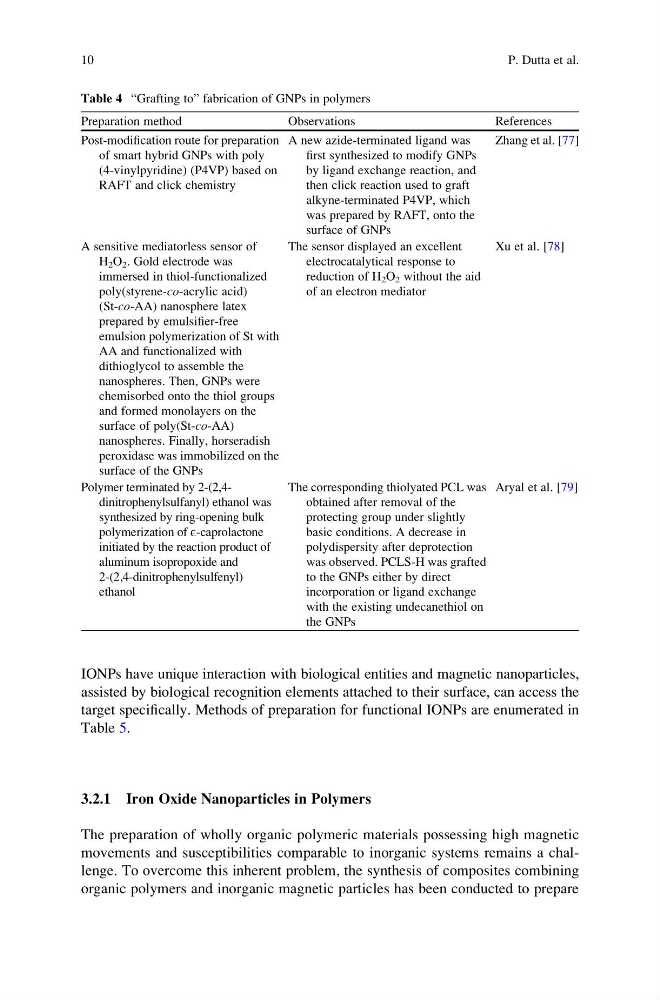
Table 4 “Grafting to” fabrication of GNPs in polymers
Preparation method
Observations
References
Post-modification route for preparation
of smart hybrid GNPs with poly
(4-vinylpyridine) (P4VP) based on
RAFT and click chemistry
A new azide-terminated ligand was
first synthesized to modify GNPs
by ligand exchange reaction, and
then click reaction used to graft
alkyne-terminated P4VP, which
was prepared by RAFT, onto the
surface of GNPs
Zhang et al. [77]
A sensitive mediatorless sensor of
H 2 O 2 . Gold electrode was
immersed in thiol-functionalized
poly(styrene-co-acrylic acid)
(St-co-AA) nanosphere latex
prepared by emulsifier-free
emulsion polymerization of St with
AA and functionalized with
dithioglycol to assemble the
nanospheres. Then, GNPs were
chemisorbed onto the thiol groups
and formed monolayers on the
surface of poly(St-co-AA)
nanospheres. Finally, horseradish
peroxidase was immobilized on the
surface of the GNPs
The sensor displayed an excellent
electrocatalytical response to
reduction of H 2 O 2 without the aid
of an electron mediator
Xu et al. [78]
Polymer terminated by 2-(2,4dinitrophenylsulfanyl) ethanol was
synthesized by ring-opening bulk
polymerization of E-caprolactone
initiated by the reaction product of
aluminum isopropoxide and
2-(2,4-dinitrophenylsulfenyl)
ethanol
The corresponding thiolyated PCL was
obtained after removal of the
protecting group under slightly
basic conditions. A decrease in
polydispersity after deprotection
was observed. PCLS-H was grafted
to the GNPs either by direct
incorporation or ligand exchange
with the existing undecanethiol on
the GNPs
Aryal et al. [79]
10
P. Dutta et al.
assisted by biological recognition elements attached to their surface, can access the
target specifically. Methods of preparation for functional IONPs are enumerated in
Table 5.
3.2.1 Iron Oxide Nanoparticles in Polymers
The preparation of wholly organic polymeric materials possessing high magnetic
movements and susceptibilities comparable to inorganic systems remains a challenge. To overcome this inherent problem, the synthesis of composites combining
organic polymers and inorganic magnetic particles has been conducted to prepare
Table 4 “Grafting to” fabrication of GNPs in polymers
Preparation method
Observations
References
Post-modification route for preparation
of smart hybrid GNPs with poly
(4-vinylpyridine) (P4VP) based on
RAFT and click chemistry
A new azide-terminated ligand was
first synthesized to modify GNPs
by ligand exchange reaction, and
then click reaction used to graft
alkyne-terminated P4VP, which
was prepared by RAFT, onto the
surface of GNPs
Zhang et al. [77]
A sensitive mediatorless sensor of
H 2 O 2 . Gold electrode was
immersed in thiol-functionalized
poly(styrene-co-acrylic acid)
(St-co-AA) nanosphere latex
prepared by emulsifier-free
emulsion polymerization of St with
AA and functionalized with
dithioglycol to assemble the
nanospheres. Then, GNPs were
chemisorbed onto the thiol groups
and formed monolayers on the
surface of poly(St-co-AA)
nanospheres. Finally, horseradish
peroxidase was immobilized on the
surface of the GNPs
The sensor displayed an excellent
electrocatalytical response to
reduction of H 2 O 2 without the aid
of an electron mediator
Xu et al. [78]
Polymer terminated by 2-(2,4dinitrophenylsulfanyl) ethanol was
synthesized by ring-opening bulk
polymerization of E-caprolactone
initiated by the reaction product of
aluminum isopropoxide and
2-(2,4-dinitrophenylsulfenyl)
ethanol
The corresponding thiolyated PCL was
obtained after removal of the
protecting group under slightly
basic conditions. A decrease in
polydispersity after deprotection
was observed. PCLS-H was grafted
to the GNPs either by direct
incorporation or ligand exchange
with the existing undecanethiol on
the GNPs
Aryal et al. [79]
10
P. Dutta et al.