

the therapy [2, 3]. During the process of preparing nanoparticles, the stability and
biological activity of the drug should be maintained during entrapment. Further,
the nanoparticles should have the required size range without any aggregation
or adherence, with high entrapment efficiency. Polymeric nanoparticles can be
conveniently prepared either from preformed polymers or by direct polymerization
of monomers using classical polymerization [50, 51]. Various methods such as
solvent evaporation, salting-out, dialysis, and supercritical fluid technology are
being utilized for the preparation of polymeric nanoparticles. Polymeric
nanoparticles can also be synthesized by the polymerization of monomers using
various techniques such as microemulsion, miniemulsion, surfactant-free emulsion, and interfacial polymerization. Selection of preparation method is made on
the basis of a number of factors such as the type of polymer, site of application,
size requirement, etc. A polymeric system that is developed for biomedical
or environmental application should be completely free from additives, reactants
such as surfactants, and traces of organic solvents, etc. Some commonly used
methods for the preparation of polymeric nanoparticles are given below, together
with a flow diagram to provide a general idea of the preparation of nanoparticles
(Scheme 1).
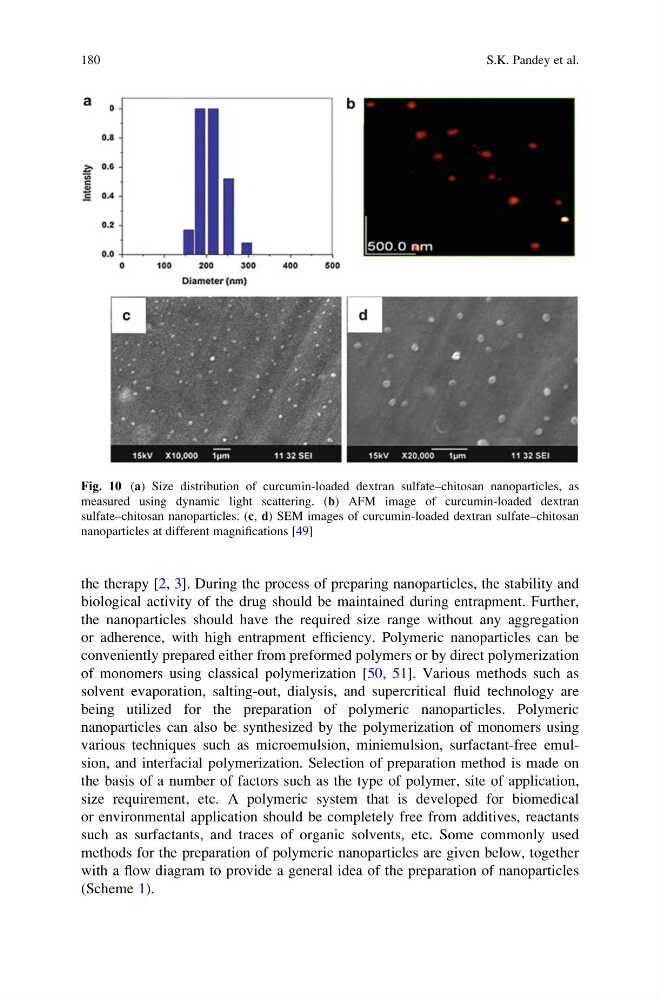
Fig. 10 (a) Size distribution of curcumin-loaded dextran sulfate–chitosan nanoparticles, as
measured using dynamic light scattering. (b) AFM image of curcumin-loaded dextran
sulfate–chitosan nanoparticles. (c, d) SEM images of curcumin-loaded dextran sulfate–chitosan
nanoparticles at different magnifications [49]
180
S.K. Pandey et al.
biological activity of the drug should be maintained during entrapment. Further,
the nanoparticles should have the required size range without any aggregation
or adherence, with high entrapment efficiency. Polymeric nanoparticles can be
conveniently prepared either from preformed polymers or by direct polymerization
of monomers using classical polymerization [50, 51]. Various methods such as
solvent evaporation, salting-out, dialysis, and supercritical fluid technology are
being utilized for the preparation of polymeric nanoparticles. Polymeric
nanoparticles can also be synthesized by the polymerization of monomers using
various techniques such as microemulsion, miniemulsion, surfactant-free emulsion, and interfacial polymerization. Selection of preparation method is made on
the basis of a number of factors such as the type of polymer, site of application,
size requirement, etc. A polymeric system that is developed for biomedical
or environmental application should be completely free from additives, reactants
such as surfactants, and traces of organic solvents, etc. Some commonly used
methods for the preparation of polymeric nanoparticles are given below, together
with a flow diagram to provide a general idea of the preparation of nanoparticles
(Scheme 1).
Fig. 10 (a) Size distribution of curcumin-loaded dextran sulfate–chitosan nanoparticles, as
measured using dynamic light scattering. (b) AFM image of curcumin-loaded dextran
sulfate–chitosan nanoparticles. (c, d) SEM images of curcumin-loaded dextran sulfate–chitosan
nanoparticles at different magnifications [49]
180
S.K. Pandey et al.