

PLA nanoparticles have been prepared by a reversible salting-out process using a
cross-flow filtration technique by which 90% drug entrapment was achieved [41].
Niwa et al. prepared nanoparticles for indomethacin (a water-insoluble drug) and
5-fuorouracil (a water-soluble drug) by a novel spontaneous emulsification/solvent
diffusion method [42]. The drug and PLGA were dissolved in acetone–DCM
mixture and subsequently emulsified in an aqueous PVA solution using a highspeed homogenizer (o/w emulsification). The rapid diffusion of acetone in the
aqueous phase resulted in faster deposition and development of polymeric
nanoparticles of size less than 500 nm. The preparation of PLGA particles may
also be based on double coacervation of PVA and PLGA, whereby PLGA was first
dissolved in a mixture of acetone and DCM, ethanol, or methanol and then dispersed
in aqueous PVA solution with stirring [43]. The dispersed solution was freeze-dried
to obtain powder having size of approximately 300 nm. The coacervated PVA
molecules help prevent the aggregation of PLGA nanoparticles due to steric hindrance. A dual-capillary electrospray system was developed to synthesize
budesonide-loaded PLGA particles with varying sizes by using different
concentrations of PLGA (Fig. 7). Budesonide is a lipophilic, glucocorticoid steroid
for the treatment of asthma and non-infectious rhinitis. It has also been studied in the
chemoprevention of lung cancer [44]. Electrospray operating in the cone-jet mode
generally produces monodisperse particles in sizes ranging from nanometers to
micrometers. The investigated dual-capillary electrospray system demonstrated
the production of uniform PLGA-coated particles in one step without any later
separation or purification steps [45]. Evaluation of in vitro and in vivo anticancer
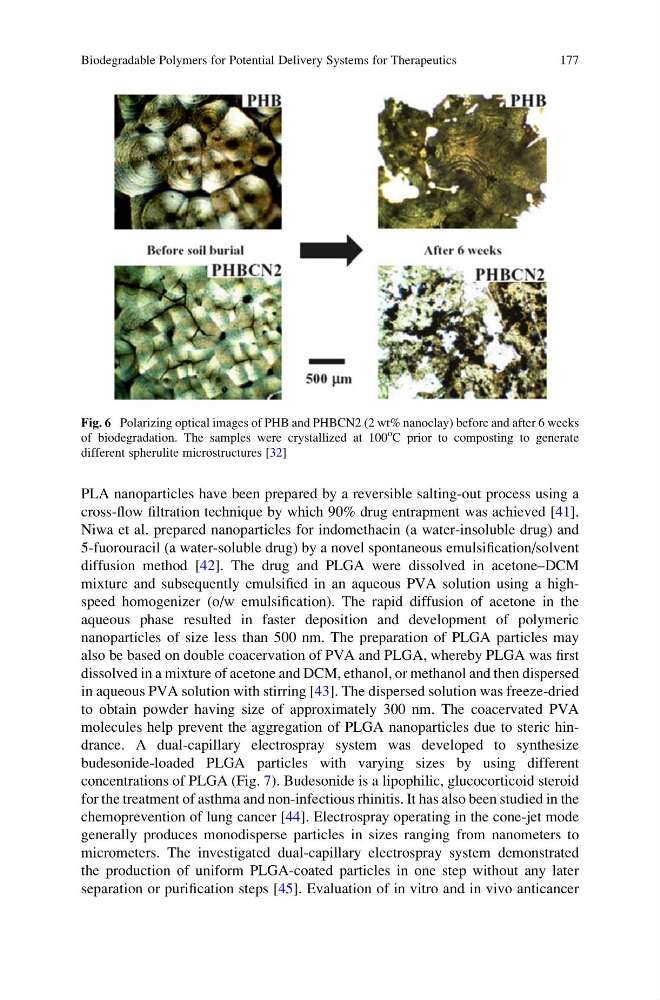
Fig. 6 Polarizing optical images of PHB and PHBCN2 (2 wt% nanoclay) before and after 6 weeks
of biodegradation. The samples were crystallized at 100
o
C prior to composting to generate
different spherulite microstructures [32]
Biodegradable Polymers for Potential Delivery Systems for Therapeutics
177
cross-flow filtration technique by which 90% drug entrapment was achieved [41].
Niwa et al. prepared nanoparticles for indomethacin (a water-insoluble drug) and
5-fuorouracil (a water-soluble drug) by a novel spontaneous emulsification/solvent
diffusion method [42]. The drug and PLGA were dissolved in acetone–DCM
mixture and subsequently emulsified in an aqueous PVA solution using a highspeed homogenizer (o/w emulsification). The rapid diffusion of acetone in the
aqueous phase resulted in faster deposition and development of polymeric
nanoparticles of size less than 500 nm. The preparation of PLGA particles may
also be based on double coacervation of PVA and PLGA, whereby PLGA was first
dissolved in a mixture of acetone and DCM, ethanol, or methanol and then dispersed
in aqueous PVA solution with stirring [43]. The dispersed solution was freeze-dried
to obtain powder having size of approximately 300 nm. The coacervated PVA
molecules help prevent the aggregation of PLGA nanoparticles due to steric hindrance. A dual-capillary electrospray system was developed to synthesize
budesonide-loaded PLGA particles with varying sizes by using different
concentrations of PLGA (Fig. 7). Budesonide is a lipophilic, glucocorticoid steroid
for the treatment of asthma and non-infectious rhinitis. It has also been studied in the
chemoprevention of lung cancer [44]. Electrospray operating in the cone-jet mode
generally produces monodisperse particles in sizes ranging from nanometers to
micrometers. The investigated dual-capillary electrospray system demonstrated
the production of uniform PLGA-coated particles in one step without any later
separation or purification steps [45]. Evaluation of in vitro and in vivo anticancer
Fig. 6 Polarizing optical images of PHB and PHBCN2 (2 wt% nanoclay) before and after 6 weeks
of biodegradation. The samples were crystallized at 100
o
C prior to composting to generate
different spherulite microstructures [32]
Biodegradable Polymers for Potential Delivery Systems for Therapeutics
177