

drying, and thermal crosslinking [159]. These methods usually involve the use of
organic solvents, surfactants, and an elevated preparation temperature, which may
lead to loss or reduction in bioactivity of some drugs and cause continuing toxic
effects [160]. Therefore, to avoid the use of organic solvents, researchers are trying
to prepare crosslinked polysaccharide-based nanospheres with narrow size distribution in aqueous media at room temperature. Wang et al. [121] reported the
preparation of chitosan–cyclodextrin nanospheres through in situ formation during
Michael addition in an aqueous solution at room temperature. Before preparing
these nanospheres, both chitosan and cyclodextrin had been chemically modified.
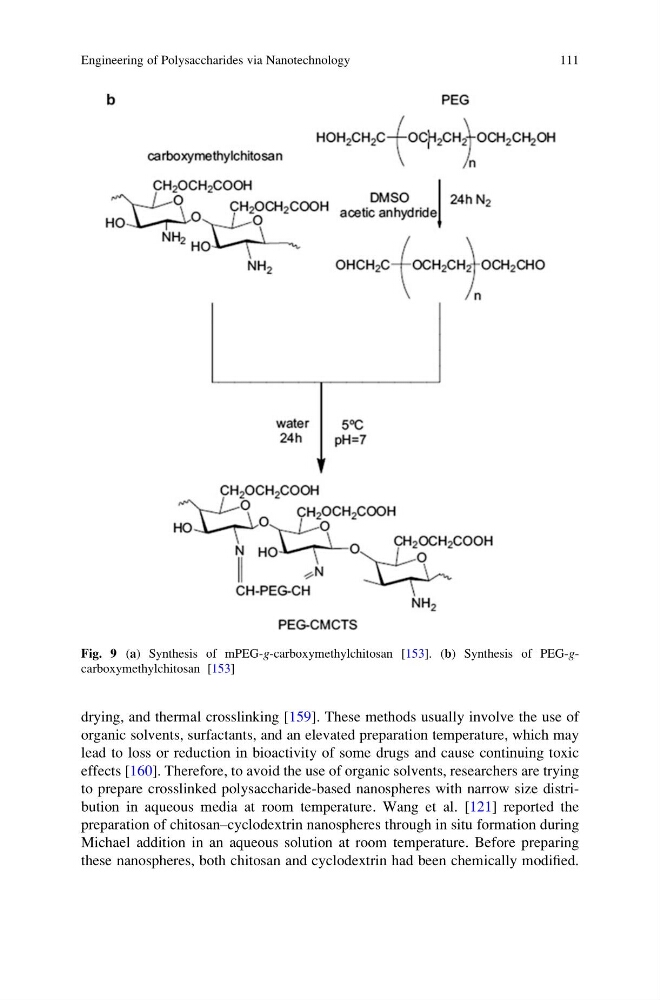
Fig. 9 (a) Synthesis of mPEG-g-carboxymethylchitosan [153]. (b) Synthesis of PEG-gcarboxymethylchitosan [153]
Engineering of Polysaccharides via Nanotechnology
111
organic solvents, surfactants, and an elevated preparation temperature, which may
lead to loss or reduction in bioactivity of some drugs and cause continuing toxic
effects [160]. Therefore, to avoid the use of organic solvents, researchers are trying
to prepare crosslinked polysaccharide-based nanospheres with narrow size distribution in aqueous media at room temperature. Wang et al. [121] reported the
preparation of chitosan–cyclodextrin nanospheres through in situ formation during
Michael addition in an aqueous solution at room temperature. Before preparing
these nanospheres, both chitosan and cyclodextrin had been chemically modified.
Fig. 9 (a) Synthesis of mPEG-g-carboxymethylchitosan [153]. (b) Synthesis of PEG-gcarboxymethylchitosan [153]
Engineering of Polysaccharides via Nanotechnology
111