

17 Theoretical Analysis of Phase-Transition Temperature
315
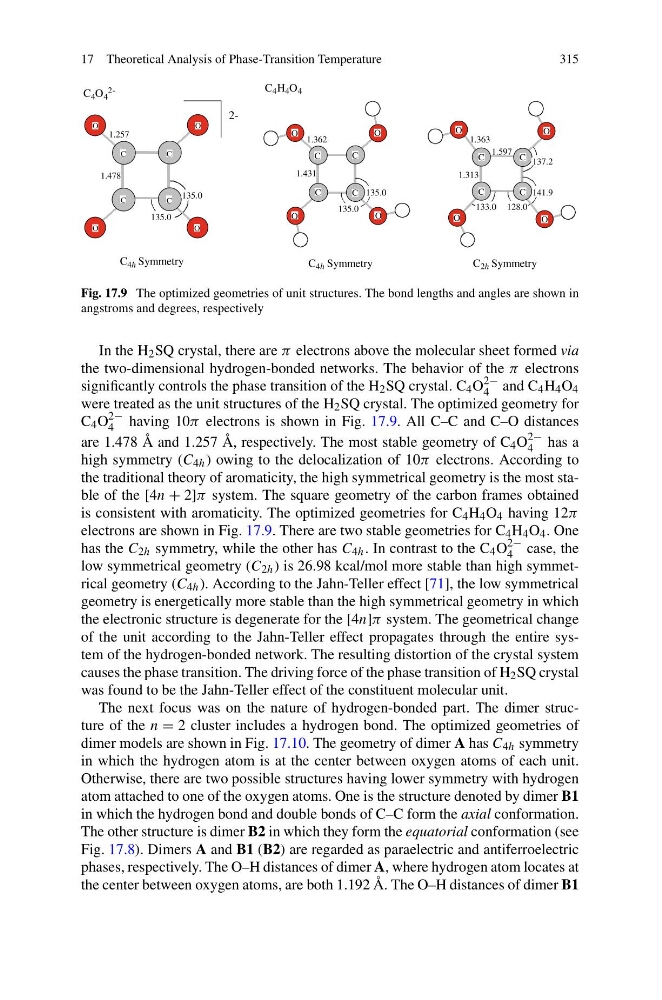
Fig. 17.9 The optimized geometries of unit structures. The bond lengths and angles are shown in
angstroms and degrees, respectively
In the H 2 SQ crystal, there are π electrons above the molecular sheet formed via
the two-dimensional hydrogen-bonded networks. The behavior of the π electrons
significantly controls the phase transition of the H 2 SQ crystal. C 4 O
2−
4 and C 4 H 4 O 4
were treated as the unit structures of the H 2 SQ crystal. The optimized geometry for
C 4 O
2−
4 having 10π electrons is shown in Fig. 17.9. All C–C and C–O distances
are 1.478 Å and 1.257 Å, respectively. The most stable geometry of C 4 O
2−
4 has a
high symmetry (C 4h ) owing to the delocalization of 10π electrons. According to
the traditional theory of aromaticity, the high symmetrical geometry is the most stable of the [4n + 2]π system. The square geometry of the carbon frames obtained
is consistent with aromaticity. The optimized geometries for C 4 H 4 O 4 having 12π
electrons are shown in Fig. 17.9. There are two stable geometries for C 4 H 4 O 4 . One
has the C 2h symmetry, while the other has C 4h . In contrast to the C 4 O
2−
4 case, the
low symmetrical geometry (C 2h ) is 26.98 kcal/mol more stable than high symmetrical geometry (C 4h ). According to the Jahn-Teller effect [71], the low symmetrical
geometry is energetically more stable than the high symmetrical geometry in which
the electronic structure is degenerate for the [4n]π system. The geometrical change
of the unit according to the Jahn-Teller effect propagates through the entire system of the hydrogen-bonded network. The resulting distortion of the crystal system
causes the phase transition. The driving force of the phase transition of H 2 SQ crystal
was found to be the Jahn-Teller effect of the constituent molecular unit.
The next focus was on the nature of hydrogen-bonded part. The dimer structure of the n = 2 cluster includes a hydrogen bond. The optimized geometries of
dimer models are shown in Fig. 17.10. The geometry of dimer A has C 4h symmetry
in which the hydrogen atom is at the center between oxygen atoms of each unit.
Otherwise, there are two possible structures having lower symmetry with hydrogen
atom attached to one of the oxygen atoms. One is the structure denoted by dimer B1
in which the hydrogen bond and double bonds of C–C form the axial conformation.
The other structure is dimer B2 in which they form the equatorial conformation (see
Fig. 17.8). Dimers A and B1 (B2) are regarded as paraelectric and antiferroelectric
phases, respectively. The O–H distances of dimer A, where hydrogen atom locates at
the center between oxygen atoms, are both 1.192 Å. The O–H distances of dimer B1
315
Fig. 17.9 The optimized geometries of unit structures. The bond lengths and angles are shown in
angstroms and degrees, respectively
In the H 2 SQ crystal, there are π electrons above the molecular sheet formed via
the two-dimensional hydrogen-bonded networks. The behavior of the π electrons
significantly controls the phase transition of the H 2 SQ crystal. C 4 O
2−
4 and C 4 H 4 O 4
were treated as the unit structures of the H 2 SQ crystal. The optimized geometry for
C 4 O
2−
4 having 10π electrons is shown in Fig. 17.9. All C–C and C–O distances
are 1.478 Å and 1.257 Å, respectively. The most stable geometry of C 4 O
2−
4 has a
high symmetry (C 4h ) owing to the delocalization of 10π electrons. According to
the traditional theory of aromaticity, the high symmetrical geometry is the most stable of the [4n + 2]π system. The square geometry of the carbon frames obtained
is consistent with aromaticity. The optimized geometries for C 4 H 4 O 4 having 12π
electrons are shown in Fig. 17.9. There are two stable geometries for C 4 H 4 O 4 . One
has the C 2h symmetry, while the other has C 4h . In contrast to the C 4 O
2−
4 case, the
low symmetrical geometry (C 2h ) is 26.98 kcal/mol more stable than high symmetrical geometry (C 4h ). According to the Jahn-Teller effect [71], the low symmetrical
geometry is energetically more stable than the high symmetrical geometry in which
the electronic structure is degenerate for the [4n]π system. The geometrical change
of the unit according to the Jahn-Teller effect propagates through the entire system of the hydrogen-bonded network. The resulting distortion of the crystal system
causes the phase transition. The driving force of the phase transition of H 2 SQ crystal
was found to be the Jahn-Teller effect of the constituent molecular unit.
The next focus was on the nature of hydrogen-bonded part. The dimer structure of the n = 2 cluster includes a hydrogen bond. The optimized geometries of
dimer models are shown in Fig. 17.10. The geometry of dimer A has C 4h symmetry
in which the hydrogen atom is at the center between oxygen atoms of each unit.
Otherwise, there are two possible structures having lower symmetry with hydrogen
atom attached to one of the oxygen atoms. One is the structure denoted by dimer B1
in which the hydrogen bond and double bonds of C–C form the axial conformation.
The other structure is dimer B2 in which they form the equatorial conformation (see
Fig. 17.8). Dimers A and B1 (B2) are regarded as paraelectric and antiferroelectric
phases, respectively. The O–H distances of dimer A, where hydrogen atom locates at
the center between oxygen atoms, are both 1.192 Å. The O–H distances of dimer B1