

312
T. Ishimoto and M. Tachikawa
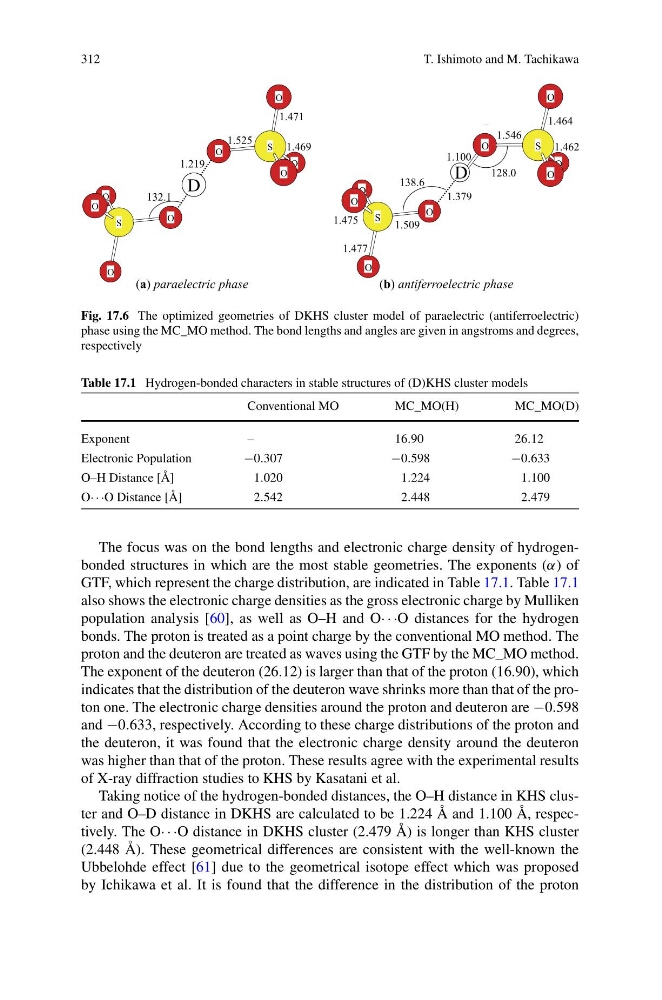
Fig. 17.6 The optimized geometries of DKHS cluster model of paraelectric (antiferroelectric)
phase using the MC_MO method. The bond lengths and angles are given in angstroms and degrees,
respectively
Table 17.1 Hydrogen-bonded characters in stable structures of (D)KHS cluster models
Conventional MO
MC_MO(H)
MC_MO(D)
Exponent
–
16.90
26.12
Electronic Population
−0.307
−0.598
−0.633
O–H Distance [Å]
1.020
1.224
1.100
O· · ·O Distance [Å]
2.542
2.448
2.479
The focus was on the bond lengths and electronic charge density of hydrogenbonded structures in which are the most stable geometries. The exponents (α) of
GTF, which represent the charge distribution, are indicated in Table 17.1. Table 17.1
also shows the electronic charge densities as the gross electronic charge by Mulliken
population analysis [60], as well as O–H and O· · ·O distances for the hydrogen
bonds. The proton is treated as a point charge by the conventional MO method. The
proton and the deuteron are treated as waves using the GTF by the MC_MO method.
The exponent of the deuteron (26.12) is larger than that of the proton (16.90), which
indicates that the distribution of the deuteron wave shrinks more than that of the proton one. The electronic charge densities around the proton and deuteron are −0.598
and −0.633, respectively. According to these charge distributions of the proton and
the deuteron, it was found that the electronic charge density around the deuteron
was higher than that of the proton. These results agree with the experimental results
of X-ray diffraction studies to KHS by Kasatani et al.
Taking notice of the hydrogen-bonded distances, the O–H distance in KHS cluster and O–D distance in DKHS are calculated to be 1.224 Å and 1.100 Å, respectively. The O· · ·O distance in DKHS cluster (2.479 Å) is longer than KHS cluster
(2.448 Å). These geometrical differences are consistent with the well-known the
Ubbelohde effect [61] due to the geometrical isotope effect which was proposed
by Ichikawa et al. It is found that the difference in the distribution of the proton
T. Ishimoto and M. Tachikawa
Fig. 17.6 The optimized geometries of DKHS cluster model of paraelectric (antiferroelectric)
phase using the MC_MO method. The bond lengths and angles are given in angstroms and degrees,
respectively
Table 17.1 Hydrogen-bonded characters in stable structures of (D)KHS cluster models
Conventional MO
MC_MO(H)
MC_MO(D)
Exponent
–
16.90
26.12
Electronic Population
−0.307
−0.598
−0.633
O–H Distance [Å]
1.020
1.224
1.100
O· · ·O Distance [Å]
2.542
2.448
2.479
The focus was on the bond lengths and electronic charge density of hydrogenbonded structures in which are the most stable geometries. The exponents (α) of
GTF, which represent the charge distribution, are indicated in Table 17.1. Table 17.1
also shows the electronic charge densities as the gross electronic charge by Mulliken
population analysis [60], as well as O–H and O· · ·O distances for the hydrogen
bonds. The proton is treated as a point charge by the conventional MO method. The
proton and the deuteron are treated as waves using the GTF by the MC_MO method.
The exponent of the deuteron (26.12) is larger than that of the proton (16.90), which
indicates that the distribution of the deuteron wave shrinks more than that of the proton one. The electronic charge densities around the proton and deuteron are −0.598
and −0.633, respectively. According to these charge distributions of the proton and
the deuteron, it was found that the electronic charge density around the deuteron
was higher than that of the proton. These results agree with the experimental results
of X-ray diffraction studies to KHS by Kasatani et al.
Taking notice of the hydrogen-bonded distances, the O–H distance in KHS cluster and O–D distance in DKHS are calculated to be 1.224 Å and 1.100 Å, respectively. The O· · ·O distance in DKHS cluster (2.479 Å) is longer than KHS cluster
(2.448 Å). These geometrical differences are consistent with the well-known the
Ubbelohde effect [61] due to the geometrical isotope effect which was proposed
by Ichikawa et al. It is found that the difference in the distribution of the proton