

228
T. Onishi
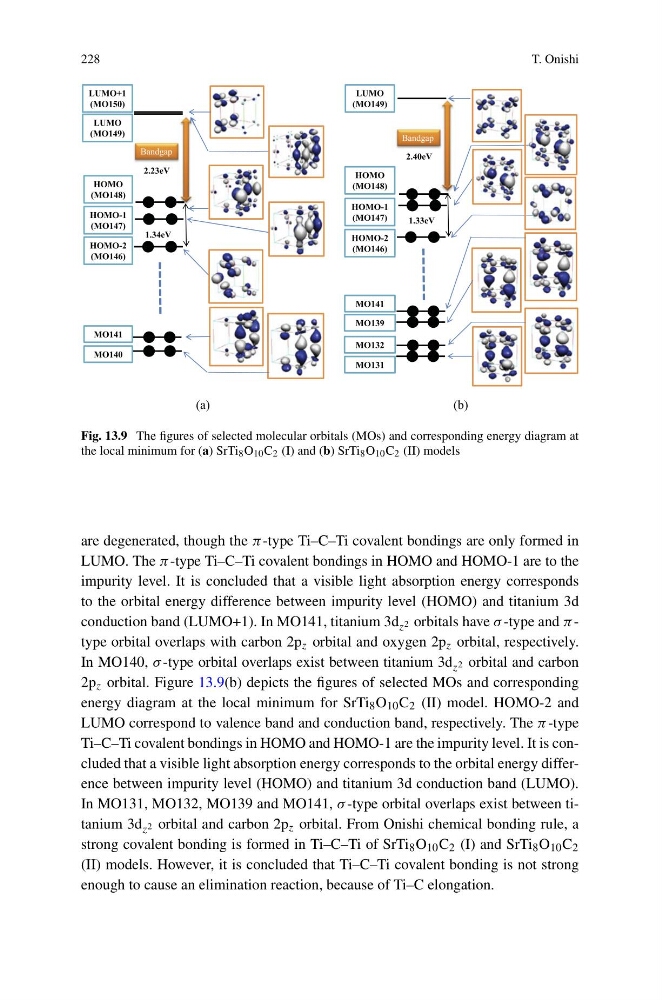
Fig. 13.9 The figures of selected molecular orbitals (MOs) and corresponding energy diagram at
the local minimum for (a) SrTi 8 O 10 C 2 (I) and (b) SrTi 8 O 10 C 2 (II) models
are degenerated, though the π -type Ti–C–Ti covalent bondings are only formed in
LUMO. The π -type Ti–C–Ti covalent bondings in HOMO and HOMO-1 are to the
impurity level. It is concluded that a visible light absorption energy corresponds
to the orbital energy difference between impurity level (HOMO) and titanium 3d
conduction band (LUMO+1). In MO141, titanium 3d z 2 orbitals have σ -type and π -
type orbital overlaps with carbon 2p z orbital and oxygen 2p z orbital, respectively.
In MO140, σ -type orbital overlaps exist between titanium 3d z 2 orbital and carbon
2p z orbital. Figure 13.9(b) depicts the figures of selected MOs and corresponding
energy diagram at the local minimum for SrTi 8 O 10 C 2 (II) model. HOMO-2 and
LUMO correspond to valence band and conduction band, respectively. The π -type
Ti–C–Ti covalent bondings in HOMO and HOMO-1 are the impurity level. It is concluded that a visible light absorption energy corresponds to the orbital energy difference between impurity level (HOMO) and titanium 3d conduction band (LUMO).
In MO131, MO132, MO139 and MO141, σ -type orbital overlaps exist between titanium 3d z 2 orbital and carbon 2p z orbital. From Onishi chemical bonding rule, a
strong covalent bonding is formed in Ti–C–Ti of SrTi 8 O 10 C 2 (I) and SrTi 8 O 10 C 2
(II) models. However, it is concluded that Ti–C–Ti covalent bonding is not strong
enough to cause an elimination reaction, because of Ti–C elongation.
T. Onishi
Fig. 13.9 The figures of selected molecular orbitals (MOs) and corresponding energy diagram at
the local minimum for (a) SrTi 8 O 10 C 2 (I) and (b) SrTi 8 O 10 C 2 (II) models
are degenerated, though the π -type Ti–C–Ti covalent bondings are only formed in
LUMO. The π -type Ti–C–Ti covalent bondings in HOMO and HOMO-1 are to the
impurity level. It is concluded that a visible light absorption energy corresponds
to the orbital energy difference between impurity level (HOMO) and titanium 3d
conduction band (LUMO+1). In MO141, titanium 3d z 2 orbitals have σ -type and π -
type orbital overlaps with carbon 2p z orbital and oxygen 2p z orbital, respectively.
In MO140, σ -type orbital overlaps exist between titanium 3d z 2 orbital and carbon
2p z orbital. Figure 13.9(b) depicts the figures of selected MOs and corresponding
energy diagram at the local minimum for SrTi 8 O 10 C 2 (II) model. HOMO-2 and
LUMO correspond to valence band and conduction band, respectively. The π -type
Ti–C–Ti covalent bondings in HOMO and HOMO-1 are the impurity level. It is concluded that a visible light absorption energy corresponds to the orbital energy difference between impurity level (HOMO) and titanium 3d conduction band (LUMO).
In MO131, MO132, MO139 and MO141, σ -type orbital overlaps exist between titanium 3d z 2 orbital and carbon 2p z orbital. From Onishi chemical bonding rule, a
strong covalent bonding is formed in Ti–C–Ti of SrTi 8 O 10 C 2 (I) and SrTi 8 O 10 C 2
(II) models. However, it is concluded that Ti–C–Ti covalent bonding is not strong
enough to cause an elimination reaction, because of Ti–C elongation.