

nanofibers as nucleating agents and highly effective reinforcement of the polyolefin
matrix, especially when shish–kebab-like structures are formed. Since no alien
fillers are needed, these materials are referred to as “all polyolefin” nanocomposites. This second strategy is of particular interest in view of sustainable
development with effective recycling of polyolefin materials.
2.1 Polymerization Filling and In situ Nanocomposites
Similar to the immobilization of multi-site catalysts on various inorganic supports
such as magnesium chloride, silica, and alumina, the (nano)fillers can be modified in
order to enable in situ nanocomposite formation when used in modern catalysis
[19]. Preferably, the filler is pretreated with methylaluminoxane (MAO) or other
metal alkyls, which are adsorbed on the filler surface and in case of porous structures
adsorbed within the pores, forming smaller pores with smaller radii. Since traces of
water and hydroxyl groups can cause severe catalyst poisoning, aluminum alkyls are
used as highly effective scavengers for rapid conversion of protic and polar
impurities as well as surface groups. As illustrated in Fig. 3, in the case of singlesite and post-metallocene catalysis, MAO-tethered filler surfaces function in the
same way as support and catalyst activator. Examples include silicates, zeolites,
boehmites, and functionalized polymer particles [20–27]. Alternatively, the catalyst
is attached to the filler surface by covalent bond formation prior to its activation
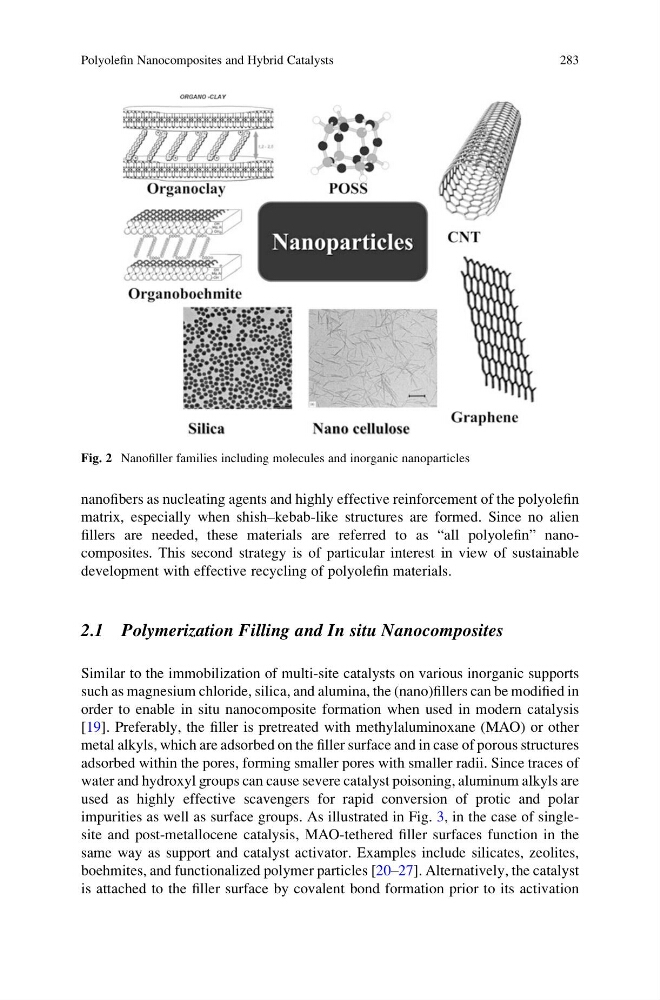
Fig. 2 Nanofiller families including molecules and inorganic nanoparticles
Polyolefin Nanocomposites and Hybrid Catalysts
283
matrix, especially when shish–kebab-like structures are formed. Since no alien
fillers are needed, these materials are referred to as “all polyolefin” nanocomposites. This second strategy is of particular interest in view of sustainable
development with effective recycling of polyolefin materials.
2.1 Polymerization Filling and In situ Nanocomposites
Similar to the immobilization of multi-site catalysts on various inorganic supports
such as magnesium chloride, silica, and alumina, the (nano)fillers can be modified in
order to enable in situ nanocomposite formation when used in modern catalysis
[19]. Preferably, the filler is pretreated with methylaluminoxane (MAO) or other
metal alkyls, which are adsorbed on the filler surface and in case of porous structures
adsorbed within the pores, forming smaller pores with smaller radii. Since traces of
water and hydroxyl groups can cause severe catalyst poisoning, aluminum alkyls are
used as highly effective scavengers for rapid conversion of protic and polar
impurities as well as surface groups. As illustrated in Fig. 3, in the case of singlesite and post-metallocene catalysis, MAO-tethered filler surfaces function in the
same way as support and catalyst activator. Examples include silicates, zeolites,
boehmites, and functionalized polymer particles [20–27]. Alternatively, the catalyst
is attached to the filler surface by covalent bond formation prior to its activation
Fig. 2 Nanofiller families including molecules and inorganic nanoparticles
Polyolefin Nanocomposites and Hybrid Catalysts
283