

dominant if the monomer insertion is delayed, as it is in cyclopolymerization of
1,5-hexadiene [143] and ethylene copolymerization with allylbenzene. In the
1 H-NMR spectra of ethylene–amide copolymers there was also a triplet signal at
δ 3.5 ppm, which is typical of primary alcohols. The presence of hydroxymethylene
groups in these copolymers was confirmed by
13 C-NMR spectroscopy (Fig. 18). A
reasonable explanation for the emergence of the hydroxyl groups is as follows:
since the polymer slurry was brought into contact with air a few minutes before the
acidic ethanol was added, a fraction of the Al-functional chain ends may have been
oxidized by oxygen and subsequently converted to hydroxyl groups by alcoholysis
[18, 144]. However, this cannot explain the trace amounts of similar types of
hydroxyl groups seen in the
1 H-NMR spectra of some of the propylene–amide
copolymers. On this basis, it seems probable that a fraction of the amide
functionalities was reduced to primary alcohol groups during either the polymerization or the acidic workup [145]. In ethylene–amide copolymers where the amount
of hydroxyl groups was higher, it was not possible by NMR to differentiate between
the hydroxyl groups at polymer chain ends and at the end of comonomer side
chains.
Molar mass distributions of the prepared copolymers were measured by gel
permeation chromatography (GPC). Relative to the molar masses of the
corresponding homopolymers, the molar masses of the functionalized copolymers
were always lower. This argues in favor of the ability of the functional comonomers
to terminate the propagation of the polymer chain. The decreasing effect on the
molar mass was most prominent with amides and amines. In general, the functional
comonomers had a greater lowering effect on molar mass in the ethylene
polymerizations. However, the molar masses of propylene copolymers were also
Alcohol 4
TMS ether 13
Me ether 12
1-Undecene
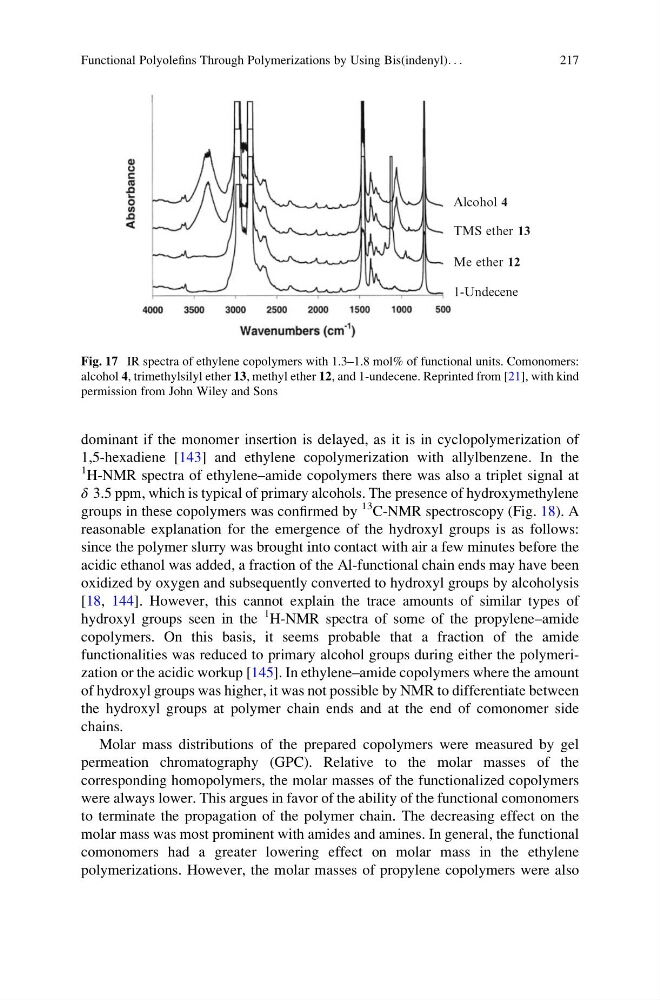
Fig. 17 IR spectra of ethylene copolymers with 1.3–1.8 mol% of functional units. Comonomers:
alcohol 4, trimethylsilyl ether 13, methyl ether 12, and 1-undecene. Reprinted from [21], with kind
permission from John Wiley and Sons
Functional Polyolefins Through Polymerizations by Using Bis(indenyl). . .
217
1,5-hexadiene [143] and ethylene copolymerization with allylbenzene. In the
1 H-NMR spectra of ethylene–amide copolymers there was also a triplet signal at
δ 3.5 ppm, which is typical of primary alcohols. The presence of hydroxymethylene
groups in these copolymers was confirmed by
13 C-NMR spectroscopy (Fig. 18). A
reasonable explanation for the emergence of the hydroxyl groups is as follows:
since the polymer slurry was brought into contact with air a few minutes before the
acidic ethanol was added, a fraction of the Al-functional chain ends may have been
oxidized by oxygen and subsequently converted to hydroxyl groups by alcoholysis
[18, 144]. However, this cannot explain the trace amounts of similar types of
hydroxyl groups seen in the
1 H-NMR spectra of some of the propylene–amide
copolymers. On this basis, it seems probable that a fraction of the amide
functionalities was reduced to primary alcohol groups during either the polymerization or the acidic workup [145]. In ethylene–amide copolymers where the amount
of hydroxyl groups was higher, it was not possible by NMR to differentiate between
the hydroxyl groups at polymer chain ends and at the end of comonomer side
chains.
Molar mass distributions of the prepared copolymers were measured by gel
permeation chromatography (GPC). Relative to the molar masses of the
corresponding homopolymers, the molar masses of the functionalized copolymers
were always lower. This argues in favor of the ability of the functional comonomers
to terminate the propagation of the polymer chain. The decreasing effect on the
molar mass was most prominent with amides and amines. In general, the functional
comonomers had a greater lowering effect on molar mass in the ethylene
polymerizations. However, the molar masses of propylene copolymers were also
Alcohol 4
TMS ether 13
Me ether 12
1-Undecene
Fig. 17 IR spectra of ethylene copolymers with 1.3–1.8 mol% of functional units. Comonomers:
alcohol 4, trimethylsilyl ether 13, methyl ether 12, and 1-undecene. Reprinted from [21], with kind
permission from John Wiley and Sons
Functional Polyolefins Through Polymerizations by Using Bis(indenyl). . .
217