

and are thus capable of reacting with TMA or MAO. No significant differences were
observed in the dimethyl-, diethyl-, and diisopropyl-substituted amides.
Compared with the amides, the amine comonomers 24–31 were much better
tolerated by the catalyst system. In ethylene copolymerizations, the catalyst activity
remained at a moderate level, i.e., 1,000–3,000 kg polymer/(mol Zr h), when
Al/comonomer ratios were 4–10 mol/mol. In the comparison of different amines,
0
1
2
3
4
5
0
1 0
2 0
3 0
4 0
5 0
6 0
Comonomer in feed mmol/l
Comonomer in polymermol-%
Alcohol 4
TMSether 13
Me ether 12
1-Undecene
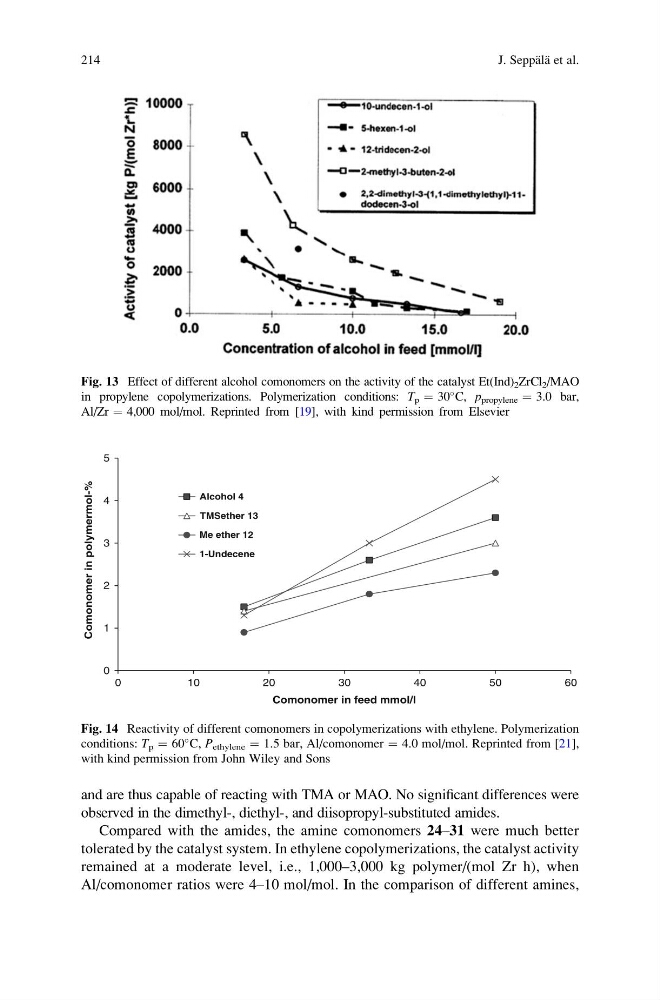
Fig. 14 Reactivity of different comonomers in copolymerizations with ethylene. Polymerization
conditions: T p ¼ 60
C, P ethylene ¼ 1.5 bar, Al/comonomer ¼ 4.0 mol/mol. Reprinted from [21],
with kind permission from John Wiley and Sons
Fig. 13 Effect of different alcohol comonomers on the activity of the catalyst Et(Ind) 2 ZrCl 2 /MAO
in propylene copolymerizations. Polymerization conditions: T p ¼ 30
C, p propylene ¼ 3.0 bar,
Al/Zr ¼ 4,000 mol/mol. Reprinted from [19], with kind permission from Elsevier
214
J. Seppa ¨la ¨ et al.
observed in the dimethyl-, diethyl-, and diisopropyl-substituted amides.
Compared with the amides, the amine comonomers 24–31 were much better
tolerated by the catalyst system. In ethylene copolymerizations, the catalyst activity
remained at a moderate level, i.e., 1,000–3,000 kg polymer/(mol Zr h), when
Al/comonomer ratios were 4–10 mol/mol. In the comparison of different amines,
0
1
2
3
4
5
0
1 0
2 0
3 0
4 0
5 0
6 0
Comonomer in feed mmol/l
Comonomer in polymermol-%
Alcohol 4
TMSether 13
Me ether 12
1-Undecene
Fig. 14 Reactivity of different comonomers in copolymerizations with ethylene. Polymerization
conditions: T p ¼ 60
C, P ethylene ¼ 1.5 bar, Al/comonomer ¼ 4.0 mol/mol. Reprinted from [21],
with kind permission from John Wiley and Sons
Fig. 13 Effect of different alcohol comonomers on the activity of the catalyst Et(Ind) 2 ZrCl 2 /MAO
in propylene copolymerizations. Polymerization conditions: T p ¼ 30
C, p propylene ¼ 3.0 bar,
Al/Zr ¼ 4,000 mol/mol. Reprinted from [19], with kind permission from Elsevier
214
J. Seppa ¨la ¨ et al.